



Turkey
Türkiye spans two continents, with Istanbul straddling Europe and Asia across the Bosphorus. The country's landscape shifts just as dramatically: Aegean and Mediterranean coastlines, the volcanic valleys of Cappadocia, and the mountains of the east all sit within a few hours of each other.
Layers of history run deep — Greek, Roman, Byzantine, and Ottoman rule each left behind cities, ruins, and mosques that are still in daily use. Türkiye suits travelers drawn to history and food in equal measure, and works well as either a city-break destination or a longer trip mixing a coastal stay with inland sightseeing.



Turkey – Planning a Trip?
Build your day-by-day itinerary in the Tripomatic app.


Money & payments
The Turkish lira has lost value quickly in recent years, so double-check prices rather than relying on memory from a past trip. Cards are widely accepted in cities and tourist areas, but small shops, markets, and some transport still expect cash. ATMs are common; withdrawing larger amounts less often usually reduces fixed withdrawal fees.
Featured Lists

Turkey's Absolute Essentials
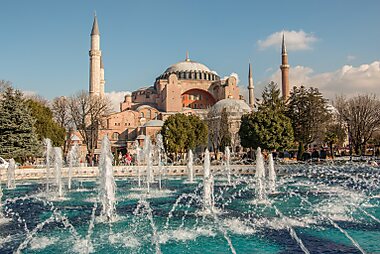
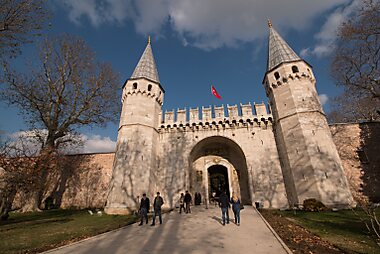
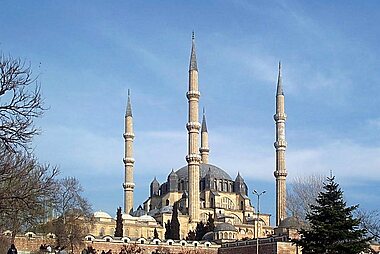
This collection explores Turkey’s architectural legacy, from the imperial heart of Istanbul to the prehistoric sites of Anatolia. It features the Hagia Sophia, Topkapı Palace, and the Blue Mosque, showcasing the height of Byzantine and Ottoman design. The list includes the subterranean Cistern of Philoxenos, the rock-cut dwellings of Cappadocia’s Zelve Open-Air Museum, and historic structures like the Column of Constantine. From the 19th-century Camondo Stairs to the Paleolithic Karain Cave near Antalya, these sites offer a timeline of human civilization spanning over 25,000 years.
16 places

Ancient Ruins and Archaeology
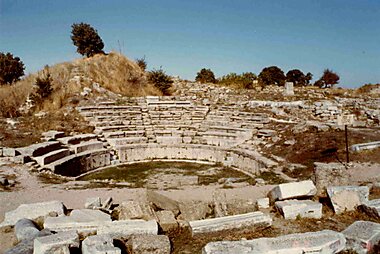
This collection spans millennia of Anatolian history, from the Neolithic settlements of Çayönü and Hacılar Mound to the architectural heights of the Byzantine and Ottoman empires. It features the massive Greco-Roman theater at Perge, the underground cisterns of Istanbul, and the Roman frontier fortress of Dara. Explore ancient trade hubs like Kültepe, the mosaic-rich Roman city of Sobesos, and medieval defensive structures including Alanya's Red Tower and the Byzantine fortress of Charsianon.
20 places

Tours & Activities
Turkey — Map

 Open the interactive map
 Tipping
5-10%, check if service charge already added
round up
round up
small note per bag/day
5-10%
A service charge is sometimes already included at tourist restaurants — check the bill before adding more. Rounding up is standard for taxis, and tour guides are usually tipped directly at the end of a tour.
Electricity
Türkiye uses Type C and F plugs at 230 V / 50 Hz — standard European sockets; most phone and laptop chargers work without an adapter.
Language
Turkish is the official language, written in the Latin alphabet since a 1928 reform, so navigation signage is easy to read even without speaking Turkish. English is common in Istanbul, coastal resorts, and major tourist sites, but far less so in smaller inland towns.
Staying connected
Buying a Turkish SIM or eSIM requires showing a passport, and coverage is strong nationwide, including most rural areas. Travelers bringing a foreign phone should know Türkiye registers device IMEI numbers: a phone used with a Turkish SIM for more than about 120 days can be blocked unless registered with authorities, though this rarely affects a standard vacation-length trip.
Safety & emergencies
Türkiye is generally safe for tourists, with the main risks being petty theft in crowded areas like the Grand Bazaar and Istiklal Street, and occasional taxi overcharging — agree on a fare or insist on the meter. The country sits on active fault lines and has experienced major earthquakes, most recently in 2023; check local guidance if traveling to the affected southeastern provinces. Border areas near Syria and Iraq carry additional travel advisories and are outside the typical tourist route.
Health
Tap water is chlorinated and generally not harmful, but most residents and visitors drink bottled or filtered water, which is inexpensive and widely available. Pharmacies (eczane), marked with a red or green cross sign, are common and can advise on minor ailments; larger towns have a rotating 24-hour pharmacy. No special vaccinations are required for entry, though routine vaccines should be up to date.
Visas & entry
Entry requirements vary significantly by nationality. Citizens of the US, UK, and most EU countries can enter visa-free for short tourist stays, typically up to 90 days; citizens of countries such as India, Mexico, and South Africa instead need an e-Visa purchased online in advance through Türkiye's official e-Visa portal before departure, and a smaller number of nationalities need a full visa. Do not use third-party sites that charge extra for this service.
Visa and entry requirements change frequently. Verify current requirements with the official immigration authority or your country's embassy before travel.
Etiquette
Remove shoes when entering a home, and dress modestly at mosques — shoulders and knees covered for everyone, with a headscarf for women; scarves are usually available to borrow at entrances. Avoid visiting mosques during Friday midday prayers unless there specifically for prayer.
Being offered tea is a common gesture of hospitality, and accepting it is polite even for a short visit. Elders are treated with particular respect, including in small courtesies like being served first.
Holidays & opening hours
Religious holidays — Ramadan Bayramı (Eid al-Fitr) and Kurban Bayramı (Eid al-Sacrifice) — shift each year on the lunar calendar and are the busiest domestic travel periods; book transport and hotels well ahead if traveling during them.
Most shops, including many in tourist areas, stay open daily with long hours; malls typically stay open every day of the week.
Getting around
- By bus: intercity coaches are extensive, comfortable, and often the most practical way between cities not connected by high-speed rail. Major operators sell tickets online.
- By air: domestic flights are common and often the fastest way to cover Türkiye's size, especially reaching the east or the Aegean and Mediterranean coasts.
- By train: high-speed rail (YHT) connects Ankara with Istanbul and a few other cities, but the network is limited outside these routes.
- By ferry: in Istanbul, ferries are a practical and scenic way to cross the Bosphorus and reach the Princes' Islands, often faster than the bridges at busy times.
Driving
- Key rules: mountainous roads and mixed local driving styles call for extra caution, especially at night and on rural roads.
- Tolls and vignettes: no paper vignette; toll motorways and Bosphorus bridges use the electronic HGS tag system rather than cash booths — check that a rental car is equipped, since unpaid tolls can lead to a fine.
- Congestion: Istanbul traffic is heavy for most of the day; many visitors avoid driving there and rely on public transport or ferries instead.
- Parking: metered street parking is common in city centers, often paid via an app or a nearby kiosk.
- Fuel: stations are typically full-service, with an attendant pumping the fuel. Petrol is labeled Kurşunsuz Benzin; diesel is labeled Motorin.
Food & drink
Breakfast (kahvaltı) is a substantial, shared spread of cheeses, olives, tomatoes, cucumbers, honey, jam, and bread, often lasting a leisurely hour on weekends. Lunch and dinner both commonly start with meze, small shared plates, before a grilled meat or stew main course.
Regional cooking varies widely: the Aegean coast leans on olive oil and vegetables, the southeast is known for spicier kebabs and rich stews, and the Black Sea region has its own cornbread and cabbage-based dishes. Turkish tea is drunk constantly throughout the day in small tulip-shaped glasses, while Turkish coffee, thick and unfiltered, is more of an occasional treat, often followed by having your fortune read from the grounds.
Where to explore
Istanbul is the typical starting point for most visits, with Byzantine and Ottoman landmarks packed into its historic peninsula and a food and nightlife scene that spans two continents. Ankara, the capital, is quieter and more government-focused, worth a stop mainly for its museums and Atatürk's mausoleum.
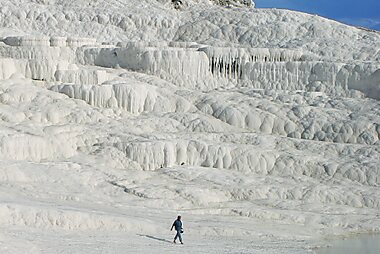
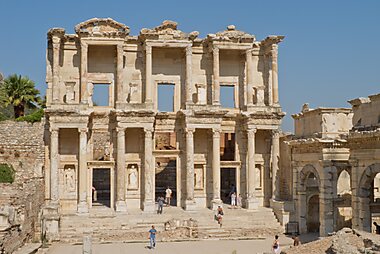
On the coast, Antalya pairs Mediterranean beach resorts with a well-preserved old town and easy access to ancient ruins like Aspendos. Inland, the Göreme Historical National Park protects Cappadocia's cave churches and fairy-chimney rock formations, best known for its sunrise hot-air balloon flights. Ephesus, near the town of Selçuk, and the white travertine terraces of Pamukkale are two more major highlights further west, both easy day trips or short stops from the Aegean coast.
Turkey – Plan Your Trip
Pick the places you want to see and Tripomatic turns them into a day-by-day route, with smart routing, time estimates, and everything you need for a perfect trip.




