



Istanbul
Istanbul is the only major city in the world split between two continents, with the Bosphorus strait dividing its European and Asian sides. Layers of history sit close together here: Byzantine churches, Ottoman palaces, and modern ferry docks share the same waterfront. It suits travelers who want dense sightseeing packed into a few days, paired with real daily life — commuter ferries, neighborhood tea houses, and a skyline of minarets and domes.
The city was also home to Nobel Prize-winning novelist Orhan Pamuk.

Istanbul – Planning a Trip?
Build your day-by-day itinerary in the Tripomatic app.


When to visit
Spring and autumn are mild and the easiest seasons for sightseeing. Summer turns hot and muggy, and winter is cold and rainy with occasional snow.
Plan around the Istanbul Tulip Festival in April, when city parks fill with millions of tulips and the weather is already turning pleasant.
Best time to visit: May, June, July, August, September, October
Top sights
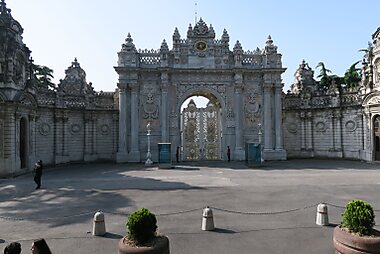
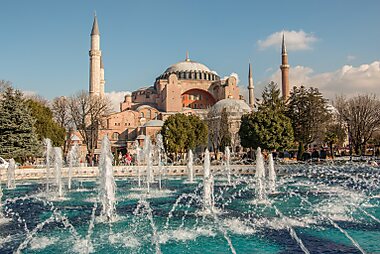
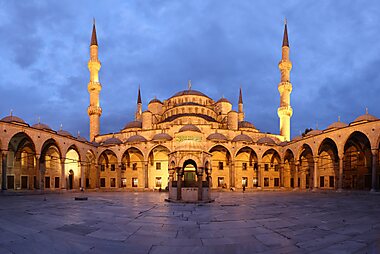
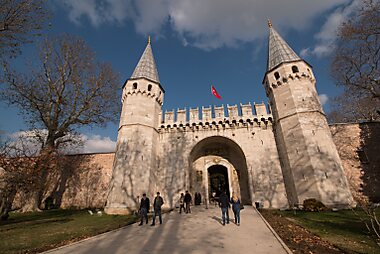

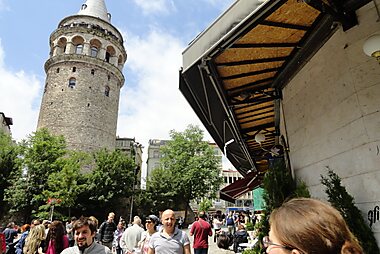
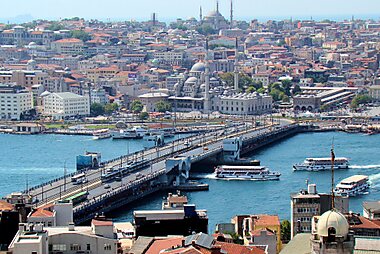

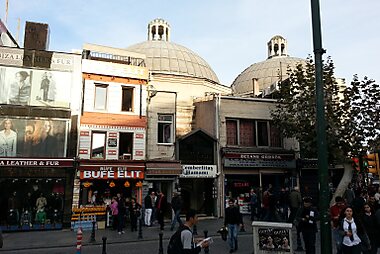
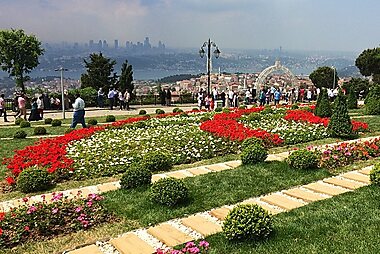
Istanbul's old town, Sultanahmet, holds the highest concentration of sights within walking distance of each other.
Hagia Sophia Grand Mosque was built as a cathedral under Emperor Justinian in 537, later became a mosque, and its vast dome and gold mosaics still dominate the skyline.
Facing it across the square, Blue Mosque is known for the blue Iznik tiles lining its interior and its six minarets.
Topkapı Palace was the residence of Ottoman sultans for centuries, and its courtyards, treasury, and harem quarters give a close look at royal life on the same hilltop.
Underneath the streets nearby, Yerebatan Cistern is a sixth-century underground reservoir with rows of columns rising out of shallow water.
Grand Bazaar is one of the world's oldest covered markets, with thousands of shops selling carpets, ceramics, and jewelry under vaulted stone ceilings. Nearby, the Spice Bazaar sells spices, tea, and Turkish delight along the Golden Horn waterfront.
Süleymaniye Mosque was designed by the Ottoman Empire's most celebrated architect, Mimar Sinan, and its hilltop setting gives one of the best views over the Golden Horn.
Across the Golden Horn, Galata Tower is a medieval stone tower with an observation deck looking out over the whole city.
On the European shore of the Bosphorus, Dolmabahçe Palace replaced Topkapı as the seat of the last Ottoman sultans, with a marble facade and an enormous crystal chandelier in its ceremonial hall.
Featured Lists

Istanbul's Absolute Essentials
Istanbul’s historic peninsula preserves layers of Byzantine and Ottoman history through its most significant landmarks. This selection features iconic architectural sites like the Hagia Sophia and the Blue Mosque, alongside the expansive Topkapı Palace complex. The list also highlights Roman engineering with the Column of Constantine and the Column of the Goths, as well as the city’s traditional bathing culture found in historic structures like the 16th-century Haseki Hürrem Hammam and the Baroque-style Cağaloğlu Hamam.
17 places
Istanbul's Historical Treasures
Istanbul’s historical core is defined by a layer of Roman, Byzantine, and Ottoman architecture. This collection spans centuries, featuring the Hagia Sophia’s iconic dome and the expansive Topkapı Palace complex. It highlights the city’s religious heritage through the Blue Mosque and the 17th-century New Mosque. Ancient civic engineering is visible at the subterranean Cistern of Philoxenos and the Column of Constantine, while Sultan Ahmet Square preserves the layout of the Roman-era Hippodrome and its monumental obelisks.
7 places

Istanbul Parks and Gardens
Istanbul’s green spaces range from the historic grounds of imperial palaces to modern waterfront retreats. Gülhane Park, once part of the Topkapı Palace, features the ancient Column of the Goths and seasonal tulip displays. Yildiz Park offers expansive picnic areas within former royal gardens, while the Dolmabahçe Palace Park provides manicured landscapes along the Bosphorus. Further north, Ulus Parkı and Bebek Park provide panoramic views of the strait and the city's upscale residential districts.
5 placesWhat to experience
A few things here are worth doing, not just seeing.
- Cross the Bosphorus on a regular public ferry, ideally near sunset, for skyline views that a tour boat charges much more for.
- Get a scrub-and-massage at Çemberlitaş Hammam, a working Ottoman-era hammam rather than a spa built for tourists.
- Watch a whirling dervish (sema) ceremony, held at a few dedicated venues around the city — a Sufi ritual, not a stage show, even though it is now performed for visitors.
- Catch sunset over the whole city from Big Çamlıca Hill, the highest point on the Asian side.
Tours & Activities
Istanbul — Map

 Open the interactive map
 Day trips
Istanbul sits within reach of islands, a Black Sea coast, and a former Ottoman capital for a day away from the city.
- Princes' Islands — car-free, reached by ferry from Kabataş or Kadıköy in about 1 to 1.5 hours. Pine forests, 19th-century wooden mansions, and no cars — get around by bicycle or electric buggy instead.
- Şile — a small Black Sea coastal town about 2 hours away by bus or car, with sandy beaches and a 19th-century lighthouse. A slower day away from the crowds.
- Bursa — the first Ottoman capital, roughly 2.5 hours away by fast ferry across the Sea of Marmara plus a short bus ride, or by direct highway bus. See the Grand Mosque and the silk market, or ride the cable car up Mount Uludağ.
Getting there
- By air: Most international flights arrive at Istanbul Airport (IST), on the European side. A taxi to the city center takes about 45 minutes. The M11 metro (connecting to the M2 line) is cheaper, at roughly 1 hour; the Havaist airport bus is cheaper still but slower, typically 1.5 to 2 hours depending on traffic. Some budget and regional flights use Sabiha Gökçen Airport (SAW) on the Asian side, about an hour from the center by bus or taxi.
- By train: High-speed YHT trains connect Istanbul to Ankara and other Turkish cities, arriving at Halkalı on the European side or Söğütlüçeşme on the Asian side. Direct international rail service is limited.
- By bus: Long-distance coaches from across Turkey and neighboring countries arrive at the Esenler bus terminal (Otogar), with metro and shuttle connections into the center.
Getting around
- Public transit: An Istanbulkart contactless card works on the metro, tram, bus, and ferries, and can be bought and topped up at station kiosks and machines; contactless bank cards are also accepted directly at some gates. Ferries are a normal part of the network, not just a tourist activity, and are often the fastest way to cross between the European and Asian sides.
- Taxi / ride-hailing: Metered yellow taxis are everywhere; BiTaksi and Uber both operate and can help avoid meter disputes.
- On foot / cycling: The old town and Beyoğlu are walkable but hilly, and distances between neighborhoods are long, so plan to combine walking with ferries or the metro. Cycling is not practical because of traffic and hills.
Driving
- Is a car worth it?: No. Traffic is heavy, parking is scarce, and ferries and the metro cover the city better than driving. Rent a car only for a day trip destination that trains and buses do not reach easily.
- Parking: Paid guarded car parks (otopark) are common in central districts; street parking is metered in some areas and hard to find near major sights.
- Restrictions: Istiklal Street and Sultanahmet Square are closed to general traffic; heavy congestion, rather than a formal charge, is the main deterrent to driving in the center.
Food & drink
Istanbul's food scene spans Ottoman palace cooking, everyday street food, and a growing wave of contemporary restaurants. Balık ekmek (grilled fish sandwiches) from the boats near Galata Bridge and simit from street carts are the classic quick bites.
For a sit-down meal, head to the meyhane (tavern) streets of Karaköy or the restaurant-lined backstreets of Kadıköy on the Asian side, both known for meze and grilled fish rather than any single famous address. Tipping in restaurants follows the country norm.
Safety & health
Istanbul is generally safe for tourists, with low rates of violent crime. The most common problems are petty ones:
- Taxi meter disputes — insist on the meter, or use an app like BiTaksi or Uber to avoid it.
- Overpriced bars and restaurants near Sultanahmet and Taksim that add unrequested extras to the bill — check the total before paying.
- Friendly strangers near tourist sites offering unsolicited tours or shoe shines that lead to a payment demand — politely decline and walk on.
History
Legend credits the city's founding to Byzas, a Greek colonist who settled the site as Byzantion in the 7th century BC. Emperor Constantine refounded it as Constantinople in 330 AD, and it served as the capital of the Byzantine Empire for over a thousand years — Hagia Sophia Grand Mosque was built during this period as the world's largest cathedral of its day. In 1453, Sultan Mehmed II captured the city after a long siege, ending the Byzantine Empire and beginning nearly 500 years as the Ottoman capital. The sultans ruled from Topkapı Palace for centuries before moving to the more modern Dolmabahçe Palace in the 1850s. The city was renamed Istanbul in the early 20th century after the founding of the Turkish Republic, when the capital moved to Ankara. Near the Theodosian Walls, the Chora Church holds some of the best-preserved Byzantine mosaics in the city, added almost 800 years after Hagia Sophia was built, in the early 1300s.
Country facts
Quick practical facts for Turkey at a glance:
- Currency
- Turkish Lira TRY ₺ · Card payments · Widely accepted
- Emergency numbers
- 112 Ambulance
- Electricity
- 230 V · 50 HzType C / Type F
- Languages
- Turkish
- Tap water
- Drink with caution
- Driving side
- Right
- Calling code
- +90


Istanbul – Plan Your Days
Turn the places from this guide into a real itinerary, with smart routing, time estimates, and everything you need for a perfect trip.




