


Hakodate
Hakodate is a port city at the southern tip of Hokkaido. It was one of the first Japanese ports opened to foreign trade, in 1859. That past still shows today in the hillside churches of Motomachi, the red brick warehouses by the bay and a star-shaped fort.
The city is best known for its night view from Mount Hakodate and for fresh seafood. It suits a trip of two or three nights, and most sights are easy to reach by tram. Hakodate is also a good base for onsen, a day at Onuma Park and travel on to Sapporo.

Hakodate – planujesz wycieczkę?
Stwórz swój plan podróży dzień po dniu w aplikacji Tripomatic.


Kiedy jechać
Summer is warm and humid, and August is the rainiest month. Sea fog is common from May to July. Winter is cold and snowy, and snow is expected from November to April. Snow makes the view from Mount Hakodate beautiful, but roads and slopes can be icy.
The biggest event is the Hakodate Port Festival, held every August. It features the Ika-odori, a squid dance.
Najlepszy czas na wizytę: czerwiec
Główne zabytki

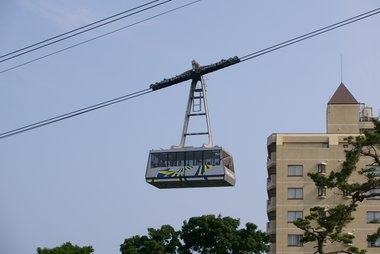
- Mount Hakodate Ropeway climbs Mount Hakodate in about three minutes. The night view from the top is the city's most famous sight. Go around sunset.
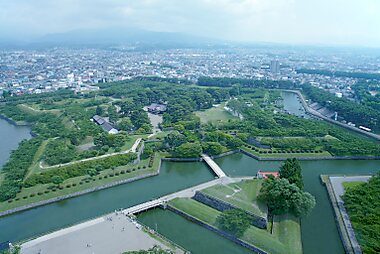
- Goryōkaku is a star-shaped fort. It was the base of the short-lived Republic of Ezo in 1868 and 1869. The park is free and is a popular place for cherry blossom viewing.
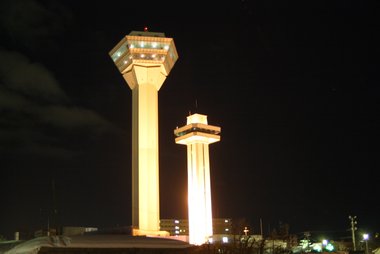
- Goryokaku Tower stands next to the fort. Its observation deck shows the star shape of the fort from above.
- Hakodate Asaichi (Morning Market) is next to Hakodate Station. It opens early and sells seafood, produce and souvenirs. Eat a seafood rice bowl here for breakfast.
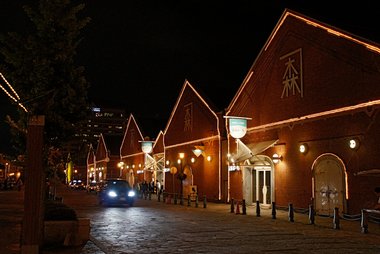
- Kanemori Red Brick Warehouse is a group of brick warehouses on the waterfront. They hold shops and restaurants, and the Bay Area around them is good for an evening walk.
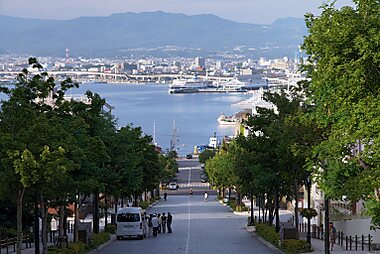
- Hachiman-zaka Slope is a wide slope in Motomachi that runs down to the harbour. It gives a view of the water and the city.
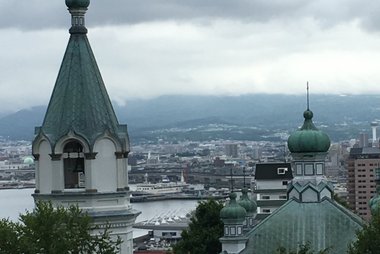
- Hakodate Orthodox Church is one of several churches in Motomachi. It shows the foreign influence that came with the port.
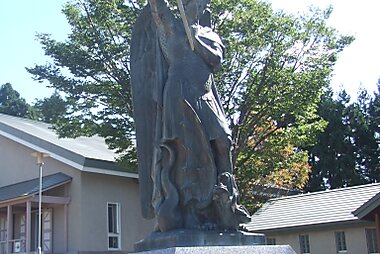
- Trappistine Monastery is a convent of nuns outside the centre. Entry to the grounds is free.
Polecane zestawienia

Czego warto doświadczyć
- Mount Hakodate at sunset. Arrive just before sunset to see the city go from daylight to night. In summer, stay for the deep blue sky after sunset. The outdoor deck is crowded around sunset, and crowds ease an hour later.
- Onsen in Yunokawa. Yunokawa Onsen is a hot spring resort about 30 minutes from the station by tram. Some hotels let day visitors use their baths, and there are foot baths. Some rooms have open-air baths with views of the Tsugaru Strait.
- Hike Mount Hakodate. The walk from the Hakodate Fureai Center to the summit takes about one hour. The trail is open all year, including when the road is closed.
- Hakodate Christmas Fantasy. In winter this event takes place in front of the red brick warehouses.
Wycieczki i aktywności
Hakodate — Mapa

Wycieczki jednodniowe
- Onuma Quasi-National Park: about 30 minutes from Hakodate Station by limited express, then a 5-minute walk from Onuma Koen Station. The park has two lakes, small islands and views of Mt. Komagatake. You can cycle, take a cruise or paddle a canoe in summer. Winter brings snow hiking and smelt fishing.
Gdzie warto się udać
Jak dotrzeć
- By air: Hakodate Airport is 7.6 km east of Hakodate Station. There is no rail link. The shuttle bus takes about 20 minutes and costs 700 yen. Route 8 express takes about 25 minutes and costs 500 yen, and Route 96 takes about 33 minutes and costs 340 yen. Flights come from Tokyo Haneda (about 1 h 20 min), Osaka Itami, Nagoya Chubu and Sapporo New Chitose. Seasonal flights come from Taipei and Seoul. Airport bus information
- By Shinkansen: the Hokkaido Shinkansen runs from Tokyo to Shin-Hakodate-Hokuto. The fastest trip takes 3 h 57 min. The station is about 18 km from the city. The rapid Hakodate Liner connects it to Hakodate Station, with one stop at Goryokaku. Tokyo to Hakodate takes about 4 h 30 min in total.
- By limited express: the Hokuto limited express runs between Hakodate and Sapporo and takes about 3 h 30 min. It also stops at Shin-Hakodate-Hokuto. An intercity bus from Sapporo takes about 5 hours.
- By bus and ferry: buses from Tokyo to Aomori connect to the ferry to Hakodate. The whole trip takes 15 to 17 hours.
Poruszanie się na miejscu
- Tram: trams reach Hakodate Station, the Bay Area and Motomachi (Jujigai stop), Goryokaku (Goryokaku-koen-mae stop) and Yunokawa. They run often in the day. Pay on board, or use a Suica, PASMO or Kitaca IC card. The 1-day tram pass costs 800 yen for adults and 400 yen for children. A 24-hour pass costs 1,130 yen and is sold online only. The 1-day tram pass is also sold on board and at the tourist information centre in Hakodate Station.
- Bus: combined tram and bus passes are sold online only. The 1-day pass costs 1,600 yen and the 2-day pass costs 2,600 yen. Buses run from Hakodate Station to the ropeway, Goryokaku Tower and the Trappistine convent. A loop bus links the station with the Bay Area and Motomachi.
- Mount Hakodate: the Climbing Bus (Route 1) takes about 30 minutes from the station and costs 700 yen. It does not run in winter. The combined 1-day pass does not cover it.
- On foot: the morning market and the station are next to each other. The Bay Area and Motomachi are easy to walk, but the slopes are steep and icy in winter.
Prowadzenie samochodu
- Is a car worth it? Not for the city. Trams and buses cover the main sights. A car helps for Onuma, the coast east and west of the city, and a road trip to Sapporo (304 km, about 4 h 40 min).
- Driving side: traffic drives on the left in Japan.
- Licence: Japan accepts only an International Driving Permit under the 1949 Geneva Convention. A permit under the 1968 Vienna Convention is not valid. Licences from Switzerland, Germany, France, Belgium, Monaco and Taiwan need an official Japanese translation from JAF instead. Apply online before you travel. It takes 2 to 3 working days.
- Winter: snow and ice are common from November to April. Ask the rental company for winter tyres and allow extra time.
- Mount Hakodate: the summit road is closed to all traffic from early November to mid-April. In the rest of the year, private and rental cars are not allowed on it in the evening. Use the ropeway or the bus.
Jedzenie i napoje
Hakodate is known for seafood, sushi and shio (salt) ramen. Squid is the local symbol. Crab, sea urchin and salmon roe are also common on menus. Many places serve them over rice in a bowl (donburi).
Eat in these areas:
- The morning market next to the station. Donburi Yokocho is a lane of rice-bowl shops and opens early.
- Daimon Yokocho, a group of small restaurants and bars near the station, for evening meals.
- The Bay Area, for restaurants in the old warehouses.
Bezpieczeństwo i zdrowie
Hakodate is very safe for visitors. Petty crime is rare.
- Slopes and pavements are icy from November to April. Wear shoes with good grip.
- The ropeway can stop in strong wind. Check its status before you go up.
Historia
Hakodate opened as a trading port in 1859, after a US fleet visited in 1854. Foreign merchants and missionaries settled on the hillside in Motomachi. The church Hakodate Orthodox Church dates from 1916.
In 1868 the rebel Enomoto Takeaki fled to Hakodate and declared the Republic of Ezo. Goryōkaku was its headquarters. The republic fell after the naval battle of May 1869. Hijikata Toshizo, a former Shinsengumi officer, died in the same war.
Fire has shaped the city. A fire in 1907 destroyed part of the waterfront, and the brick warehouses of Kanemori Red Brick Warehouse were rebuilt in 1909. A second great fire in 1934 destroyed about two thirds of the buildings.
Informacje o kraju
Here are the essentials for traveling in Japan:
- Waluta
- jen japoński JPY ¥ · Płatności kartą · Zazwyczaj akceptowane
- Elektryczność
- 100 VTyp A / Typ B
- Języki
- japoński
- Woda z kranu
- Zdatna do picia
- Ruch drogowy
- Lewostronny
- Numer kierunkowy
- +81


Hakodate – zaplanuj swoje dni
Zmień miejsca z tego przewodnika w prawdziwy plan podróży z inteligentnym wyznaczaniem tras, szacowanym czasem i wszystkim, czego potrzebujesz na udaną wycieczkę.


Powiązane cele podróży

Data: © OpenStreetMap contributors, Wikidata, Wikipedia, Tripomatic, Official websites, geoBoundaries (CC BY 4.0). Tours by GetYourGuide. We earn commission from bookings. Travel guide generated with AI.
Zaplanuj wycieczkę z Tripomatic
- Planowanie z asystentem AIZyskaj gotowy plan dnia jednym stuknięciem, pozwól AI rozmieścić miejsca z listy życzeń w Twojej wycieczce lub zaplanuj wszystko na czacie.
- Ostrzeżenia podróżneOficjalne komunikaty, trudne warunki pogodowe, strajki i zagrożenia naturalne dla miejsc w każdym dniu wycieczki.
- Dni wolne od pracy i wydarzeniaSprawdzaj święta, festiwale i dni zamknięcia w trakcie wycieczki oraz ich wpływ na Twoje plany.
- Szacowanie kosztówZestawienia kosztów wycieczki oparte na sztucznej inteligencji, dzięki którym poznasz budżet przed wyjazdem.
- Wycieczki i biletyRezerwuj wycieczki z przewodnikiem, bilety wstępu bez kolejki i aktywności bezpośrednio w swoim planie.