


Palermo
Palermo is the capital of Sicily and one of the oldest cities in the Mediterranean. Phoenicians, Arabs, Normans and Spanish rulers all left their mark. The result is a city of gold-mosaic churches, red domes, baroque squares and noisy street markets, all within a walkable historic centre.
It suits travelers who like history, art and food more than polish. Some streets look worn, traffic is loud, and life spills out onto the pavement. Three or four days give you the main monuments, the markets and a half-day trip to the mosaics of Monreale or the beach at Mondello.

Palermo – planujesz wycieczkę?
Stwórz swój plan podróży dzień po dniu w aplikacji Tripomatic.


Kiedy jechać
Spring and autumn are the best times to visit, with warm days and fewer crowds. Summer is hot and humid, and the hot sirocco wind from Africa can push temperatures much higher for a few days. Winter is mild and rainy, and it is a good time for museums and churches without queues.
The biggest event is the Festino di Santa Rosalia in mid-July, the feast of the city's patron saint. On the main night a huge decorated cart is pulled through the old town, and the evening ends with fireworks over the sea at the Foro Italico. Expect big crowds and closed streets in the centre.
Najlepszy czas na wizytę: kwiecień, maj, czerwiec, październik, listopad
Główne zabytki


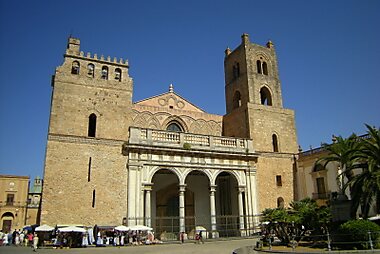



- Cappella Palatina is the city's most famous chapel. It is covered in 12th-century gold mosaics under a painted wooden ceiling in Islamic style.
- Royal Palace of Palermo houses the chapel and was the seat of the Norman kings. Since 1947 it has also been the seat of the Sicilian regional parliament.
- Palermo Cathedral mixes Norman, Gothic and baroque styles. Inside are the tombs of King Roger II and Emperor Frederick II, and you can walk on the roof for views over the city.
- Church of Santa Maria dell’Ammiraglio, also called La Martorana, has 12th-century mosaics, including one of King Roger II crowned by Christ. Next door, the small Church of San Cataldo has three red domes and a bare stone interior.
- Quattro Canti is the baroque crossroads at the heart of the old town. A few steps away, Pretoria Square holds a large 16th-century fountain surrounded by marble statues.
- Church of San Giovanni degli Eremiti is a Norman church with red domes and a quiet garden cloister.
- Teatro Massimo is the largest opera house in Italy. Take a guided tour, or book a performance.
- Catacombs of the Capuchins hold thousands of preserved bodies dressed in their best clothes. It is a strange and moving visit, and not suitable for every child.
Polecane zestawienia


Czego warto doświadczyć
These are things that make a visit to Palermo different.
- Watch a puppet show. The Opera dei Pupi uses large armoured puppets to tell stories of Charlemagne's knights. This tradition is on the UNESCO list of intangible heritage. Small theatres in the old town hold short shows, and the Museo internazionale delle marionette Antonio Pasqualino has a collection.
- Climb to the sanctuary of Santa Rosalia. An old paved path winds up Mount Pellegrino to the Santa Rosalia Sanctuary, built in a cave. Start early to avoid the heat.
- Join the evening walk on the seafront. In the evening, locals walk along the Foro Italico and the Kalsa waterfront.
- Spend a morning at a street market. At Ballarò Market, vendors shout their prices in Sicilian dialect over piles of fish, fruit and vegetables. Go before noon, when it is busiest.
Wycieczki i aktywności
Palermo — Mapa

 Otwórz interaktywną mapę
Wycieczki jednodniowe
Palermo is a good base for short trips. These are listed from closest to farthest.
- Mondello: the city's beach suburb, with pale sand under Monte Pellegrino. North of the centre, beyond La Favorita park. About 30 to 45 minutes by city bus 806 from Piazza Sturzo, behind the Politeama theatre.
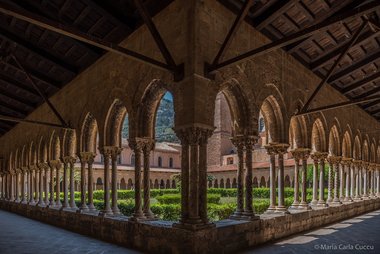
- Monreale: a hill town above the city with Monreale Cathedral and its Chiostro Benedettino, with more than 200 carved columns, set in pairs. Gold mosaics cover almost the whole interior of the cathedral. About 30 to 40 minutes by bus 389 from Piazza Indipendenza.
- Cefalù: a seaside town with a Norman cathedral and a long beach. About 40 minutes to 1 hour by regional train.
- Segesta: an unfinished Greek temple and a hillside theatre in open countryside. About 1 hour by car, or a little longer by bus.
- Erice: a medieval hill town above Trapani with wide views over the sea. About 1.5 hours by car, or by bus to Trapani and then the cable car.
Gdzie warto się udać
Jak dotrzeć
- By air: Palermo Falcone Borsellino Airport (PMO), also called Punta Raisi, is about 35 km west of the city. The Prestia e Comandè shuttle bus runs about every 30 minutes and takes about 40 minutes to Politeama and 50 minutes to the central station. Regional trains from the station under the terminal take 35 minutes to 1 hour to Palermo Centrale. Taxis charge fixed fares into the city.
- By train: Palermo Centrale is the main station. Regional trains run along the coast to Cefalù and east towards Messina. Book on Trenitalia.
- By bus: Long-distance buses link Palermo with Catania, Agrigento, Trapani and other Sicilian cities. Most leave from the bus area next to Palermo Centrale.
- By ferry: Overnight ferries connect Palermo with Naples, Genoa and other mainland ports. The port is a short walk from the old town.
Poruszanie się na miejscu
- On foot: The historic centre is compact and flat. Most major sights are within a 20-minute walk of the Quattro Canti. Walking is the best way to see the city.
- Bus and tram: AMAT runs the city buses and trams. A single ticket is valid for 90 minutes. Buy it before you board at tobacconists, newsstands or in the MyAmat app. You can also buy one from the driver for a little more, with exact coins. A day ticket is good value if you plan several rides. See AMAT.
- Taxi: Use licensed taxis from official ranks or call one. Agree on the fare or check that the meter is running before you leave.
- Cycling: Traffic is heavy and cycle lanes are few. Cycling is practical mainly along the seafront.
Prowadzenie samochodu
- Is a car worth it? Not for the city. Traffic is chaotic, parking is hard, and most sights are within walking distance. Rent a car only when you leave Palermo to explore western Sicily.
- Restrictions: The historic centre is a ZTL (limited traffic zone) controlled by cameras on weekdays during the day, and also on some nights in the high season. Driving in without a pass leads to a fine. A daily pass can be bought in the PalerMobilità app. Ask your hotel before you drive in.
- Parking: Street parking with blue lines is paid. Use a car park at the edge of the centre and walk in.
Jedzenie i napoje
Palermo has some of the best street food in Italy. Try arancine (fried rice balls), panelle (chickpea fritters) in a bread roll, sfincione (a thick, soft pizza with onions and breadcrumbs), and pani ca' meusa, a roll filled with spleen. For pasta, look for pasta con le sarde, with sardines, wild fennel, pine nuts and raisins. Finish with a cannolo, cassata or a granita with brioche in summer.
The best places to eat cheaply are the markets: Ballarò Market, the Capo market and, in the evening, the area around Vucciria Market. For a sit-down meal, the lanes of the Kalsa district and the streets near the Teatro Massimo have many trattorias.
Bezpieczeństwo i zdrowie
Palermo is generally safe for visitors, but petty crime is common. Watch your bags in markets, on crowded buses and around Palermo Centrale station. Carry your bag on the side away from the road, because thieves on scooters sometimes snatch bags. Do not leave anything visible in a parked car.
Some quiet back streets in the old town can feel empty at night. Stay on the busier streets after dark. Traffic is the bigger daily risk: drivers rarely stop at crossings, so cross carefully.
In summer, heat can be intense, especially during sirocco days. Drink plenty of water and plan indoor visits for the hottest hours.
Historia
The Phoenicians founded the city in the 8th century BC and called it Ziz. The Greeks later named it Panormos because of its large natural harbour. After Roman and Byzantine rule, Arabs conquered the city in the 9th century and made it one of the largest and richest cities in Europe.
The Normans took Palermo in 1072. Their kings kept Arab and Byzantine craftsmen, and this mix created the Arab-Norman style you see in Cappella Palatina, Church of San Giovanni degli Eremiti and the royal pleasure palace of Zisa Castle. In 2015 these buildings, together with the cathedrals of Monreale and Cefalù, became a UNESCO World Heritage Site.
Under Spanish rule the city gained its baroque face. In the early 17th century, the crossing of the two main streets became the Quattro Canti. In 1624 a plague struck the city. According to tradition, the bones of Saint Rosalia were found on Monte Pellegrino and carried through the streets, and the plague ended. She has been the city's patron saint ever since.
In the 20th century the Mafia damaged the city badly. In 1992 the judges Giovanni Falcone and Paolo Borsellino were murdered. The airport now carries their names, and the city has since become a centre of the fight against organised crime.
Informacje o kraju
Quick practical facts for Italy at a glance:
- Waluta
- euro EUR € · Płatności kartą · Powszechnie akceptowane
- Numery alarmowe
- 112
- Elektryczność
- 230 V · 50 HzTyp C / Typ F / Typ L
- Języki
- włoski
- Woda z kranu
- Zdatna do picia
- Ruch drogowy
- Prawostronny
- Numer kierunkowy
- +39


Palermo – zaplanuj swoje dni
Zmień miejsca z tego przewodnika w prawdziwy plan podróży z inteligentnym wyznaczaniem tras, szacowanym czasem i wszystkim, czego potrzebujesz na udaną wycieczkę.


Powiązane cele podróży



Data: © OpenStreetMap contributors, Wikidata, Wikipedia, Tripomatic, Official websites, geoBoundaries (CC BY 4.0). Tours by GetYourGuide. We earn commission from bookings. Travel guide generated with AI.