


Takayama
Takayama is an old merchant town in the Hida mountains of Gifu Prefecture. Its centre keeps rows of dark wooden houses, sake breweries and craft shops from the Edo period. By area, it is the largest municipality in Japan.
It suits a trip of one to three nights. Most visitors come for the old town, the morning markets and the two big festivals. The town is also a good base for Shirakawa-go, hot springs and the Northern Alps. It is a calm, walkable stop between Nagoya, Kanazawa and Tokyo.

Takayama – Planst du eine Reise?
Erstelle deine Reiseroute Tag für Tag in der Tripomatic-App.


Beste Reisezeit
Spring and autumn are the best seasons, with mild days and clear air. Autumn brings colour to the hills. Summer is hot, humid and rainy. Winter is cold with regular snow from December to March, and the old town looks very good under snow.
Plan around the Takayama Festival. The spring festival is on 14 and 15 April and the autumn festival is on 9 and 10 October. Decorated floats are pulled through the old town, and at night they carry lanterns. Hotels fill up early for both festivals, so book well ahead.
Top-Sehenswürdigkeiten
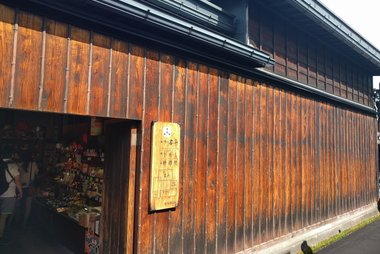
- Takayama Old Town, Sanmachi Suji is the heart of the old town. Three main streets keep their wooden merchant houses, sake breweries, sweet shops and craft stores.
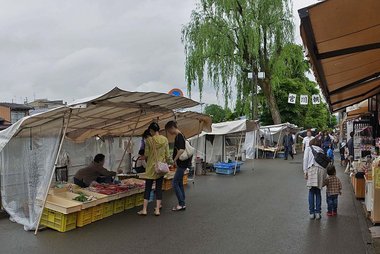
- Miyagawa Morning Market runs along the river most mornings. Local farmers and craftspeople sell vegetables, pickles and handmade goods. Go in the morning, because it closes around noon.
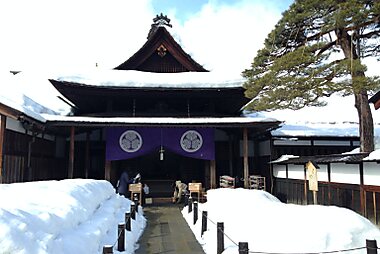
- Takayama Jin’ya is the former regional government office of the Edo period. It is a national historic site and is open to visitors.
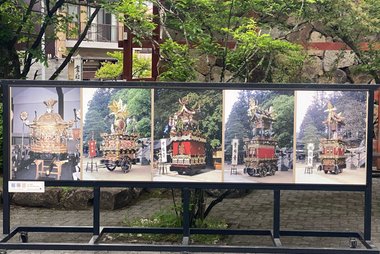
- Takayama Festival Floats Exhibition Hall shows some of the festival floats up close. It is the best way to see them outside the festival days.
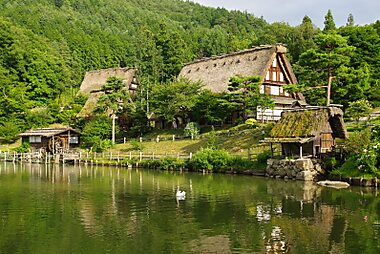
- Hida Folk Village is an open-air museum of about 30 old farmhouses, some with steep thatched roofs. It sits on a hillside south-west of the station. Allow about two hours.
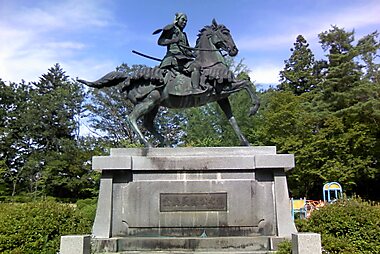
- Shiroyama Park is a quiet hill park on the site of the old castle. The castle was demolished in the 1690s. Only the park remains.
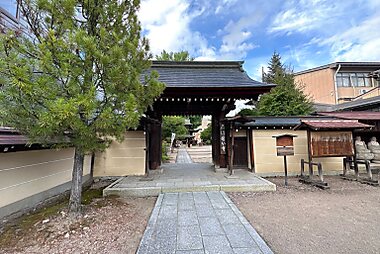
- The Great Ginkgo of Hida Kokubun-ji stands in the grounds of a temple founded in the Nara period. The foundation stones of its old pagoda are a national historic site.
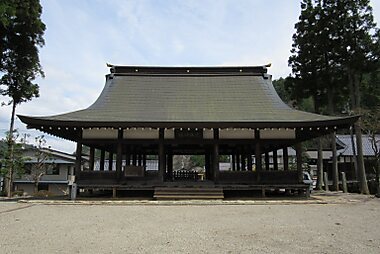
- Minashi Shrine is the main shrine of the old Hida Province. It lies south-west of the centre, so it suits a quieter side trip.
Empfohlene Listen


Japanese Alps Adventure
This collection highlights the rugged terrain of the Northern Japanese Alps near Takayama, featuring three of the nation’s 100 Famous Mountains: Mt. Norikura, Mt. Hotaka, and the iconic spear-tipped Mt. Yari. The list includes essential high-altitude alpine huts like Yaridaira Goya and Sugoroku Goya, which provide shelter and supplies for hikers traversing the Hida Range. Key natural landmarks include the 64-meter-high Hirayu Waterfall and the reflective waters of Kagami-daira, offering views of the surrounding 3,000-meter peaks.
20 Orte

Erlebnisse & Aktivitäten
Things to do in Takayama beyond the sights:
- Taste sake at the breweries in the old town. Several breweries offer tastings, and winter is a good time for it.
- Walk the Higashiyama Walking Course. The route passes temples and the former castle site on the hill above the centre.
- Try a craft workshop at the Hida Takayama Crafts Experience Center, near Hida Folk Village. Sessions last 15 to 60 minutes. You do not need to reserve, and it is closed on Thursdays.
- Buy a sarubobo charm. It is a small red doll that is the typical souvenir of the Hida region.
Touren & Aktivitäten
Takayama — Karte

Tagesausflüge
Takayama is a good base for the Hida mountains. The close places come first.
- Hida is about 15 km north of Takayama, with a quiet old town and a festival on 19 and 20 April. Trains and buses go there.
- Shirakawa is about 50 minutes by direct bus. The thatched farmhouses of Shirakawa-go are a UNESCO World Heritage Site. Some buses need a reservation, and they can sell out in busy periods.
- Gero Onsen, about 1 hour south by train, is a hot spring town.
- Okuhida Onsen-go is a group of hot spring villages in the mountains east of Takayama. A Nohi bus takes about 90 to 100 minutes to the Shinhotaka Ropeway, which climbs towards the Northern Alps, with a top station at 2,156 m.
- Kanazawa can be reached by bus through Shirakawa-go. The Shirakawa-go to Kanazawa leg takes about 1 hour 20 minutes. It is better as an overnight stop than a day trip.
Orte zum Entdecken
- Nearby in the Hida region: Hida and Shirakawa are the closest places to add to your stay.
- Heading west or south: Gifu is the capital of the prefecture, on the train line to Nagoya.
- Heading to the Alps and beyond: Matsumoto has a castle and is linked to Takayama by highway bus. Nagoya and Kanazawa are the main big cities on either side.
Anreise
- By air: Takayama has no airport. Most visitors fly to Tokyo, Osaka or Chubu Centrair Airport near Nagoya, then continue by train or bus.
- By train: The JR Limited Express Hida runs from Nagoya in about 2 hours 20 minutes to 2.5 hours, with several trains a day. From Toyama it takes about 1.5 hours. Tokyo takes about 4.5 hours with a change at Nagoya. In peak seasons all seats on the Hida can be reserved-only, so book early. There is no Shinkansen to Takayama.
- By bus: Highway buses run from Tokyo (Shinjuku) in about 5.5 hours, and from Matsumoto. A bus to Shirakawa takes about 50 minutes, and you can continue from there to Kanazawa.
- From the station: The JR station and the Hida Bus Center are in the same area. The old town is about a 10-minute walk away, across the river.
- Official site: Takayama City: official tourism site
Unterwegs vor Ort
- On foot: The old town, the morning markets and the river are all close together. Many sights are within a 10 to 20-minute walk of the station.
- Buses: The Sarubobo Bus runs from the station to Hida Folk Village about every 30 minutes. A ride costs 100 yen, and a one-day pass costs 500 yen. Other town loop buses use the same pass.
- Rickshaw: Rickshaw rides are offered in the old town for short tours.
- Cycling: The centre is mostly flat, but snow and ice make cycling hard from December to March.
Autofahren
- Is a car worth it?: Not for the town itself. The old town is for walking. A car is useful for Okuhida and the mountain areas.
- Driving side: Japan drives on the left. Japan accepts only a 1949 Geneva International Driving Permit. A permit under the 1968 Vienna Convention is not valid. Licences from Switzerland, Germany, France, Belgium, Monaco and Taiwan need an official Japanese translation from JAF.
- Winter: Takayama is above 500 m, and temperatures can drop below freezing from December to March. Snow tyres are needed on snowy or icy roads, and highway use can be restricted without them. Reserve snow tyres when you book the rental car.
Essen & Trinken
Takayama is known for Hida beef. You can eat it as steak, grilled skewers or beef sushi. Other local foods are mitarashi dango (rice dumplings in a sweet soy glaze), hoba miso (miso grilled on a leaf), Hida red turnip pickles, mountain vegetables and local ramen. Takayama also makes sake.
Eat in these areas:
- The lanes of Takayama Old Town, Sanmachi Suji for street snacks, beef skewers and sweets.
- The stalls at Miyagawa Morning Market for pickles, fruit and rice cakes in the morning.
Sicherheit & Gesundheit
- Takayama is very safe, with low crime. Normal care with your bags is enough.
- Black bears live in the mountains around Takayama. Carry a bell when you hike, and follow local trail notices.
- In winter, pavements and steps can be icy. Wear shoes with good grip.
- Earthquakes happen in Japan. Learn the exits in your hotel and follow local instructions.
Geschichte
Kanamori Nagachika received Hida Province in the 1580s and began a castle in 1588 on the hill that is now Shiroyama Park. The town grew around the castle, and the merchant streets of Takayama Old Town, Sanmachi Suji began as its trading quarter.
In 1692 the Kanamori family was moved elsewhere, and the shogunate took direct control of Hida. The castle was demolished in 1695. From 1692 to 1871, Takayama Jin’ya served as the shogunate's local government office for the region.
Today the festival floats can be seen at Takayama Festival Floats Exhibition Hall, and the Takayama Festival is listed by UNESCO as intangible cultural heritage.
Länderfakten
Here are the essentials for travelling in Japan:
- Währung
- Japanischer Yen JPY ¥ · Kartenzahlung · Häufig akzeptiert
- Stromnetz
- 100 VSteckertyp A / Steckertyp B
- Sprachen
- Japanisch
- Leitungswasser
- Trinkbar
- Fahrseite
- Linksverkehr
- Telefonvorwahl
- +81


Takayama – Plane deine Tage
Verwandle die Orte aus diesem Reiseführer in eine echte Reiseroute mit intelligenter Routenführung, Zeitschätzungen und allem für eine perfekte Reise.


Ähnliche Reiseziele
Data: © OpenStreetMap contributors, Wikidata, Wikipedia, Tripomatic, Official websites, geoBoundaries (CC BY 4.0). Tours by GetYourGuide. We earn commission from bookings. Travel guide generated with AI.
Plane deine Reise mit Tripomatic
- KI-gestützte PlanungErhalte mit einem Fingertipp einen fertigen Tag, lass die KI deine Merkliste über deine Reise verteilen oder plane alles im Chat.
- ReisewarnungenOffizielle Hinweise, Unwetter, Streiks und Naturgefahren für die Orte an jedem Tag deiner Reise.
- Feiertage & EventsSieh Feiertage, Festivals und Schließungen an den Tagen deiner Reise und erfahre, was sie für deine Pläne bedeuten.
- KostenschätzungKI-gestützte Reisekostenübersichten, damit du dein Budget schon vor der Abreise genau kennst.
- Touren & TicketsBuche geführte Touren, Tickets ohne Anstehen und Aktivitäten direkt in deinem Reiseplan.