


Albi
Albi is a small city on the Tarn river in southwest France, about 85 km northeast of Toulouse. Almost everything in the old centre is built of red brick, so the city glows orange and pink in the evening light. Its fortress-like cathedral and the old bishops' district are a UNESCO World Heritage Site.
Albi suits a calm stay of one or two nights, or a day trip from Toulouse. It is also the birthplace of the painter Henri de Toulouse-Lautrec, and it has the largest public collection of his work.

Albi – Planning a Trip?
Build your day-by-day itinerary in the Tripomatic app.


When to visit
May, June, September and October are the best months. The weather is warm, the days are long and the town is not too busy. July and August are hot and sunny, and afternoons can be hard for sightseeing. Winter is cool and damp, with a quiet centre and a Christmas programme in the old town.
The main event of the year is the Pause Guitare music festival, held in early July. Book rooms early if you visit then.
Best time to visit: May, June, September, October
Top sights

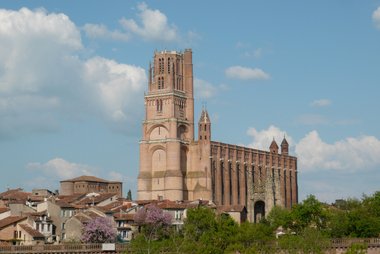
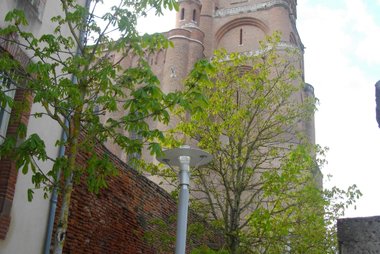
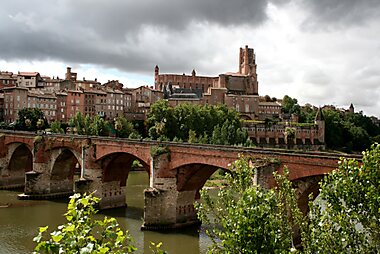
- Albi Cathedral looks like a fortress. Work began in 1282, and it was consecrated in 1480. The tower is 78 m tall, and the inside has painted vaults, a carved stone screen around the choir and a large Last Judgment painting.
- The whole Cité épiscopale d'Albi area is a UNESCO World Heritage Site, listed in 2010. It is a rare, well-kept medieval centre built around the cathedral and the bishops' palace.
- Palais de la Berbie is the former bishops' palace next to the cathedral. It was built mainly in the 13th century, and it looks more like a castle than a home.
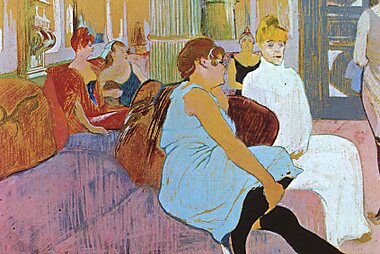
- Musée Toulouse-Lautrec is inside the palace. It holds more than 1,000 works, and it is the largest public collection of work by Toulouse-Lautrec, including his posters.
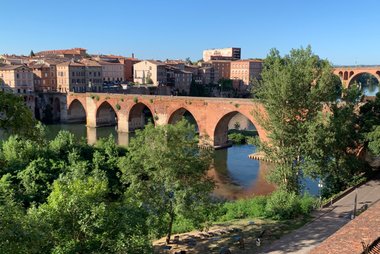
- Pont Vieux crosses the Tarn on eight arches and is about 150 m long. It was first built in the 11th century and later covered in brick. It gives the classic view of the cathedral and the river.
- The church and cloister of Saint-Salvi are a few minutes' walk from the cathedral. The church is the oldest in Albi. The covered market, Marché Couvert, is nearby and opened in 1905.
Featured Lists

Albi Essentials
Albi’s UNESCO-listed Episcopal City is defined by its distinctive red-brick architecture. This collection features the Cathédrale Sainte-Cécile, the world's largest brick building, and the Palais de la Berbie, which houses the extensive Henri de Toulouse-Lautrec collection. Explore the 11th-century Pont Vieux, the Romanesque-Gothic Saint-Salvy collegiate church, and the 16th-century Maison Enjalbert. From the formal gardens of the Berbie to the 19th-century covered market, these sites showcase the medieval heritage and artistic legacy of the Tarn region’s 'Red City.'
13 places

What to experience
Things to do that are special to Albi:
- Saturday market. The covered market is busiest on Saturday, when stalls fill the streets around it.
- Walk the Échappée Verte. This trail follows part of the GR36 and runs from the Tarn riverbanks into the Jarlard woods.
- See the bridges at dusk. From the riverside near the Tarn bridges, the brick cathedral and Pont Vieux glow in the evening light.
Tours & Activities
Albi — Map

 Open the interactive map
Day trips
Albi sits in a quiet countryside of vineyards and old villages. Trips are easiest by car. Some are possible by train or coach.
- Gaillac: about 20 minutes by train. This wine town has made wine for nearly 2,000 years. Visit the old abbey and the wine cellars.
- Cordes-sur-Ciel: about 30 minutes by car. It is a medieval hill town founded in 1222, and it is one of the Most Beautiful Villages of France. A liO coach also runs there a few times a day.
- Castres: about 45 minutes by car, or by liO coach. This town on the Agout river has a museum with Spanish art, including work by Goya.
- Toulouse: about 1 hour by train, with trains almost every hour on weekdays. It is a big city with a lively old centre.
- Rodez: about 1 hour 15 minutes by car. It has a cathedral and a large museum of modern art.
Getting there
- By air: The main gateway is Toulouse-Blagnac Airport (TLS), about 85 km away. Take the tram or an airport shuttle into Toulouse, then a train to Albi. Rodez and Carcassonne airports have fewer flights.
- By train: Regional TER trains from Toulouse take about 1 hour, and run almost every hour on weekdays. Paris takes about 6 hours, with a change in Toulouse. Albi-Ville station is a 15-minute walk from the centre. Book at SNCF Connect.
- By bus: Regional coaches run from the bus station on Place Jean-Jaurès, about 5 minutes from the centre. They serve Castres, Cordes-sur-Ciel and Gaillac. See liO Occitanie.
- By car: The A68 motorway links Albi with Toulouse.
Getting around
- On foot: The old centre is small and flat. You can cross it in under 20 minutes. The cathedral to Pont Vieux is about 10 minutes.
- Public transit: Libéa runs the city buses and short shuttle loops that serve the station and the cathedral area. You will only need them for the station or the edge of town. For details see Albi Tourism.
- Taxi: Taxis wait at the train station.
- Hiking trail: The Échappée Verte, a walking trail, follows the Tarn banks and the Jarlard woods.
Driving
- Is a car worth it? Not for the town. A car helps for Cordes-sur-Ciel, the wine villages and the countryside.
- Parking: Park at a car park on the edge of the centre. It is cheaper than parking near the cathedral. From there, walk or take the bus. Electric car charging points are spread around town.
Food & drink
Albi cooks in the style of southwest France. Look for duck, sausages and slow-cooked bean stews. Wines from nearby Gaillac go well with them.
Good places to eat cluster around Place du Vigan, the covered market and Rue de la Piale. More restaurants stand near the Saint-Salvi cloister. Many close on Sunday, and some on Monday.
Safety & health
Albi is a safe, calm city. Petty theft is uncommon, but keep an eye on bags in busy places.
In July and August it can be very hot, so carry water and plan sightseeing for the morning or evening.
History
Albi gave its name to the Albigensian Crusade, a war against the Cathars that began in 1209. After the crusade the bishops of Albi became powerful, and they built a city that looked like a fortress.
Albi Cathedral was begun in 1282, and Palais de la Berbie next to it was begun in 1228, before the cathedral. The cathedral is built of brick, because good building stone was scarce nearby. Pont Vieux is much older. Its first stone bridge dates from the 11th century.
The region later became rich from woad, a plant used to make blue dye. In 1864 the painter Toulouse-Lautrec was born in Albi. His art is now shown in Musée Toulouse-Lautrec.
Country facts
Quick practical facts for France at a glance:
- Currency
- Euro EUR € · Card payments · Widely accepted
- Emergency numbers
- 112
- Electricity
- 230 V · 50 HzType C / Type E
- Languages
- French
- Tap water
- Safe to drink
- Driving side
- Right
- Calling code
- +33


Albi – Plan Your Days
Turn the places from this guide into a real itinerary, with smart routing, time estimates, and everything you need for a perfect trip.


Related destinations
Data: © OpenStreetMap contributors, Wikidata, Wikipedia, Tripomatic, Official websites. Tours by GetYourGuide. We earn commission from bookings. Travel guide generated with AI.
Plan your trip with Tripomatic
- AI-Powered PlanningGet a ready-made day in one tap, let AI spread your shortlist across your trip, or plan everything by chatting.
- Travel AlertsOfficial advisories, severe weather, strikes, and natural hazards for the places on each day of your trip.
- Public Holidays & EventsSee holidays, festivals, and closures on the days of your trip, and what they mean for your plans.
- Cost EstimationAI-powered trip cost breakdowns so you know what to budget before you go.
- Tours & TicketsBook tours, skip-the-line tickets, and activities directly in your plan.