


Angers
Angers is the historic capital of Anjou, on the Maine river in western France. It is a calm, student-friendly city of about 160,000 people with a dark-stone fortress at its centre. The old town is compact, green and easy to explore on foot.
The city suits a short stay of one or two nights, or a base for the western Loire Valley. It combines a big medieval castle, one of Europe's famous medieval tapestries, good museums and Anjou wines. It is quieter and less crowded than the better-known châteaux towns upriver.

Angers – Planning a Trip?
Build your day-by-day itinerary in the Tripomatic app.


When to visit
Late spring and early autumn are the most pleasant times, with mild weather and long days. July and August are warm and fairly dry. Winter is cool, damp and grey, and some seasonal attractions are closed.
The biggest event is the Accroche-Cœurs street-arts festival, held over a weekend in mid-September. Theatre, music and street performances fill the squares and the Maine riverbanks.
Best time to visit: May, June, July, August, September
Top sights
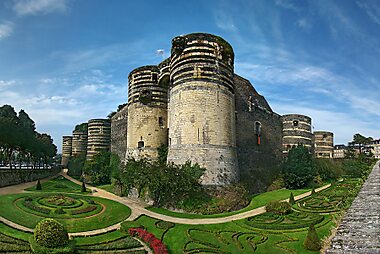


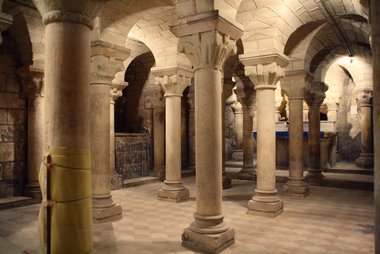
- Château d'Angers is a huge fortress above the Maine with 17 towers, built in the 13th century. Inside is the Apocalypse Tapestry, a very large medieval work made in the 1370s.
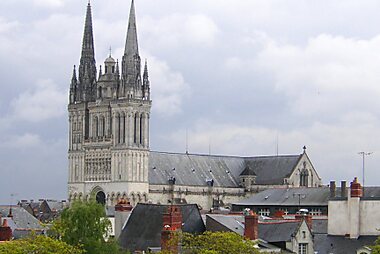
- Cathédrale Saint-Maurice has stood in the old town since the 12th century. It is known for its twin spires and its old stained glass.
- Musée des Beaux-Arts covers local and European art in a historic mansion. It is a good rainy-day stop close to the cathedral.
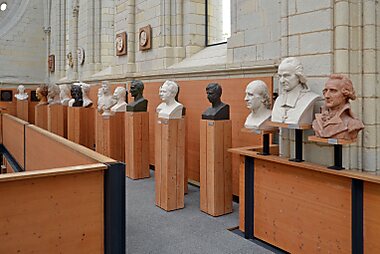
- Galerie David d'Angers shows the large plaster works of David d'Angers, a sculptor born in the city. It is set in a former abbey church.
- The Jean-Lurçat Museum of contemporary tapestry shows modern tapestry in an old hospital. It is a good follow-up to the castle's medieval tapestry.
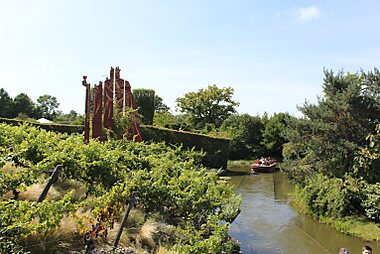
- Terra Botanica is a plant-themed park just outside the centre. It is a good choice for families. It is open seasonally, so check dates before you go.
Featured Lists


What to experience
Angers has a lively calendar and a strong riverside culture.
- Festival d'Anjou: A summer theatre festival held in June in castles and historic courtyards in and around Angers.
- Accroche-Cœurs: A street-arts weekend in September, with free shows across the city centre.
- Cycling along the Maine: Quiet riverside paths run out of the city, and the terrain is flat.
- Lac de Maine: In summer, locals swim, sail and paddle at this lake and leisure park on the western edge of the city.
- Christmas market: In December, the city centre has a Christmas market with lights and stalls.
Tours & Activities
Angers — Map

 Open the interactive map
Day trips
Angers is a good base for the western Loire. Times are one way from Angers.
- Château de Serrant: about 20 minutes by car. A moated château with a large park and richly decorated interiors.
- Savennières: about 20 minutes by car. This village is known for dry white wines from Chenin Blanc grapes. Many estates offer tastings.
- Château de Brissac: about 25 minutes by car, with no direct train. This very tall château stands in a wine area and has a large park.
- Saumur: about 30 minutes by train. A castle overlooks the town, and the area is known for sparkling wine cellars cut into the rock.
- Nantes: about 40 minutes by train. The city has the castle of the Dukes of Brittany and the giant mechanical animals of the Machines of the Isle.
Where to explore
Angers lies at the western end of the Loire Valley. The towns below follow the river east.
Getting there
- By air: Angers-Loire airport is about 20 km from the city but has no scheduled passenger flights. Most travelers fly to Paris (CDG) or Nantes and continue by train. Nantes airport is the closest large one.
- By train: Angers Saint-Laud station has fast TGV trains from Paris. The trip takes about 1 hour 30 minutes. Some TGV trains also run direct to Paris Charles de Gaulle airport. Regional TER trains link Angers with Nantes, Saumur and Tours. Book at SNCF Connect.
- From the station: The old town and castle are about 15 to 20 minutes away on foot. The tram also runs to the centre.
Getting around
- Public transit: The Irigo network runs trams and buses. You can buy tickets in the irigo app, on the online shop, at sales points and at the customer agency in Place de Lorraine. Anyone over 6 needs a valid ticket. See Irigo for lines and fares.
- On foot / cycling: The old town is small and mostly flat, so walking is the best way to see it. Cycling works well along the Maine riverbanks.
Driving
- Is a car worth it? Not for the city itself. A car is useful for the châteaux and wine estates around Angers, which have little public transport.
- Parking: Use paid car parks near the centre or the riverbank rather than street parking. Parts of the old centre are pedestrian only.
Food & drink
Anjou is a wine region. Look for white wines from Chenin Blanc grapes, including dry Savennières and sweet wines from the Layon hills, and also rosé and sparkling Crémant de Loire. Local dishes include rillauds (cooked pork belly) and goat cheese. Quernons d'ardoise are a local sweet made of nougat covered in blue chocolate.
The orange liqueur Cointreau has been made near Angers since the 19th century. Its visitor centre, Carré Cointreau, is on the east side of the city and offers tours.
For eating, try the streets around Place du Ralliement and the Doutre quarter across the river. The covered market, Halles Cœur de Maine, is good for local produce.
Safety & health
Angers is a safe city for visitors. Petty theft is rare but can happen in crowded areas and around the station, so keep bags closed. Tap water is safe to drink, as in the rest of France.
History
Angers was the capital of the counts of Anjou. The counts became kings of England as the Plantagenet dynasty in the 12th century, and the city is called the cradle of that family. Anjou was taken by the French king Philip II in 1204.
Château d'Angers was rebuilt in the 1230s under King Louis IX. In 1373, Louis I of Anjou ordered the Apocalypse Tapestry for it. René of Anjou, a later count and duke, was buried in Cathédrale Saint-Maurice in 1480.
The sculptor David d'Angers, born here in 1788, left many works to his home city. They are now shown in Galerie David d'Angers. Bombing hit the city in 1944 before its liberation in August of that year.
Country facts
Quick practical facts for France at a glance:
- Currency
- Euro EUR € · Card payments · Widely accepted
- Emergency numbers
- 112
- Electricity
- 230 V · 50 HzType C / Type E
- Languages
- French
- Tap water
- Safe to drink
- Driving side
- Right
- Calling code
- +33


Angers – Plan Your Days
Turn the places from this guide into a real itinerary, with smart routing, time estimates, and everything you need for a perfect trip.


Related destinations


Data: © OpenStreetMap contributors, Wikidata, Wikipedia, Tripomatic, Official websites. Tours by GetYourGuide. We earn commission from bookings. Travel guide generated with AI.
Plan your trip with Tripomatic
- AI-Powered PlanningGet a ready-made day in one tap, let AI spread your shortlist across your trip, or plan everything by chatting.
- Travel AlertsOfficial advisories, severe weather, strikes, and natural hazards for the places on each day of your trip.
- Public Holidays & EventsSee holidays, festivals, and closures on the days of your trip, and what they mean for your plans.
- Cost EstimationAI-powered trip cost breakdowns so you know what to budget before you go.
- Tours & TicketsBook tours, skip-the-line tickets, and activities directly in your plan.