



South Bohemian Region
South Bohemia is Czech lake-and-castle country: gently rolling hills, pine forests, and a chain of medieval fishponds spread beneath the wild peaks of the Bohemian Forest along the Austrian border. Two of the country's best-known towns anchor the region — the regional capital České Budějovice and the UNESCO-listed old town of Český Krumlov — but its real character shows in the dozens of smaller towns, moated chateaux, and quiet nature reserves between them.
The region suits travelers who want to slow down: a night or two in a historic town, some castle-hopping by car, and a day outdoors on a lake or forest trail. Much of what you see today was shaped by the Rožmberk family, medieval lords who built castles and the fishponds that still surround Třeboň. The military leader Jan Žižka founded Tábor in 1420 as a fortress town for his radical Hussite followers.

South Bohemian Region – Planning a Trip?
Build your day-by-day itinerary in the Tripomatic app.


When to visit
Spring and autumn are mild, with fewer crowds than summer. Summer is warm and the best season for the lakes and forest trails around Lipno and the Bohemian Forest, though it is also the busiest time in Český Krumlov. Winters are cold, with reliable snow in the higher Bohemian Forest.
Plan around mid-September for the Tábor Meetings festival in Tábor, when the old town fills with historical reenactors, market stalls, and music honoring the town's Hussite founder, Jan Žižka.
Best time to visit: August
July and August bring the warmest, sunniest days, but pack a light layer for evenings by the lakes.
Top sights
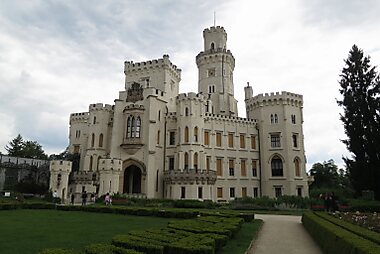
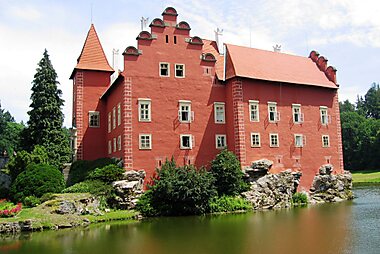
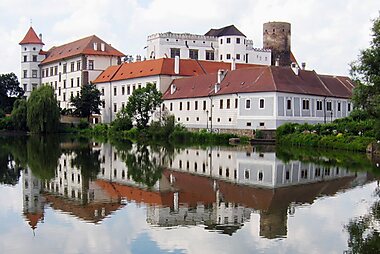
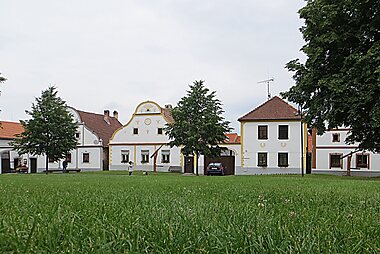
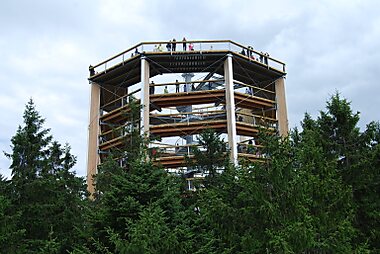
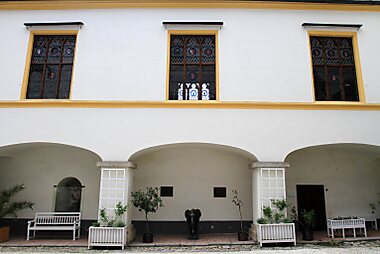

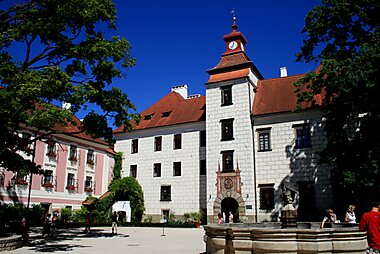
South Bohemia's castles and chateaux are spread across the countryside outside its two famous towns — plan on a car or a few train rides to link them.
Hluboká Castle is a fairytale-white neo-Gothic château modeled on England's Windsor Castle, with wide lawns and a large art collection inside.
Červená Lhota Chateau is a small Renaissance chateau painted deep red and set on an island in a fishpond, one of the most photographed buildings in the country.
Jindřichův Hradec Castle is the country's third-largest castle complex, built up over centuries by the noble families who ruled the region.
Rožmberk Castle perches above the Vltava river gorge near the Austrian border, the original seat of the Rožmberk family before they moved their court to Český Krumlov.
Zlatá Koruna Monastery is a former Cistercian monastery on a bend of the Vltava, with a Gothic cloister and a museum of regional folk art.
Třeboň Chateau anchors the spa town of Třeboň, ringed by the fishponds that have supplied the region's carp since the Middle Ages.
Holašovice is a UNESCO-listed village of restored South Bohemian farmhouses, their gabled facades decorated in a distinctive folk-Baroque style.
Lipno Treetop Walk is a treetop walkway above the Lipno lake shore, ending in a long slide down — a popular family stop on the edge of the Bohemian Forest.
Featured Lists


Historic Religious Sites
This collection features 14 significant religious landmarks in South Bohemia, including Gothic churches, Roman Catholic cathedrals, historic chapels, noble family tombs, and a synagogue built in the early 20th century. These sites represent diverse architectural styles and the region's rich spiritual and cultural history.
15 places
Authentic Czech Flavors
This selection features six traditional restaurants in South Bohemia, each offering authentic Czech regional cuisine. Visitors can find establishments with outdoor seating, wi-fi access, and facilities such as wheelchair accessibility. These venues highlight the culinary heritage of the region through their menus and atmospheres.
6 places


Top Viewpoints & Towers
Discover a diverse collection of observation towers and elevated viewpoints across the South Bohemian and Bavarian Forest regions. This list features historic towers like the 16th-century Black Tower in České Budějovice, innovative wooden treetop walkways, and scenic forest peaks, each offering unique perspectives on the surrounding landscapes and cultural heritage.
15 placesWhat to experience
South Bohemia's fishponds and forests shape its outdoor rituals as much as its castles do.
- Watch a výlov, the traditional draining and harvest of a fishpond, when nets full of carp are hauled out to crowds of onlookers — most ponds around Třeboň do this each autumn.
- Paddle a canoe or raft down a calm stretch of the Vltava between riverside towns, a popular multi-day summer trip.
- Cycle the flat trail that circles Lipno nad Vltavou's lake, or a longer stretch of the river-following Vltava cycle route.
- Hike into the Bohemian Forest toward the glacial lakes of Černé jezero and Čertovo jezero, or through the Boubín primeval forest, one of the oldest protected forest reserves in Central Europe.
Tours & Activities
South Bohemian Region — Map

Day trips
South Bohemia's own towns and countryside fill most itineraries on their own, but three destinations just beyond its borders are worth the trip:
- Telč — about 45 minutes by car from Jindřichův Hradec, a small UNESCO town in the neighboring Vysočina region, built around a single long square of pastel Renaissance houses.
- Linz, Austria — about 1 to 1.5 hours by car or bus from Český Krumlov, a Danube river city with a modern art museum and an old town of its own.
- Plzeň — about 1.5 to 2 hours by car or train from the region's western towns, home to the original Pilsner Urquell brewery and its underground cellars.
Where to explore
South Bohemia's two most-visited towns each deserve their own stay. České Budějovice is the region's compact, low-key capital, best known as the birthplace of Budweiser beer. Český Krumlov is the region's UNESCO showpiece, its old town wrapped around a bend of the Vltava beneath a hilltop castle.
East of them, Třeboň is a Renaissance spa town set among centuries-old fishponds, and Tábor grew from a fortified Hussite camp into a maze of narrow medieval streets. Further east, Jindřichův Hradec centers on the country's third-largest castle.
To the west, Písek has the country's oldest standing stone bridge and a compact riverside old town. To the south, Prachatice is a well-preserved old salt-trading town at the edge of the Bohemian Forest, and Lipno nad Vltavou sits on the shore of the region's largest lake, popular for swimming, sailing, and winter skiing.
Hluboká nad Vltavou and Vyšší Brod make easy add-ons for their castle and riverside monastery, both a short drive from České Budějovice and Český Krumlov.
Getting there
- By air: The region has no airport with scheduled passenger service. Most travelers fly into Prague (PRG) and continue by train or bus, about 2 to 2.5 hours to České Budějovice. Linz Airport in Austria is a useful alternative in the south, about 1.5 hours by car to Český Krumlov; Vienna (VIE) works too but takes 3 to 4 hours overland.
- By train: Direct trains connect Prague with České Budějovice in about 2 to 2.5 hours, with regional connections onward to Český Krumlov, Tábor, and Písek.
- By bus: Long-distance coaches link Prague with the region's main towns; coaches from Linz and Vienna also reach Český Krumlov and České Budějovice, though the train is often faster from Vienna.
Getting around
- Public transit: Each town runs its own local buses, and the region-wide IDS JK network ties together buses and trains across South Bohemia. Buy tickets from the driver, at machines, or through the IDS JK app. IDS JK
- Taxi / ride-hailing: Bolt and Uber operate in České Budějovice; smaller towns rely on local taxi companies.
- On foot / cycling: Town centers are compact and walkable, but the region is large, so seeing more than one in a day means driving. Cycling is excellent around Lipno nad Vltavou, where a lakeside trail circles the whole reservoir.
Driving
- Is a car worth it?: Yes — a car is the easiest way to link the region's castles, villages, and lakes, since buses and trains between smaller towns run infrequently.
- Parking: Historic centers such as České Budějovice, Český Krumlov, and Tábor have paid parking just outside the pedestrian core; pay by app or at a machine.
- Restrictions: Český Krumlov's old town is largely closed to non-resident traffic — park in one of the car parks at its edge and walk in.
Food & drink
Freshwater fish define South Bohemian cooking, especially carp raised in the region's centuries-old ponds — fried carp is the traditional Czech Christmas Eve dish nationwide, and this region is where most of it comes from. In autumn and winter, look for fish soup, smoked fish, and trout from the cold streams of the Bohemian Forest. Forest mushrooms and game also show up on menus near the forest.
Skip individual restaurant recommendations and follow the fish instead — small towns around Třeboň and along the Lipno lake shore have fish restaurants built right beside the ponds where the carp is raised.
Safety & health
South Bohemia is very safe for travelers, including in the evening in its town centers. The most common issue is pickpocketing in the crowded lanes of Český Krumlov in peak summer season — keep bags zipped there and around busy squares elsewhere.
Tap water is safe to drink throughout the region. If hiking in the Bohemian Forest, stick to marked trails: weather can change quickly at higher elevations, and phone signal is patchy in the deeper forest.
History
Much of the region's landscape was shaped in the 14th to 16th centuries by the Rožmberk family, South Bohemia's most powerful noble dynasty. They built Rožmberk Castle as their original seat before shifting their court to Český Krumlov, and their fishpond engineer Jakub Krčín dug the artificial lakes around Třeboň that still supply the region's carp today.
Religious conflict shaped the region too. In 1420, the military leader Jan Žižka founded Tábor as a fortified camp for radical Hussites, naming it after the biblical Mount Tabor; its warren of narrow, deliberately confusing streets was designed to slow down attackers.
The Cistercian monks at Zlatá Koruna Monastery, founded in the 13th century, once held some of the richest land in Bohemia before the monastery was dissolved in the 18th century.
Country facts
Quick practical facts for the Czech Republic at a glance:
- Currency
- Czech Koruna CZK Kč · Card payments · Commonly accepted
- Emergency numbers
- 112
- Electricity
- 230 V · 50 HzType C / Type E
- Languages
- Czech
- Tap water
- Safe to drink
- Driving side
- Right
- Calling code
- +420
South Bohemian Region – Plan Your Trip
Pick the places you want to see and Tripomatic turns them into a day-by-day route, with smart routing, time estimates, and everything you need for a perfect trip.




