


Faial Island
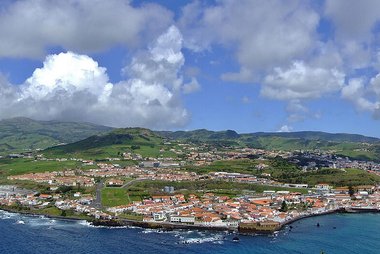
Faial is a small volcanic island in the central Azores. It is called the Blue Island because hydrangeas flower across the island in summer. Most of the island is quiet farmland and green hills, with a large crater in the middle.
Most visitors stay in Horta, the main town. Its marina is a famous stop for sailors crossing the Atlantic. The west coast has bare volcanic land that was formed by an eruption in 1957 and 1958. Faial suits hikers, whale watchers and anyone who likes boats and sea stories. Two to four days is enough, and many people combine it with nearby Pico.

Faial Island – Planning a Trip?
Build your day-by-day itinerary in the Tripomatic app.


When to visit
Summer is the warmest and driest season. The sea is warm enough for swimming from July to October, and hydrangeas flower in summer. Winters are mild but wet and windy, and boat trips are less frequent. Whale watching has its widest variety of species in spring. Sperm whales and dolphins are present in summer.
The biggest event is Semana do Mar, the Sea Week in Horta. It is held around the start of August, with sailing events, concerts and fireworks. Book rooms early if you plan to come then.
Best time to visit: June, July, August, September
Top sights

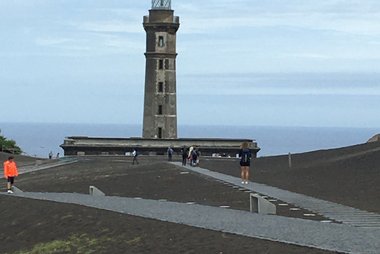
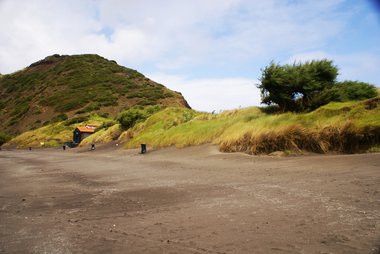
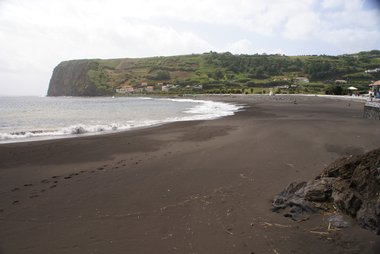
- Capelinhos Volcano is the island's most famous sight. The 1957–58 eruption added new land to the coast, and the ash left a bare landscape.
- The old lighthouse, Capelinhos Lighthouse, stands beside the volcano. The land around it was buried in ash during the eruption.
- Capelinhos Interpretation Centre is built mostly underground. It explains the eruption and volcanoes of the Azores, and it honours the people who lived through it.
- Caldeira do Faial is the large crater in the middle of the island. It is about 2 km wide and 400 m deep. The viewpoint on the rim is the easiest way to see it.
- Cabeço Gordo Viewpoint is on the crater rim, near the island's highest point. Clouds can cover it, so go on a clear day.
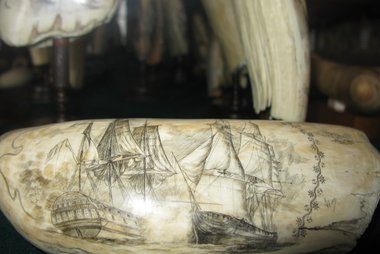
- Peter Café Sport is a café-bar on Horta's waterfront. It opened in 1901 and took the name Café Sport in 1918. Sailors from many countries have met here for generations. The small scrimshaw museum is above the café.
- Horta Museum has an exhibition on the Capelinhos eruption. It also has miniature models by Euclides Rosa.
- Monte da Guia is a volcanic hill beside Horta. A viewpoint here looks over the town and the bay of Porto Pim.
- Porto Pim Beach is a sandy beach in a bay next to Horta.
Featured Lists

Sacred Sites of Faith
This collection groups twenty religious sites across Faial Island, including parish churches, small mountain hermitages (ermidas) and local Holy Spirit ceremonial buildings. Entries note parish location (Horta, Capelo, Cedros, Feteira, Pedro Miguel, Flamengos, Praia do Norte), architectural type and—where recorded—historic or community functions tied to local religious traditions.
20 places
Parks and Gardens
This collection maps 19 green spaces across Faial Island, from the 8,000 m² Faial Botanical Garden and its Pedro Miguel nucleus to small municipal gardens in Horta and purpose-built forest parks in Capelo and Chão Frio. Entries include formal botanical collections, planted civic gardens, designated picnic areas with covered shelters and accessible facilities, and developing woodland parks used for leisure and local conservation.
19 places
What to experience
- Look at the marina murals. Visiting crews leave a painting of their boat on the quay walls, and sailors say it is bad luck to leave Horta without one. Visitors can look at the older paintings.
- Go whale watching from Horta. Spring brings blue and fin whales, and summer brings sperm whales and dolphins. Boats must keep at least 50 m from the animals, and swimming with whales is not allowed. Old lookout huts on the coast were used by whalers, and operators still use lookouts to find the animals.
- Visit the scrimshaw museum above Peter Café Sport. It shows portraits carved on whale teeth.
- Take part in Semana do Mar in early August. The week grew from a regatta between Portsmouth and Horta in 1975. It has boat races, a book fair, music and fireworks.
- Watch a Holy Spirit festival. These local celebrations are held in many parishes from Easter into late summer, with processions and shared meals.
Tours & Activities
Faial Island — Map

 Open the interactive map
Day trips
Faial is small, so the best day trip is by sea to the next island.
- Pico: the ferry from Horta to Madalena takes about 30 minutes. Pico has a huge volcanic mountain that you can see from Faial. Winter sailings are fewer and can be cancelled in rough weather, so check the timetable.
Where to explore
Faial belongs to the central group of the Azores. Other islands to explore:
- Nearest: Pico is across the channel, and São Jorge is a long, narrow island to the east.
- Central group: Terceira and Graciosa.
- Farther east: São Miguel, the largest island, and Santa Maria.
- Far west: Flores and Corvo.
The whole archipelago is covered in the Azores guide.
Getting there
- By air: Horta Airport (HOR) is about 9.5 km from Horta. Azores Airlines flies here from Lisbon. SATA Air Açores flies between Faial and other Azores islands, including São Miguel and Terceira.
- By sea: the ferry from Madalena on Pico takes about 30 minutes. Atlânticoline runs it, and tickets can be bought at the port. Check the Atlânticoline timetable for other islands.
- By yacht: Horta marina is a major stop for boats crossing the Atlantic.
Getting around
- Horta is compact, and the waterfront, the marina and Porto Pim can be reached on foot.
- Buses are run by Farias. They serve Horta and some island routes, so check the timetable before you rely on them.
- A rental car is the easiest way to reach Capelinhos, the crater and the villages. Car hire is available at the airport and in Horta.
Driving
- Is a car worth it? Yes, if you want to see more than Horta. Capelinhos and the crater are far from town, so a car saves a lot of time.
- Roads: clouds and fog can cover the high ground near the crater, so allow extra time.
Food & drink
The island's food comes from the sea and the farm. Look for limpets, either grilled or in rice, and fish stew. Octopus stewed in wine and sausage with yams are other local dishes. Faial sweets include fofas, light pastries with cream. Local cheeses include Ilha Azul and Capelinhos.
Most restaurants are in Horta, around the marina and in the town centre. For a drink with history, try Peter Café Sport. Gin and tonic is its most popular drink.
Safety & health
Faial is a quiet and calm island. Use normal care with valuables, and lock your rental car at viewpoints and beaches.
The weather changes fast. Fog and rain can come in quickly on the high ground. If you walk around the crater, wear good shoes and take a waterproof jacket, a hat, sunscreen and water. The path down from the crater viewpoint is steep. Tap water is safe to drink.
History
- The first settlers arrived in the 1460s, and the town of Horta grew around the harbour.
- From the late 1800s Horta was a base for undersea telegraph cables. The first cable to Lisbon was laid in 1893, and cable stations worked here until 1969.
- Horta became a stop for Pan Am flying boats that crossed the Atlantic after 1939. The harbour and the marina still link the island to the ocean.
- Whaling was an important trade in the Azores until it ended in 1984. Scrimshaw is a craft from that time, and the museum above Peter Café Sport shows it.
- In 1957 the sea off the west coast began to erupt, and the island grew by about 2.4 km². Many people left Faial for North America. The story is told at Capelinhos Interpretation Centre and Horta Museum.
Country facts
Quick practical facts for Portugal at a glance:
- Currency
- Euro EUR € · Card payments · Widely accepted
- Emergency numbers
- 112
- Electricity
- 230 V · 50 HzType C / Type F
- Languages
- Portuguese
- Tap water
- Safe to drink
- Driving side
- Right
- Calling code
- +351
Faial Island – Plan Your Days
Turn the places from this guide into a real itinerary, with smart routing, time estimates, and everything you need for a perfect trip.


Related destinations


Data: © OpenStreetMap contributors, Wikidata, Wikipedia, Tripomatic, Official websites. Tours by GetYourGuide. We earn commission from bookings. Travel guide generated with AI.
Plan your trip with Tripomatic
- AI-Powered PlanningGet a ready-made day in one tap, let AI spread your shortlist across your trip, or plan everything by chatting.
- Travel AlertsOfficial advisories, severe weather, strikes, and natural hazards for the places on each day of your trip.
- Public Holidays & EventsSee holidays, festivals, and closures on the days of your trip, and what they mean for your plans.
- Cost EstimationAI-powered trip cost breakdowns so you know what to budget before you go.
- Tours & TicketsBook tours, skip-the-line tickets, and activities directly in your plan.