


Fussen
Füssen is a small town on the Lech river, close to the Austrian border. It lies at the foot of the Alps and is the southern end of the Romantic Road.
The old town is compact and easy to walk. A medieval castle and a Baroque abbey stand above the river. Most visitors come for Neuschwanstein and Hohenschwangau, a few kilometres away. The town is a good base for several nights, with lakes and mountain walks close by.

Fussen – Planning a Trip?
Build your day-by-day itinerary in the Tripomatic app.


When to visit
Summer is the warmest season and the busiest at the castles. It is also the wettest, so bring a rain jacket. Spring and autumn are quieter. Snow is common from late autumn to early spring.
The Forggensee is drained after mid-October, so the lake looks different in winter. The Advent market in December is the main seasonal event in town.
Top sights

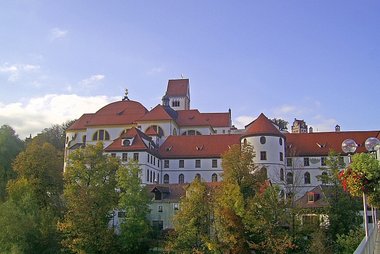
- Basilika St. Mang is the former abbey church below the castle. The crypt has a fresco from about 980.
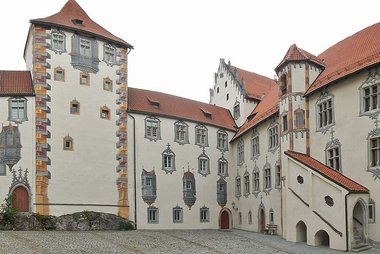
- Staatsgalerie im Hohen Schloss fills the Hohes Schloss above the old town. It shows late Gothic paintings and sculpture. The castle also has illusionistic paintings and a tower you can climb.
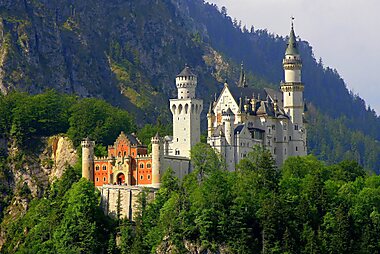
- Neuschwanstein Castle was started by Ludwig II in 1869. You can enter only on a guided tour with a fixed time. The Marienbrücke over the Pöllat Gorge gives the classic view and can close in winter weather. Official castle information
- Hohenschwangau Castle was built by Maximilian II in the 1830s. His son Ludwig II spent much of his childhood here. This castle also needs a guided tour.
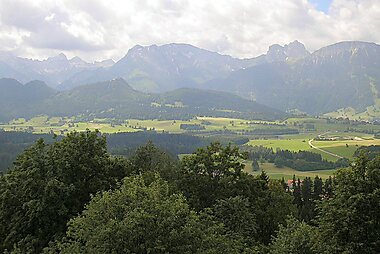
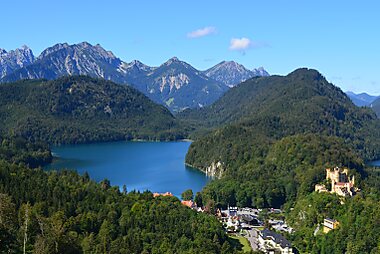
- Forggensee is a large reservoir north of town. It has views of the Alps and the castles.
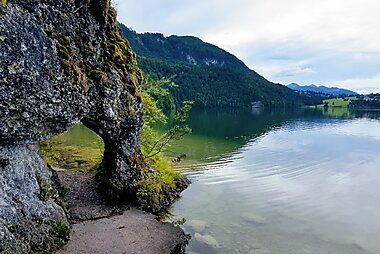
- Weißensee is a small lake west of Füssen with mountain views.
- Ruine Falkenstein is a castle ruin on a rock above Pfronten, west of Füssen.
- The Lechfall is a waterfall on the Lech, just south of the old town.
Featured Lists

What to experience
- Take a boat trip on the Forggensee in summer.
- Ride the Tegelbergbahn cable car for views of the castles and the lake.
- Visit the Advent market in December.
- Relax at the Königliche Kristall-Therme in Schwangau after a day of walking.
Tours & Activities
Fussen — Map

 Open the interactive map
Day trips
- Reutte in Tyrol, Austria, is just across the border. The Highline179 footbridge and the Ehrenberg castle ruins are nearby. Go by bus or car.
- The Wieskirche near Steingaden is a Rococo pilgrimage church and a UNESCO World Heritage site. Go by car or bus.
- Linderhof Palace is a small palace of Ludwig II near Ettal, with gardens and a grotto. A car is the easiest way to reach it.
Where to explore
More places in the region:
- Allgäu is the wider region of hills, lakes and dairy farms.
- Kempten is a city in the Allgäu with Roman roots.
- Garmisch-Partenkirchen is an Alpine town below the Zugspitze.
Getting there
- By air: Munich Airport (MUC) is the main gateway. Continue to Füssen by train or car.
- By train: Füssen is the end of the line, and the station is in the town centre. Travel from Munich or Augsburg by regional train. Deutsche Bahn
- By bus: Long-distance coaches run from Munich to Füssen.
Getting around
- On foot: The walk from Hohenschwangau up to Neuschwanstein is uphill.
- Public transit: A regional bus links Füssen with Hohenschwangau. Füssen tourist information
Driving
- A car is not needed for the town or the castles. It helps for Linderhof and the Wieskirche.
- At Hohenschwangau, use the car parks P1 to P4.
Food & drink
Allgäu cheese dishes such as Kässpatzen, a baked cheese noodle dish, are the local speciality. Eat in the old town, where cafés and restaurants line Reichenstraße.
Safety & health
- Mountain weather changes quickly. Take a rain jacket on walks and check the forecast before you ride a cable car.
History
- Füssen began as a Roman settlement on the Via Claudia Augusta, a road from northern Italy to Augsburg. Its name probably comes from the Latin word for gorge.
- Magnus, called Mang, was a monk from St. Gall. He is the town's patron saint. A Benedictine abbey grew up around his church, and it now stands as Basilika St. Mang.
- The bishops of Augsburg ruled the town. The bishops built the Hohes Schloss from 1291 and extended it between 1489 and 1504. It now houses Staatsgalerie im Hohen Schloss.
- The Treaty of Füssen in 1745 ended Bavaria's part in the War of the Austrian Succession.
- Füssen has long been known for violin making.
Country facts
Quick practical facts for Germany at a glance:
- Currency
- Euro EUR € · Card payments · Commonly accepted
- Emergency numbers
- 112 Ambulance · Fire brigade
- Electricity
- 230 V · 50 HzType C / Type F
- Languages
- German
- Tap water
- Safe to drink
- Driving side
- Right
- Calling code
- +49


Fussen – Plan Your Days
Turn the places from this guide into a real itinerary, with smart routing, time estimates, and everything you need for a perfect trip.


Related destinations

Data: © OpenStreetMap contributors, Wikidata, Wikipedia, Tripomatic, Official websites. Tours by GetYourGuide. We earn commission from bookings. Travel guide generated with AI.
Plan your trip with Tripomatic
- AI-Powered PlanningGet a ready-made day in one tap, let AI spread your shortlist across your trip, or plan everything by chatting.
- Travel AlertsOfficial advisories, severe weather, strikes, and natural hazards for the places on each day of your trip.
- Public Holidays & EventsSee holidays, festivals, and closures on the days of your trip, and what they mean for your plans.
- Cost EstimationAI-powered trip cost breakdowns so you know what to budget before you go.
- Tours & TicketsBook tours, skip-the-line tickets, and activities directly in your plan.