


Le Havre
Le Havre is a large port city on the Normandy coast, at the mouth of the Seine. Most of the centre was destroyed in 1944 and rebuilt in concrete by the architect Auguste Perret. The rebuilt centre is a UNESCO World Heritage Site. The city suits visitors who like modern architecture, art and sea air more than old half-timbered streets.
It works well for a short stay of one or two nights. The sights are close together, the beach is in town, and the cliffs of Étretat and the harbour town of Honfleur are an easy trip away. Le Havre is also where Claude Monet painted the picture that gave Impressionism its name.
Download this guide as a PDFPrintable tourist mapPublic holidays in France

Le Havre – Planning a Trip?
Build your day-by-day itinerary in the Tripomatic app.


When to visit
Late spring to early autumn is the best time. Summers are mild, not hot, and the sea wind is constant, so bring a light jacket in any season. Winters are cool, grey and wet, and many days bring rain. Museums and the covered sights are still a good choice then.
Un Été au Havre is a summer programme of art installations across the city and is a highlight of the local events calendar. Check the dates with the tourist office before you book.
Best time to visit: July, August
Top sights
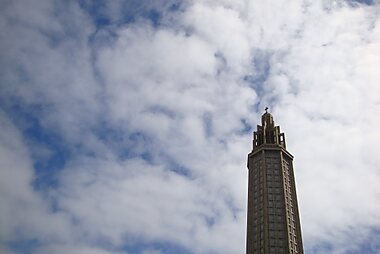
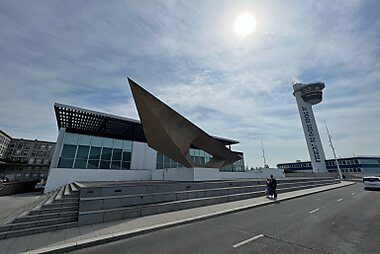
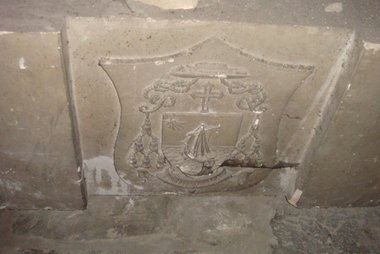


- Église Saint-Joseph is Perret's concrete church. Its tower is about 107 m high and is a landmark across the city. Go inside on a sunny day, when light fills the tower through coloured glass.
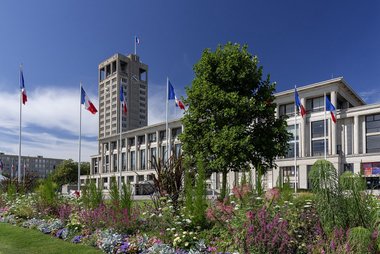
- Hôtel de Ville is another building that Perret designed himself. It stands in a large square with gardens, and its tower is about 70 m high.
- Musée d'Art Moderne André Malraux is the city's art museum, in a glass and steel building by the harbour. Its collection of Impressionist paintings is among the largest in France, with many views of the Normandy coast.
- Cathédrale Notre-Dame is older than the rebuilt city. Its first stone was laid in 1536, and it was damaged but not destroyed in 1944.
- Bibliothèque Oscar Niemeyer is a library in a white building by Oscar Niemeyer. It is part of his Volcano cultural complex.
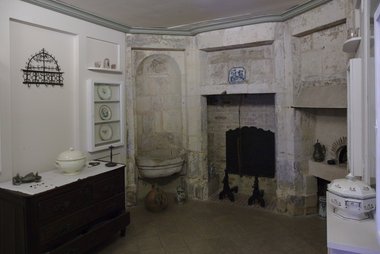
- Maison de l'Armateur is a late 18th-century shipowner's house that survived the war. It shows how rich port families lived.
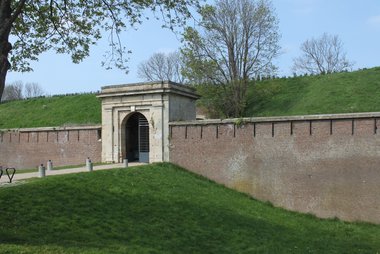
- Les Jardins Suspendus are terraced gardens inside an old fort on the hill above the sea. They give wide views over the harbour and the estuary.
- Le Havre Beach is the city beach. It is a pebble beach with a long promenade, good for a walk at any time of year.
Featured Lists


What to experience
- Visit the Perret show apartment, a flat furnished as in the 1950s. It shows what daily life was like in the rebuilt city.
- Walk the seafront promenade at sunset, when ships pass the harbour mouth.
- Ride the funicular to the upper town for views over the port and the roofs of the centre.
- Take the boat to Deauville and Trouville-sur-Mer in season.
- Follow the summer art trail of Un Été au Havre, which places artworks across the city and along the port.
Tours & Activities
Le Havre — Map

 Open the interactive map
Day trips
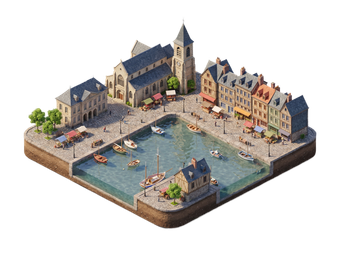
- Honfleur: about 30 minutes by car across the Pont de Normandie. It is a small harbour town with narrow houses around the old port. The wooden church of Sainte-Catherine is the largest wooden church in France. A car is the easiest way to go.
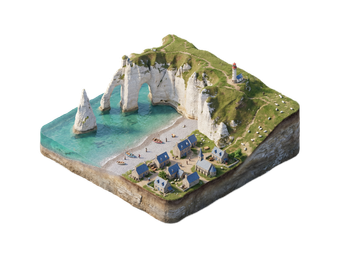
- Etretat: about 32 km from Le Havre, roughly 40 minutes by car. White chalk cliffs, natural arches and the 70 m rock needle make this one of the best coastal walks in Normandy. Painters including Monet worked here. A car is the easiest way to go.
- Deauville: about 40 minutes by car. It is a seaside resort with a wide beach and a boardwalk. In season a boat also runs from Le Havre to Deauville and Trouville-sur-Mer.
- Rouen: about 1 hour by train. The city has a famous Gothic cathedral and a large old town, and suits a full day.
Getting there
- By air: There is no major international airport at Le Havre. Most visitors fly to Paris, then take a train from Paris Saint-Lazare station.
- By train: Direct trains from Paris Saint-Lazare take about 2 hours and stop at Rouen. Le Havre station is the end of the line. The tram stops outside the station. Book at SNCF Connect.
- By car: Paris is about 2 hours away by motorway. The Pont de Normandie links Le Havre with Honfleur and Deauville on the other side of the Seine.
Getting around
- On foot: The rebuilt centre, the port-side museums and the beach are all within a 20-minute walk of each other.
- Tram: Two lines, A and B, share the central route from the beach to the station and then split. Buy tickets at the machine at each stop, or from the bus driver. Validate your ticket when you board. A 1-hour ticket, a 10-trip pack and a day ticket are sold. More information: LiA transport network.
- Funicular: A historic funicular, open since 1890, climbs from the town centre to the hill above. It is part of the city transport network.
- Cycling: The seafront promenade is flat and good for cycling. The upper town is hilly.
Driving
- Is a car worth it?: Not for the city itself. The tram and your feet cover the centre. A car is useful for Étretat and the Normandy coast.
- Parking: Use the car parks near the centre or the town hall, as street parking is limited.
- Bridge: The Pont de Normandie is a toll bridge.
Food & drink
Le Havre is a good place for fish and shellfish: mussels, shrimp, sole and oysters from the Normandy coast. Local dairy products such as cream, butter and Camembert appear on many menus. Apple cider and pommeau, an apple drink, are the regional drinks.
For eating, go to the streets of the Saint-François quarter, the old fishermen's area near the harbour, and to the restaurants along the seafront. Fish restaurants fill up at weekends in summer, so book ahead.
Safety & health
Le Havre is safe for visitors. It is a large port city, so use normal city care. Keep bags closed in crowded places and on the tram, and do not leave items visible in a parked car. The area around the port and some outer districts are quiet at night, so take a taxi or the tram in the evening.
The sea is cold and the beach is pebbles. Check the tide and the wind before you swim, and follow the flags on the beach.
History
King François I founded Le Havre in 1517 as a new port on the Seine estuary. Ships sailed from here across the Atlantic for centuries, and the port grew into the largest container port in France. The late 18th-century house at Maison de l'Armateur shows the wealth that trade brought.
In 1872 Claude Monet painted a view of the harbour at sunrise. The title, Impression, Sunrise, gave Impressionism its name. The art at Musée d'Art Moderne André Malraux is closely tied to this coast.
In September 1944 bombing destroyed much of the city centre. Auguste Perret rebuilt it in precast concrete on a modular grid, and the work lasted into the 1960s. Église Saint-Joseph and Hôtel de Ville are his best-known buildings here. UNESCO listed the rebuilt centre in 2005 as an example of modern city planning.
Country facts
Quick practical facts for France at a glance:
- Currency
- Euro EUR € · Card payments · Widely accepted
- Emergency numbers
- 112
- Electricity
- 230 V · 50 HzType C / Type E
- Languages
- French
- Tap water
- Safe to drink
- Driving side
- Right
- Calling code
- +33


Le Havre – Plan Your Days
Turn the places from this guide into a real itinerary, with smart routing, time estimates, and everything you need for a perfect trip.


Related destinations
Data: © OpenStreetMap contributors, Wikidata, Wikipedia, Tripomatic, Official websites. Tours by GetYourGuide. We earn commission from bookings. Travel guide generated with AI.
Plan your trip with Tripomatic
- AI-Powered PlanningGet a ready-made day in one tap, let AI spread your shortlist across your trip, or plan everything by chatting.
- Travel AlertsOfficial advisories, severe weather, strikes, and natural hazards for the places on each day of your trip.
- Public Holidays & EventsSee holidays, festivals, and closures on the days of your trip, and what they mean for your plans.
- Cost EstimationAI-powered trip cost breakdowns so you know what to budget before you go.
- Tours & TicketsBook tours, skip-the-line tickets, and activities directly in your plan.