


Rouen
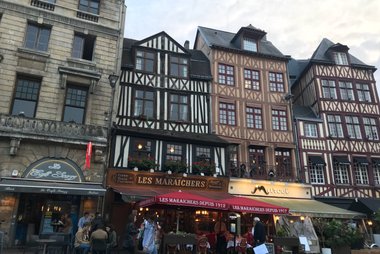
Rouen is the historic capital of Normandy, on the Seine northwest of Paris. It has a large Gothic cathedral and narrow streets lined with half-timbered houses. Many of its churches and old houses were rebuilt after World War II bombing, and they still define the old centre.
Rouen is best known as the city where Joan of Arc was tried and burned in 1431. It is also the city of Claude Monet's cathedral paintings and the home town of the writers Gustave Flaubert and Pierre Corneille. It suits a weekend of 1 to 2 nights, and it works well as a base for the Seine valley and the Normandy coast.
Download this guide as a PDFPrintable tourist mapPublic holidays in France

Rouen – Planning a Trip?
Build your day-by-day itinerary in the Tripomatic app.


When to visit
Late spring and summer are the most pleasant seasons, with mild days and long evenings. Rain is frequent all year, so bring a light waterproof jacket. Winter is grey and cool, but the Christmas market and low crowds suit a short city break.
The biggest event is the Armada, a gathering of tall ships along the Seine quays. It takes place every few years, usually in June. Book hotels well ahead if your dates match.
Best time to visit: June, July, August, September
Top sights
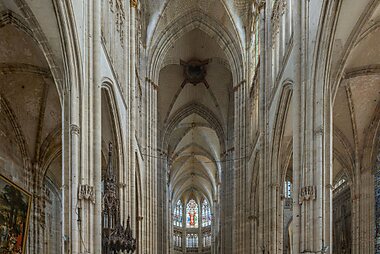
- Cathédrale Notre-Dame de Rouen is the city's great Gothic landmark. Its tall spire is the highest in France, and the west front is the subject of Monet's famous series of paintings.
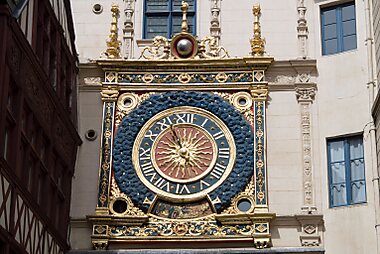
- Gros-Horloge is a 14th-century clock set in a Renaissance arch over the main pedestrian street. You can climb the belfry for views over the old town.
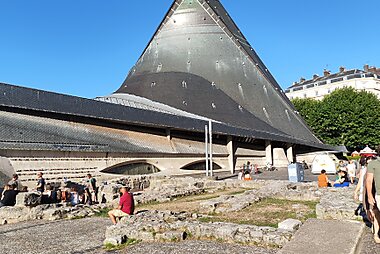
- Place du Vieux Marché is the square where Joan of Arc was burned in 1431. Today it has a modern church, a market hall and cafés.
- Église Sainte-Jeanne-d'Arc is a modern church on the same square. It reuses fine stained-glass windows from a church destroyed in 1944.
- Abbatiale Saint-Ouen is a large Gothic abbey church. It is quieter than the cathedral and has a bright, airy interior.
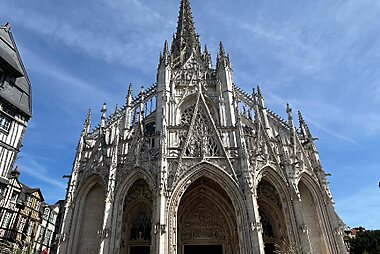
- Église Saint-Maclou is a late Gothic church with a richly carved west front. It stands in a lively area of old streets.
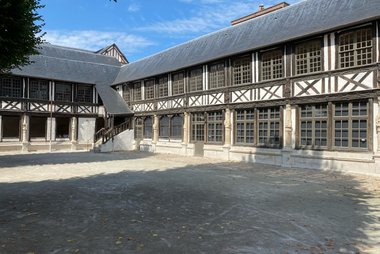
- Aître Saint-Maclou is a courtyard with carved half-timbered galleries. It was built in the 16th century as a plague cemetery.
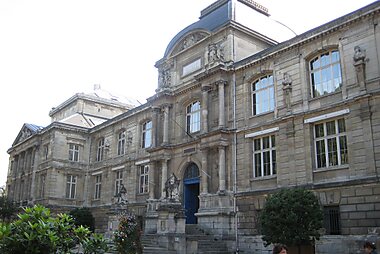
- Musée des Beaux-Arts is the city's main art museum. It shows European paintings from the Renaissance to the 20th century, including works by Monet.
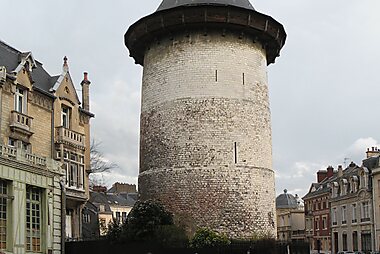
- Tour Jeanne d'Arc is the surviving keep of a medieval castle. Joan of Arc was brought here in 1431 and shown the instruments of torture.
Featured Lists


Rouen's Historical Heritage
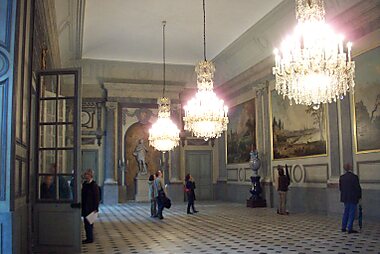
Rouen's historical landscape is defined by medieval architecture and significant religious monuments. This collection features the Flamboyant Gothic Church of Saint-Maclou and the Tour Jeanne d'Arc, the last remains of the 13th-century Rouen Castle. The list highlights the city's preserved timber-framed houses, historic private mansions like Hôtel de Senneville, and repurposed sites such as the Chapelle Saint-Louis theater. These landmarks illustrate Rouen's evolution from a ducal capital to a modern cultural hub.
14 places

What to experience
- Armada: Every few years, usually in June, tall sailing ships from many countries moor along the Seine quays. You can visit some ships and watch the parade on the river.
- Joan of Arc festival: Each year in late May, the city marks the anniversary of her death with a medieval-style parade and events around Place du Vieux Marché.
- Christmas market: From late November to Christmas, wooden chalets fill the area around the cathedral. It is a good time for hot cider and local crafts.
- Cycling the Seine: A signed cycle route follows the river towards Paris and the sea. A flat half-day ride out of the city is pleasant in good weather.
Tours & Activities
Rouen — Map

 Open the interactive map
Day trips
Rouen has good rail links, and the Seine valley and Normandy coast are within reach. Times below are one way.
- Jumièges: about 30 minutes by car. The ruins of a large Benedictine abbey stand in a bend of the Seine. Public transport is limited.
- Giverny: about 1 hour by train to Vernon, then a short shuttle or bike ride. It has Claude Monet's house and gardens, which are usually open from spring to autumn only.
- Le Havre: about 50 minutes by train. It is a port city with a modern centre rebuilt after the war.
- Honfleur: about 1 hour by car. It has a picturesque old harbour with tall houses. There is no direct train.
- Dieppe: about 1 hour 10 minutes by direct train. It is a seaside town with a long pebble beach and a fishing port.
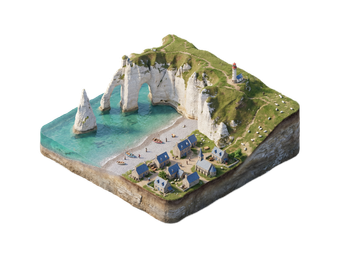
- Etretat: about 1 hour 15 minutes by car. White chalk cliffs and natural arches run along the shore. Public transport takes longer, with a change at Le Havre.
- Paris: about 1 hour 30 minutes by direct train from Paris Saint-Lazare. It works as a long day trip.
Getting there
- By air: Rouen's own airport has no regular scheduled passenger flights. Most visitors fly into Paris Charles de Gaulle and continue by train via Paris. Allow about 2.5 to 3 hours in total.
- By train: Direct trains from Paris Saint-Lazare take roughly 1.5 hours. Trains also run to Le Havre and Dieppe. The main station is Rouen Rive-Droite, a short walk or tram ride from the old town. Book at SNCF Connect.
Getting around
- On foot: The historic centre is compact and mostly flat. Most sights are within a 15-minute walk of each other. Streets are cobbled in places.
- Public transport: The Astuce network has buses, rapid Teor buses and a tram-metro line. You can tap a contactless bank card on buses, so there is no need to buy a ticket in advance.
- Taxi: Taxis wait at Rouen Rive-Droite station. They are useful late in the evening.
- Cycling: The Seine river path is good for a flat ride. In the centre, cobbles and pedestrian streets make cycling less practical.
Driving
- Is a car worth it?: Not for the old town, which is small and has many pedestrian streets. A car is useful for Jumièges, Étretat and the Normandy countryside.
- Parking: Use underground car parks near the centre or park-and-ride sites on the edge of the city, then walk or take the tram.
- Restrictions: The central streets around the Gros-Horloge are pedestrian-only. Follow signs and avoid driving into the old town.
Food & drink
Rouen food is Normandy food: butter, cream, apples, duck and seafood. Look for canard à la rouennaise, a local duck dish, and sole in cream sauce. Normandy cheeses such as camembert and Neufchâtel are easy to find. Cider and calvados, an apple brandy, are the local drinks. Rouen apple sugar is a classic sweet to take home.
Eat in the old centre around Place du Vieux Marché, on Rue Martainville and on Rue Eau-de-Robec. Terraces fill up at lunch and in the evening, so book ahead on weekends. A set lunch menu is usually good value.
Safety & health
Rouen is generally safe for visitors. Pickpocketing is the main risk, especially around the station and on crowded pedestrian streets. Keep bags closed and phones out of back pockets.
Use normal city care late at night around the station area. Cobbled streets can be slippery in the rain, so wear shoes with good grip.
History
Rouen was a Roman town and later the capital of the Duchy of Normandy, founded by the Viking leader Rollo in the early 10th century. The duchy's rulers later became kings of England, and Rouen grew rich from trade on the Seine. A tomb in Cathédrale Notre-Dame de Rouen holds the heart of Richard the Lionheart.
In 1419 the English took the city during the Hundred Years' War. In 1431 Joan of Arc was tried here and burned at Place du Vieux Marché. A museum and the remains of Tour Jeanne d'Arc recall her story. The French regained Rouen in 1449.
Allied bombing in 1944 destroyed large parts of the city and damaged the cathedral. Many landmarks, including Gros-Horloge, survived or were carefully restored, and the old centre was rebuilt in the same style.
Country facts
Quick practical facts for France at a glance:
- Currency
- Euro EUR € · Card payments · Widely accepted
- Emergency numbers
- 112
- Electricity
- 230 V · 50 HzType C / Type E
- Languages
- French
- Tap water
- Safe to drink
- Driving side
- Right
- Calling code
- +33


Rouen – Plan Your Days
Turn the places from this guide into a real itinerary, with smart routing, time estimates, and everything you need for a perfect trip.


Related destinations


Data: © OpenStreetMap contributors, Wikidata, Wikipedia, Tripomatic, Official websites. Tours by GetYourGuide. We earn commission from bookings. Travel guide generated with AI.
Plan your trip with Tripomatic
- AI-Powered PlanningGet a ready-made day in one tap, let AI spread your shortlist across your trip, or plan everything by chatting.
- Travel AlertsOfficial advisories, severe weather, strikes, and natural hazards for the places on each day of your trip.
- Public Holidays & EventsSee holidays, festivals, and closures on the days of your trip, and what they mean for your plans.
- Cost EstimationAI-powered trip cost breakdowns so you know what to budget before you go.
- Tours & TicketsBook tours, skip-the-line tickets, and activities directly in your plan.