


Lisbon
Lisbon is Portugal's capital, built across seven hills above the Tagus River. Pastel-colored buildings, black-and-white cobblestone streets, and yellow trams give the city a look found nowhere else in Europe. It suits travelers who want historic architecture, strong coffee culture, and an easy pace, all within a compact center you can explore mostly on foot.
The city's Age of Discoveries wealth, its 1755 earthquake, and centuries of Moorish, Christian, and maritime history all left visible marks. Poet Fernando Pessoa and singer Amália Rodrigues, the icon of fado music, are both closely tied to Lisbon.

Lisbon – Planning a Trip?
Build your day-by-day itinerary in the Tripomatic app.
When to visit
Spring and autumn are mild, sunny, and less crowded than summer. Summer is hot and almost rain-free, while winter stays mild but brings the most rain.
Plan a trip around Santo António, Lisbon's patron saint festival on June 12–13. Streets fill with grilled sardines, paper streamers, and all-night parties, especially in Alfama.
Best time to visit: May, June, July, August, September, October
Top sights
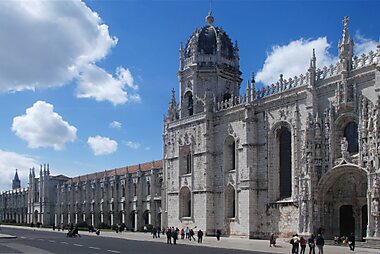


Jerónimos Monastery is a UNESCO World Heritage monastery built with wealth from the spice trade. Its stone carvings mix Gothic and maritime motifs in the ornate Manueline style.
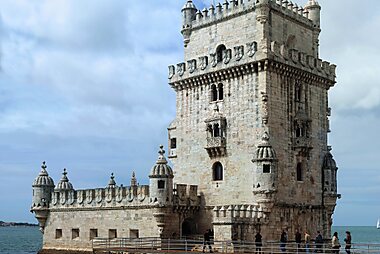
Standing guard where the Tagus meets the Atlantic, Tower of Belém was built in the early 1500s to defend the harbor during Portugal's Age of Discoveries, when ships bound for Africa, India, and Brazil sailed past it.
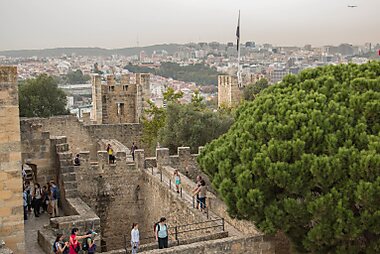
São Jorge Castle crowns the Alfama hillside with Moorish walls and wide views over the city and river.
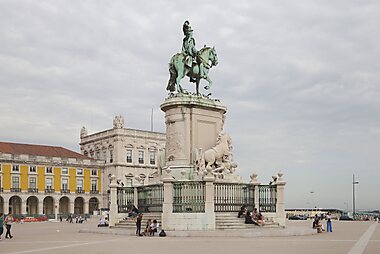
Commerce Square is Lisbon's grand riverfront plaza, rebuilt after the 1755 earthquake as the ceremonial gateway to the city.
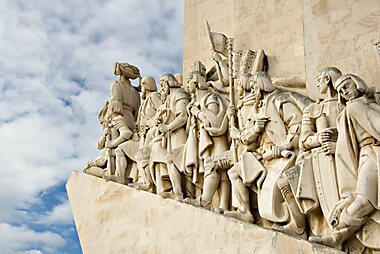
Monument to the Discoveries honors the sailors of Portugal's Age of Discoveries with a soaring stone prow shape on the riverbank.
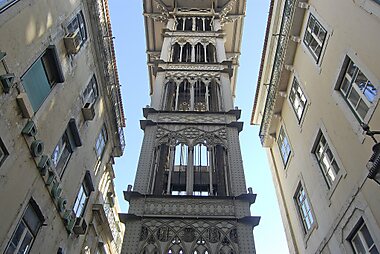
Take Santa Justa Lift, a wrought-iron elevator in the city center, up to a rooftop platform with sweeping views over the old town.
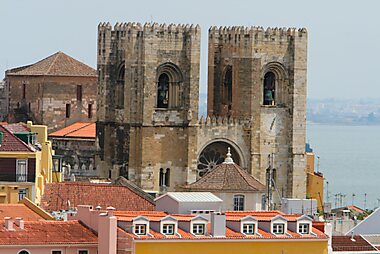
Lisbon Cathedral is Lisbon's oldest church, a fortress-like Romanesque cathedral. The 1755 earthquake toppled a tower and damaged the chancel; later restoration rebuilt the rose window.
Featured Lists


Lisbon's Best Views & Landmarks
This collection features Lisbon's most iconic panoramic terraces, known as miradouros, alongside historic monuments and public fountains. From the Manueline architecture of the Tower of Belém to the neoclassical expanse of Dom Pedro IV Square, these sites provide a geographical and historical overview of the city. The list includes Alfama's oldest public fountain, the Chafariz d'El Rei, and high-altitude viewpoints like the Sophia de Mello Breyner Andersen Belvedere, offering perspectives of the Tagus River and the city's seven hills.
16 placesAudio Guides – Lisbon
Explore on foot with a self-guided audio tour that narrates each stop as you reach it.


Hear Lisbon's audio tours
1 walk in Audio Guides by Tripomatic


What to experience
- Catch sunset at Miradouro de Santa Catarina, a hillside terrace where locals gather with a drink to watch the sky over the river turn orange.
- Ride tram 28 through Alfama, Graça, and Baixa on its steep, narrow route past yellow facades and tight corners.
- Drink a shot of ginjinha standing at A Ginjinha, a small standing-room bar serving the sour cherry liqueur since the 1840s.
- Hear live fado in a small Alfama restaurant, Portugal's melancholic ballad tradition, usually performed after dinner.
- Browse the art studios, design shops, and weekend market at LX Factory, a former factory turned creative complex under the 25th of April Bridge.
Tours & Activities
Lisbon — Map

 Open the interactive map
 Day trips
Lisbon sits close to beaches, palaces, and historic towns, easy to reach without a car.
- Sintra — about 40 minutes by train from Rossio station. Fairy-tale palaces and gardens in cool hills above the coast; the closest and most popular day trip.
- Cascais — about 40 minutes by train from Cais do Sodré. A former fishing village turned beach resort, with a walkable old town and coastal cliffs.
- Costa da Caparica — about 30–40 minutes by ferry and bus across the Tagus. Long Atlantic beaches, popular with surfers and locals on hot days.
- Setúbal and the Arrábida Natural Park — about 1–1.5 hours by car or train and bus. Cheese, wine, dolphin-watching boat trips, and a mountain coastline.
- Óbidos — about 1 hour by bus or car. A small walled medieval town with whitewashed houses and a hilltop castle.
Getting there
- By air: Humberto Delgado Airport (LIS) sits inside the city, about 7 km from the center. The red metro line reaches downtown in about 20–25 minutes; the Aerobus shuttle and taxis take about the same, longer in traffic.
- By train: Santa Apolónia and Oriente stations connect Lisbon to Porto, Coimbra, and the rest of Portugal.
- By bus: Sete Rios terminal has long-distance coaches to towns and cities across the country.
Getting around
- Public transit: The metro, trams, and buses share the Viva Viagem card, or tap a contactless bank card or phone directly at the gate. Lisbon Metro
- Taxi and ride-hailing: Uber and Bolt both operate widely alongside metered taxis.
- On foot: The center is walkable but steep, with seven hills and long staircases; comfortable shoes matter more than in most cities. Trams, funiculars, and the Santa Justa Lift help with the climbs.
Driving
- Is a car worth it?: No. Lisbon's center has narrow, hilly streets and heavy traffic. A car is only useful for day trips beyond the train and bus network.
- Parking: Street parking in the center is metered and limited; use a car park instead. Rates run about 1–2 € per hour.
- Restrictions: Alfama and parts of the historic center restrict car access to residents; check signage before driving in.
Food & drink
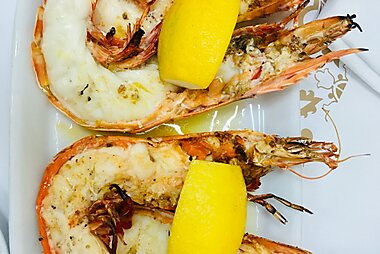
Lisbon's food centers on fresh seafood, grilled sardines, and the custard tart that made the city famous worldwide.
For the original custard tart, visit Pastéis de Belém, baking since 1837 next to the monastery that once guarded the recipe. For fresh shellfish, Cervejaria Ramiro is a well-known choice; expect a line at busy times. Otherwise, head to the food stalls at the Time Out Market near Cais do Sodré, or the restaurants around Bairro Alto for a lively night out.
Safety & health
Lisbon is one of Europe's safer capital cities for tourists. Violent crime against visitors is rare.
Watch for pickpockets on the crowded tram 28, in Alfama's narrow lanes, and around Rossio Square, especially in peak season. Keep bags zipped and phones out of back pockets. Common scams include overpriced "guided" ginjinha tastings and unofficial taxi drivers approaching at the airport — use the official taxi rank or a ride-hailing app instead.
History
Lisbon's history stretches back to Phoenician and Roman settlement, followed by centuries of Moorish rule that left São Jorge Castle standing above the city. Portuguese forces retook the city in 1147 during the Second Crusade.
The 15th and 16th centuries brought the Age of Discoveries. Fortunes from spice and trade routes funded Jerónimos Monastery and Tower of Belém, both built to celebrate and defend Portugal's maritime empire.
On 1 November 1755, a massive earthquake, fire, and tsunami destroyed much of the city. Prime minister the Marquis of Pombal rebuilt downtown Lisbon on a strict grid, centered on Commerce Square, one of Europe's earliest examples of planned earthquake-resistant construction.
Country facts
Quick practical facts for Portugal at a glance:
- Currency
- Euro EUR € · Card payments · Widely accepted
- Emergency numbers
- 112
- Electricity
- 230 V · 50 HzType C / Type F
- Languages
- Portuguese
- Tap water
- Safe to drink
- Driving side
- Right
- Calling code
- +351


Lisbon – Plan Your Days
Turn the places from this guide into a real itinerary, with smart routing, time estimates, and everything you need for a perfect trip.




