


Obidos
Óbidos is a small walled town on a hill in the West region of Portugal. It is about one hour from Lisbon. The white houses, flowers and narrow cobbled streets sit inside medieval walls and below a castle. For centuries the town was a gift to Portuguese queens, and it is still called the Town of the Queens.
Today Óbidos is also a town of books and festivals. It has several bookshops, one inside a church, and UNESCO named it a Creative City of Literature in 2015. It suits a half-day or an overnight stay, ideally combined with the coast and nearby towns. Stay overnight to see it after the day visitors leave.

Obidos – Planning a Trip?
Build your day-by-day itinerary in the Tripomatic app.


When to visit
Spring and early autumn are pleasant, with mild days and fewer crowds. Summer is warm and dry and the busiest season. Winter is mild but often wet, and the streets are quiet.
The main events fall in three seasons. The International Chocolate Festival is usually held in March. The Medieval Market fills the town for about ten days each July, with a ticket needed to enter. From late November to early January, Óbidos Vila Natal turns the town into a Christmas village.
Best time to visit: May, June, July, August, September, October
Top sights
- Castelo de Óbidos was fortified by the Moors and taken by King Afonso Henriques in 1148. It is now a pousada, a historic hotel. The best views come from walking along the town walls, which are up to 13 m high in places.
- Town Gate is the main entrance to the old town. A short tiled passage leads through the wall to the main street.
- Igreja (Matriz) de Santa Maria stands on the main square. Afonso V married here in 1441. It is the town's parish church.
- Livraria de São Tiago is a former church that is now a bookshop. It is a good example of the town's literary identity.
- Aqueduto da Usseira is a long 16th-century stone aqueduct south of the old town. It carried water to the town and is a pleasant short walk.
Featured Lists


Religious Heritage Sites
This collection explores the diverse religious architecture of the Óbidos and Caldas da Rainha region, ranging from 14th-century Gothic chapels to 18th-century Baroque sanctuaries. Key highlights include the royal wedding site of St. Mary's Church, famous for its 17th-century tiles, and the unique hexagonal Santuário do Senhor Jesus da Pedra. The list also encompasses the National Monument of Nossa Senhora do Pópulo and significant local parish cemeteries.
10 placesWhat to experience
- Drink ginjinha, the local sour-cherry liqueur, in a small edible chocolate cup. Many shops in the old town sell it.
- Browse the town's bookshops. Fólio, the international literary festival, is held each October.
- Visit during the Medieval Market in July. Costumed performers and shows fill the streets.
- Walk the top of the town walls at sunset for views over the roofs and countryside.
- Visit in March for the Chocolate Festival, with chocolate-themed events across the town.
- See Óbidos Vila Natal from late November to early January, with lights and a themed Christmas village.
Tours & Activities
Obidos — Map

 Open the interactive map
Day trips
The towns and beaches of the West region are close. Most are about 15 to 45 minutes by car.
- Caldas da Rainha: about 15 minutes by car. A spa town known for its ceramics. See the Museu da Cerâmica.
- Lagoa de Óbidos and Foz do Arelho: about 20 minutes by car. A large coastal lagoon with beaches and water sports.
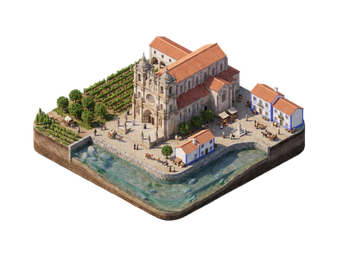
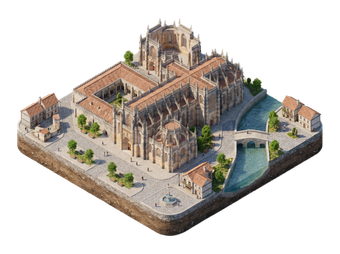
- Alcobaça: about 25 minutes by car. Home to a large medieval monastery that is a World Heritage site.
- Peniche: about 30 minutes by car. A fishing town with surf beaches and boats to the Berlengas islands in summer.
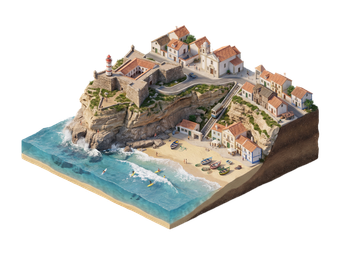
- Nazaré: about 40 minutes by car. A beach town known for very large winter waves.
- Lisbon: about 1 hour by bus or car.
Where to explore
Getting there
- By air: Lisbon Airport (LIS) is the gateway, about 80 km south. Take a taxi or rental car for about one hour. Or take the metro into Lisbon and continue by bus.
- By bus: Direct coaches run from Lisbon, from the Sete Rios and Campo Grande terminals. The trip takes about 1 to 1.25 hours. Booking online in advance is usually cheaper. The stop is just outside the walls, a few minutes on foot from the Porta da Vila.
- By train: Óbidos has a station on a slow regional line, but there is no direct train from Lisbon. The trip takes over two hours with changes, so the bus is faster. The station is at the foot of the hill, about 10 minutes uphill from the old town. Check times on the CP Comboios de Portugal site.
Getting around
- On foot: The old town is small and closed to most traffic. Cobbles are steep and uneven, so wear sturdy shoes. The tourist office is at Rua da Porta da Vila, open daily 9:30 to 13:00 and 14:00 to 17:30.
- Local buses: OBI municipal buses connect the town with nearby villages and the lagoon area. Check lines and timetables on the Óbidos municipality transport page.
- Tickets: Event tickets, such as the Medieval Market, are sold online. Most sights inside the old town can be seen on foot at no cost.
Driving
- Is a car worth it?: No for Óbidos itself, which is walkable. A car is useful for the lagoon, beaches and nearby towns.
- Parking: Cars are not allowed in the historic centre. Use the car parks outside the walls, mainly south of the old town, and walk in.
- Access: Lisbon is about 80 km away on the A8 toll motorway, around 50 minutes without traffic. Rental cars usually have a toll transponder.
Food & drink
Try ginjinha, the cherry liqueur known here as ginja d'Óbidos. It is often served in a small chocolate cup. Chocolate is a local theme year-round.
For meals, look along Rua Direita, the main street, and the side lanes. Choose by the menu on the door and book ahead on festival weekends.
Safety & health
Óbidos is very safe for visitors. Watch for pickpockets in busy summer and festival crowds.
Cobbles are slippery when wet. The tops of the walls are narrow and in places high, so take care, especially with children.
History
Muslim forces fortified the hilltop in the 8th century. King Afonso Henriques took Castelo de Óbidos from the Moors in 1148. The town celebrates this on 11 January.
In 1282 King Dinis gave the town to his new wife, Queen Isabel, as a wedding gift. After that, many Portuguese queens kept Óbidos as part of their property, which earned it the name Town of the Queens. This lasted until 1834.
In 1441 Afonso V married at Igreja (Matriz) de Santa Maria. The 1755 earthquake damaged the walls and churches. The painter Josefa de Óbidos lived in the town in the 1600s.
Country facts
Quick practical facts for Portugal at a glance:
- Currency
- Euro EUR € · Card payments · Widely accepted
- Emergency numbers
- 112
- Electricity
- 230 V · 50 HzType C / Type F
- Languages
- Portuguese
- Tap water
- Safe to drink
- Driving side
- Right
- Calling code
- +351


Obidos – Plan Your Days
Turn the places from this guide into a real itinerary, with smart routing, time estimates, and everything you need for a perfect trip.


Related destinations

Data: © OpenStreetMap contributors, Wikidata, Wikipedia, Tripomatic, Official websites, geoBoundaries (CC BY 4.0). Tours by GetYourGuide. We earn commission from bookings. Travel guide generated with AI.
Plan your trip with Tripomatic
- AI-Powered PlanningGet a ready-made day in one tap, let AI spread your shortlist across your trip, or plan everything by chatting.
- Travel AlertsOfficial advisories, severe weather, strikes, and natural hazards for the places on each day of your trip.
- Public Holidays & EventsSee holidays, festivals, and closures on the days of your trip, and what they mean for your plans.
- Cost EstimationAI-powered trip cost breakdowns so you know what to budget before you go.
- Tours & TicketsBook tours, skip-the-line tickets, and activities directly in your plan.