


Costa da Caparica
Costa da Caparica is a beach resort on the Atlantic coast, south of Lisbon across the Tagus. It is part of the municipality of Almada. A long strip of sand runs along the coast, with a small town and a seafront at the northern end.
The area suits a beach stay or a day out from Lisbon. Surfing is the main sport, and the waves work for beginners and experienced surfers. Fishing is still part of local life. Summer is busy and winter is quiet.

Costa da Caparica – Planning a Trip?
Build your day-by-day itinerary in the Tripomatic app.


When to visit
Summer is the main beach season. Days are warm and sunny and it rarely rains. The Atlantic stays cool and afternoons are often windy. Spring and early autumn are mild and less crowded. Winter is mild but wet, and most beach bars and lifeguard posts are closed.
In June, the Santos Populares street festivals bring music and grilled sardines to the Lisbon area, including Costa da Caparica.
Best time to visit: May, June, July, August, September, October
Top sights
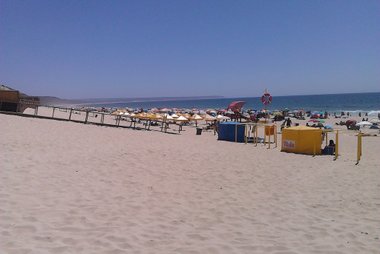

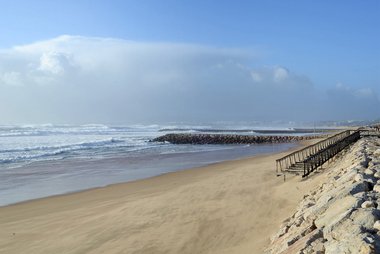
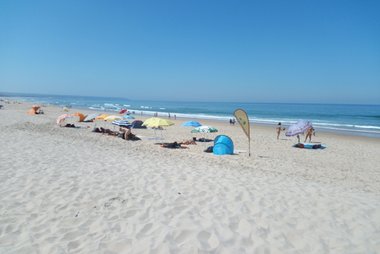
The main beaches lie along the coast south of the town. Each has its own character.
- Praia de São João is the centre of the surf scene, with several surf schools and steady waves. It also suits families and has cafés nearby.
- Praia do CDS is a narrow beach next to the town with good waves. It is popular with day visitors from Lisbon.
- Praia da Saúde is easy to reach and busy in summer. It is a good choice for families.
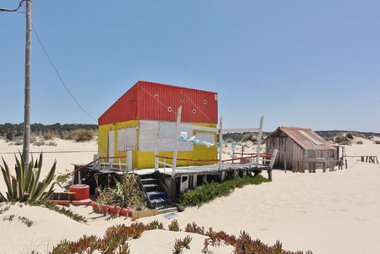
- Praia da Mata is calmer than the beaches near the town. Small colourful fishermen's huts stand on the sand.
- Praia da Rainha is a wide family beach with space to spread out.
- Fonte da Telha is near the southern end, backed by dunes and the fossil cliff. The cliff is a protected landscape more than 13 km long.
- Praia da Adiça is an official naturist beach south of Fonte da Telha.
- Convento dos Capuchos is a 16th-century Franciscan convent above the town. It is now a cultural space with gardens and a viewpoint over the coast, Lisbon and the Sintra hills.
Featured Lists

What to experience
- Watch the traditional net fishing, called arte xávega. Crews pull a long net from the sea with tractors, and the catch is sold on the beach. It depends on sea conditions and the season, so times change.
- Take a surf lesson. Several surf schools work at Praia de São João.
- Try kitesurfing at the windy Praia Nova Vaga, which has a kitesurf school.
- Watch the sunset over the Atlantic from the beach. The coast faces west.
Tours & Activities
Costa da Caparica — Map

 Open the interactive map
Day trips
Most day trips are short. A car makes the southern ones much easier.
- Lisbon is about one hour away by bus, or by ferry and bus. It has the main sights, museums and nightlife.
- The city of Almada is on the south bank of the Tagus, about 15 minutes by car. Visit the Cristo Rei statue for views over the river and Lisbon.
- Sesimbra is about 30 minutes by car. It is a fishing town with a beach and a castle on the hill.
- Setúbal is about 40 minutes by car. It is the base for the Arrábida hills, with quiet beaches and scenic roads.
Getting there
- By air: Lisbon Humberto Delgado Airport (LIS) is the gateway. There is no direct rail or metro link to Costa da Caparica. Take a taxi or ride-hailing car across the 25 de Abril bridge, or go into Lisbon and change to a bus or ferry.
- By bus: Direct Carris Metropolitana buses run from Lisbon to the Costa da Caparica bus terminal. Allow about one hour. In summer, extra beach bus lines also run from towns north of the Tagus. Check times at Carris Metropolitana.
- By ferry and bus: Take the ferry from Cais do Sodré to Cacilhas, about 10 minutes. Then take a bus to Costa da Caparica, about 35 to 45 minutes. This is often easier than the bus from the city centre.
- By train and bus: Trains from Lisbon cross the 25 de Abril bridge to Pragal station. From there, a local bus goes to Costa da Caparica.
Getting around
- On foot: The town centre and the nearest beaches are flat and close together.
- Bus: Local Carris Metropolitana buses link the town with beaches further south, including Fonte da Telha. Pay with a Navegante pass or buy a ticket from the driver.
- Cycling: The area is flat. A separate cycle lane links Trafaria and Praia de São João.
- Beach train: The old Transpraia beach train, which ran from 1960, is not in regular service. Do not plan a trip around it.
Driving
- A car is not needed for the town and the central beaches. A car helps for the southern beaches and for day trips to Sesimbra and Setúbal.
- Parking: Beach car parks and streets near the seafront fill early on sunny summer weekends. Arrive in the morning or use the bus.
- Tolls: The 25 de Abril bridge and the A2 motorway are tolled.
- Traffic: The bridge to Lisbon backs up at rush hour.
Food & drink
Fish and seafood are the local specialty, especially caldeirada, a fish stew. Grilled fish is on most menus. During arte xávega, some of the catch is sold fresh on the beach.
Most visitors eat at the beach restaurants along the sand. Fonte da Telha has beach restaurants close to the sand. Beach bars along the coast also serve food in summer.
Safety & health
Costa da Caparica is generally safe for visitors. Watch for petty theft from beach bags and parked cars, especially in summer.
The sea is the main risk. Atlantic waves and currents can be strong. Swim only at beaches with a lifeguard and follow the flag signs and the lifeguards' instructions. Lifeguards work only in the bathing season, so check that a beach is supervised before you swim.
The summer sun is strong, so use sunscreen and carry water.
History
Costa da Caparica began as a fishing community on the sand. A local story says the name comes from "capa rica", meaning rich cloak. Fishermen worked from the beach with nets, and arte xávega is still practised today.
The Convento dos Capuchos was built in the 16th century by Franciscan monks. In the 20th century, the beaches became one of the busiest in the Lisbon region. The Transpraia train, which opened in 1960, carried visitors along the coast.
Country facts
Quick practical facts for Portugal at a glance:
- Currency
- Euro EUR € · Card payments · Widely accepted
- Emergency numbers
- 112
- Electricity
- 230 V · 50 HzType C / Type F
- Languages
- Portuguese
- Tap water
- Safe to drink
- Driving side
- Right
- Calling code
- +351


Costa da Caparica – Plan Your Days
Turn the places from this guide into a real itinerary, with smart routing, time estimates, and everything you need for a perfect trip.


Related destinations


Data: © OpenStreetMap contributors, Wikidata, Wikipedia, Tripomatic, Official websites, geoBoundaries (CC BY 4.0). Tours by GetYourGuide. We earn commission from bookings. Travel guide generated with AI.
Plan your trip with Tripomatic
- AI-Powered PlanningGet a ready-made day in one tap, let AI spread your shortlist across your trip, or plan everything by chatting.
- Travel AlertsOfficial advisories, severe weather, strikes, and natural hazards for the places on each day of your trip.
- Public Holidays & EventsSee holidays, festivals, and closures on the days of your trip, and what they mean for your plans.
- Cost EstimationAI-powered trip cost breakdowns so you know what to budget before you go.
- Tours & TicketsBook tours, skip-the-line tickets, and activities directly in your plan.