


Porto
Porto is Portugal's second-largest city, built on granite hills above the Douro River where it meets the Atlantic. Its historic center is a dense tangle of narrow streets, tiled facades, and steep stairways, much of it unchanged for centuries. The city gave Portugal its name: the Roman-era port here, Portus Cale, evolved into the word "Portugal" itself.
Porto feels grittier and less polished than Lisbon, and locals are proud of that. The city built its wealth on the port wine trade, aged in cellars just across the river, and on shipbuilding. Prince Henry the Navigator, who launched Portugal's age of exploration, was born here in 1394, though the exact house is disputed. A weekend covers the highlights; three or four days lets you add a day trip to the Douro wine valley or a nearby town.

Porto – Planning a Trip?
Build your day-by-day itinerary in the Tripomatic app.
When to visit
Spring (April to June) and autumn (September to October) are mild and the best times to visit, with fewer crowds than summer. Summer is warm and mostly dry, while winter is cool and rainy but rarely cold.
Plan around Festa de São João, Porto's biggest festival, held on the night of June 23. Locals fill the streets to eat grilled sardines, watch fireworks over the Douro, and keep up the local tradition of tapping strangers on the head with a squeaky plastic hammer.
Best time to visit: May, June, July, August, September
July and August bring the driest, sunniest weather, but also the biggest crowds and highest prices. November through February sees the most rain.
Top sights
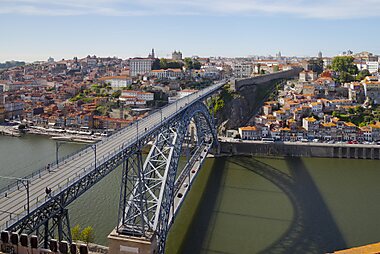

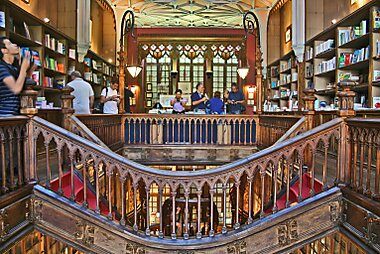


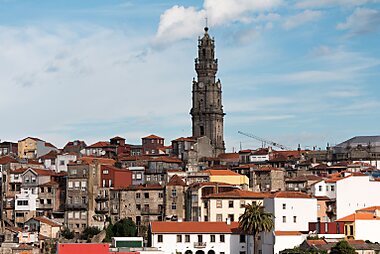


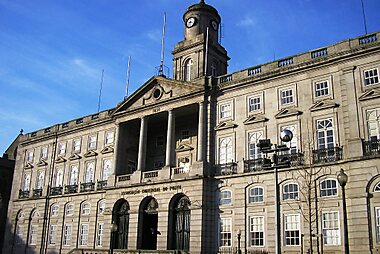
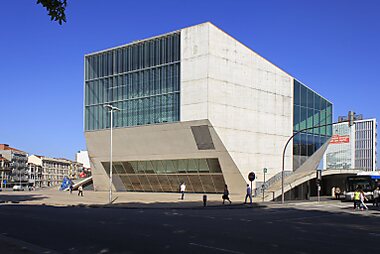
Porto's historic core is compact enough to see on foot, with the Douro River and its bridges as the backbone of any visit.
Ribeira Square anchors the Ribeira district, a UNESCO World Heritage tangle of colorful houses and riverside cafes that has changed little in centuries.
Ponte Luís I is the city's double-deck iron bridge, designed by a former associate of Gustave Eiffel. Walk across the upper deck for the best view over the Douro.
Porto Cathedral is Porto's fortress-like Romanesque cathedral, standing over the old town since the 12th century.
Climb the 240 steps of Clérigos Tower for a 360-degree view over the city's rooftops.
Lello Bookstore is one of the world's most photographed bookshops, known for its carved wooden staircase and stained-glass ceiling.
São Bento Railway Station is a working train station whose entrance hall is lined with thousands of hand-painted tiles depicting Portuguese history.
Palácio da Bolsa was built by Porto's merchants in the 19th century and holds the lavish Arab Room, modeled on Granada's Alhambra.
Across the river, Mosteiro da Serra do Pilar offers the best panorama of Porto's skyline and sits a short walk from the port wine cellars.
Featured Lists


Hidden Gems of Porto
Porto’s backstreets house architectural and cultural treasures beyond the main tourist circuit. This selection includes the Church of Saint Ildefonso with its 11,000 azulejo tiles and the Portuguese Photography Centre, housed in a former 18th-century prison. Explore Art Nouveau storefronts like A Pérola do Bolhão, traditional 19th-century bakeries, and the British Factory House, a Palladian-style monument to the city's port trade. From medieval defensive walls to quiet riverside chapels, these sites highlight the city's layered history and local traditions.
12 places


Audio Guides – Porto
Explore on foot with a self-guided audio tour that narrates each stop as you reach it.


Hear Porto's audio tours
1 walk in Audio Guides by Tripomatic


What to experience
- Tour a port wine lodge in Vila Nova de Gaia and finish with a tasting — Graham's Port Lodge is one of the best known.
- Cross the river by cable car on the Teleférico de Gaia for a bird's-eye view of the rooftops and the bridge.
- Watch the sunset from Jardim do Morro, across the river, with the whole of Porto's skyline lit up in front of you.
- Take a cruise past Porto's six bridges on a traditional Rabelo boats, once used to carry port wine barrels down the Douro.
Tours & Activities
Porto — Map

 Open the interactive map
 Day trips
Porto makes a good base for day trips, from beach towns just outside the city to Portugal's most famous wine valley.
- Espinho — about 25 minutes by train. A straightforward beach town south of Porto, popular with surfers and known for its Monday flea market.
- Vila do Conde — about 50 minutes by metro. A former shipbuilding town with a long sandy beach, a 14th-century convent, and a tradition of bobbin lace-making.
- Braga — about 1 hour by train. Portugal's religious capital, home to the Baroque staircase sanctuary of Bom Jesus do Monte.
- Guimarães — about 1 hour 15 minutes by train. Known as the birthplace of Portugal, with a well-preserved medieval center and the castle where the country's first king is said to have been born.
- Douro Valley — 1.5 to 2 hours by train along the river, or by car. Steep terraced vineyards produce the port wine Porto is famous for. The train ride itself, hugging the Douro, is one of the most scenic in Portugal.
Where to explore
Just across the Douro, Vila Nova de Gaia is technically a separate city, though most visitors treat it as part of Porto. Nearly all of the historic port wine houses have their cellars and tasting rooms here, a short walk or cable car ride from the Ribeira waterfront.
Getting there
- By air: Francisco Sá Carneiro Airport, about 11 km north of the center, is Porto's international gateway. Metro Line E (violet) runs to the city center in about 35 minutes for a few euros; a taxi takes 20 to 25 minutes and costs roughly €25–€30.
- By train: Long-distance and international trains, including from Lisbon, arrive at Porto Campanhã station, a short metro or local train ride from the center. Regional trains continue on to São Bento Railway Station, right in the historic core.
- By bus: Long-distance coaches, including international routes, use the bus terminal next to Porto Campanhã station.
Getting around
- Public transit: The Metro do Porto (six lines) and STCP buses cover the city; three historic tram lines run along the river and up to Massarelos. Pay with a rechargeable Andante card, tapped at validators on board or at station machines — buy one at any metro station. Metro do Porto
- Taxi and ride-hailing: Uber and Bolt both operate in Porto alongside metered taxis.
- On foot: The historic center is compact and walkable, but steep and cobbled — comfortable shoes matter more here than in most cities. Cycling is easiest along the flat riverside promenade, less so in the hilly old town.
Driving
- Is a car worth it?: No, not for the city itself. The historic center is compact, hilly, and full of one-way cobbled streets. Rent one only if you plan to explore the Douro Valley or coastal towns beyond the metro and train network.
- Parking: Multi-story car parks ring the historic center; street parking there is metered and limited. Pay by app or at the meter.
- Restrictions: Parts of the historic center (Cedofeita, Flores, Ribeira, and Santa Catarina) are under a permit-based traffic access scheme that limits general car access at busy times — check current rules before driving in.
Food & drink
Porto's signature dish is the francesinha, a meat-stuffed sandwich covered in melted cheese and a spiced tomato-beer sauce. Order it at a no-frills tasca rather than a tourist-oriented restaurant for the best version.
For casual eating, head to the stalls and cafes around Mercado do Bolhão, the city's historic covered market, or the streets around Rua das Flores. For something distinctive, Café Majestic is a beautifully preserved Art Nouveau cafe that has served coffee since the early 20th century.
Safety & health
Porto is one of Europe's safer major cities for tourists. The main risks are pickpocketing and bag-snatching in crowded spots like Ribeira Square, on trams, and around São Bento station — keep bags zipped and in front of you.
Use the official taxi rank or a ride-hailing app rather than unlicensed drivers touting for business at the airport or train stations. Tap water is safe to drink throughout the city.
History
Porto's name comes from the Roman-era settlement of Portus Cale at the mouth of the Douro, the root of the word "Portugal" itself. The medieval city grew up around what is now Ribeira Square, when the river was the city's main trade route.
Prince Henry the Navigator, who financed Portugal's early voyages of exploration, was born in Porto in 1394; Casa do Infante marks the site traditionally identified as his birthplace. Locals are nicknamed tripeiros ("tripe eaters") after a 15th-century episode when the city donated its meat to provision a fleet, leaving residents to cook with only offal — tripe stew remains a local specialty today.
French forces overran the city in 1809, and Porto endured a long siege during the Portuguese Civil War of 1832–33, shaping its identity as a city resistant to outside rule. Mosteiro da Serra do Pilar, overlooking the river, was a key defensive position during the 1832–33 siege.
Country facts
Quick practical facts for Portugal at a glance:
- Currency
- Euro EUR € · Card payments · Widely accepted
- Emergency numbers
- 112
- Electricity
- 230 V · 50 HzType C / Type F
- Languages
- Portuguese
- Tap water
- Safe to drink
- Driving side
- Right
- Calling code
- +351


Porto – Plan Your Days
Turn the places from this guide into a real itinerary, with smart routing, time estimates, and everything you need for a perfect trip.




