


Santa Cruz de Tenerife
Santa Cruz de Tenerife is the capital of Tenerife, in the Canary Islands, and a busy port city on the island's northeast coast. It has a relaxed island atmosphere, modern architecture, parks and one of the biggest carnivals in the world.
The city is close to a golden-sand beach and the forested Anaga mountains. It suits a day or two, and it is a good base for exploring the north of the island.

Santa Cruz de Tenerife – Planning a Trip?
Build your day-by-day itinerary in the Tripomatic app.


When to visit
The weather is mild all year, with warm summers and gentle winters, and the city is sunnier and drier than the green north coast of the island. Summer is hottest, and winter can be cloudy with some rain.
Carnival, in February or March, is the major event, with parades, music and costumes. It is the busiest time of year, so book early.
Best time to visit: April, May, June, July, August, September, October, November, December
Top sights
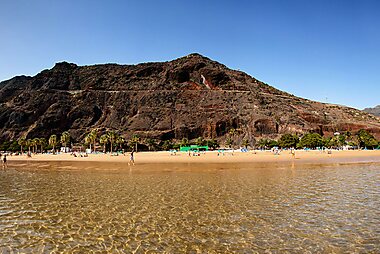
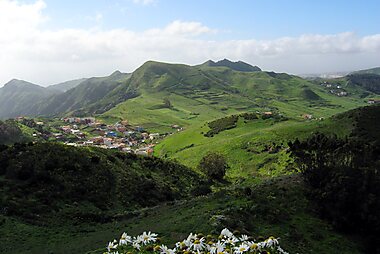
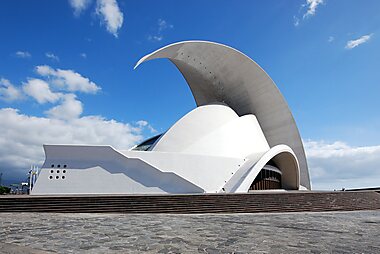


- Plaza de España is the main square, with a large fountain and a monument, next to the Cabildo building.
- Auditorio de Tenerife Adán Martín is a white concert hall by the architect Santiago Calatrava, shaped like a wave, which is a symbol of the city.
- Playa de las Teresitas is a long golden beach with palm trees, about 8 km from the center.
- Montañas de Anaga are the Anaga mountains, a nature reserve with ancient laurel forest and walking trails.
- Museo de la Naturaleza y Arqueología (MUNA) is a museum of nature and archaeology, with a collection on the Guanches, the island's native people.
- Iglesia de Nuestra Señora de la Concepción is the main church, with a Baroque tower.
- Palmetum de Santa Cruz de Tenerife is a botanical garden of palms.
- Parque Marítimo César Manrique is a seawater swimming complex designed by César Manrique.
- Playa de Benijo is a wild beach on the north coast, in the Anaga area.
- Rambla del General Franco is a wide avenue and shopping district.
- Museo Histórico Militar de Canarias is a military museum in a 19th-century building.
- Centro de Arte La Recova is an art center in the former market hall.
Featured Lists


Parks & Gardens
Santa Cruz de Tenerife features a diverse range of urban green spaces, from the historic 1926 Parque García Sanabria with its sculptures and fountains to the 120,000-square-meter Palmetum, a botanical garden specialized in palm species. The city’s landscape includes early 20th-century sites like the Viera y Clavijo Cultural Park, modern recreational areas like Parque de La Granja, and the elevated Parque de Las Mesas which offers panoramic views. Central hubs like the tree-lined Plaza del Príncipe de Asturias and the iconic floral clock provide shaded retreats within the urban core.
9 placesWhat to experience
- Spend a day at Las Teresitas beach.
- Hike one of the laurel forest trails in the Anaga mountains.
- Join Carnival if you visit in February or March.
Tours & Activities
Santa Cruz de Tenerife — Map

Day trips
- La Laguna (about 9 km, 15 minutes by tram): a UNESCO World Heritage colonial town.
- Teide National Park (about 60 km, 1.5 hours by car): the volcano Teide and its lunar landscape.
- La Orotava (about 45 km): a historic valley town with wooden balconies.
- Garachico (about 70 km): a coastal town with natural lava pools.
- Anaga Rural Park (about 20 km): hiking, viewpoints and fishing villages.
Where to explore
Other places on Tenerife and nearby:
- Tenerife: Tenerife, La Orotava and Garachico.
- Nature: Teide National Park.
- Nearby islands: Gran Canaria and La Gomera.
Getting there
- By air: Tenerife North airport (TFN) is about 12 km from the center and has domestic and some European flights. Tenerife South airport (TFS) is about 70 km away and has more international routes.
- By ferry: The port has ferries to the other Canary Islands, including Gran Canaria, La Gomera and La Palma.
- By bus: Frequent buses (TITSA) link the city with the airports and the island.
Getting around
- On foot: The center is compact and mostly flat. Most sights are within a 15 to 20 minute walk.
- Tram: A tram line links the center with La Laguna.
- Public transport: TITSA buses reach the beach at Las Teresitas and the Anaga mountains.
Driving
- Is a car worth it?: Not for the city. A car helps for Teide, the north coast and villages.
- Parking: Use an underground car park in the center.
- Restrictions: Parts of the center are pedestrian only. Mountain roads in Anaga are narrow and winding.
Food & drink
Canarian food is simple and based on local produce. Papas arrugadas (small wrinkled potatoes) are served with mojo sauces, red or green. Fresh fish, grilled cheese and gofio (toasted grain flour) are typical.
Local wines come from the volcanic slopes of the island.
Safety & health
Santa Cruz is a safe city. The sun is strong all year, so wear sun protection. Atlantic currents at the beaches can be strong, so swim where lifeguards are on duty, and take care on mountain trails in fog or rain.
History
Santa Cruz was founded in 1494 by the conqueror Alonso Fernández de Lugo, as a port on the route between Spain and the Americas. In 1797 the British admiral Horatio Nelson lost his arm in a failed attack on the town.
It replaced La Laguna as the capital of the Canary Islands in the 19th century, and today it shares the role of regional capital with Las Palmas de Gran Canaria.
Country facts
Quick practical facts for Spain at a glance:
- Currency
- Euro EUR € · Card payments · Widely accepted
- Emergency numbers
- 112
- Electricity
- 230 V · 50 HzType C / Type F
- Languages
- Spanish
- Tap water
- Safe to drink
- Driving side
- Right
- Calling code
- +34


Santa Cruz de Tenerife – Plan Your Days
Turn the places from this guide into a real itinerary, with smart routing, time estimates, and everything you need for a perfect trip.


Related destinations




Data: © OpenStreetMap contributors, Wikidata, Wikipedia, Tripomatic, Official websites, geoBoundaries (CC BY 4.0). Tours by GetYourGuide. We earn commission from bookings. Travel guide generated with AI.