


Senegal
Senegal is West Africa's most accessible introduction: stable, welcoming, and an easy short flight from Europe. The country has a culture of hospitality known locally as teranga, and visitors notice it everywhere, from Dakar's markets to small Casamance villages. The landscape ranges from Sahel-edge dunes near Lompoul to the mangrove channels of the Saloum Delta and the greenery of Casamance in the south.
The country's history is closely tied to its coastline. Island of Gorée sits just offshore from Dakar as a UNESCO World Heritage memorial to the transatlantic slave trade. The capital also carries the legacy of Léopold Sédar Senghor, Senegal's first president and a founding poet of the Négritude literary movement. He led the country to independence from France in 1960. Senegal suits travelers who want an unpolished West African trip, strong on culture, wildlife, and music. Tourist infrastructure is lighter outside Dakar and the coastal resorts.


Senegal – Planning a Trip?
Build your day-by-day itinerary in the Tripomatic app.
Money & payments
The CFA franc is mainly a cash currency outside Dakar's hotels and larger restaurants, which do take cards. Carry cash for markets, shared taxis, smaller guesthouses, and rural regions, including Casamance. ATMs are common in Dakar, Saint-Louis, and other regional capitals. They are scarce in small towns, so withdraw money before heading to places like the Saloum Delta or Niokolo-Koba.


Featured Lists


Tours & Activities
Senegal — Map

Tipping
round up or 5-10%
small note for porters/housekeeping
round up
roughly 2000-5000 XOF per day
A small tip is welcome almost everywhere but rarely demanded. Round up taxi fares rather than calculating a percentage. In restaurants, check whether a service charge is already on the bill before adding more. Guides on wildlife or cultural tours generally expect a tip, since it is a normal part of their income. Hotel porters and housekeeping staff appreciate small notes.
Electricity
Sockets follow the European two-pin standard, so most travelers from continental Europe need no adapter.
Language
French is the official language and the one used in signage, government, and most tourist-facing business. Wolof is the country's true lingua franca. Most Senegalese speak it as a first or second language, regardless of ethnicity, and a few Wolof words are appreciated by locals. English is limited outside upscale hotels and tour operators in Dakar and the main resort areas. Some French is genuinely useful once outside the capital.
Staying connected
Prepaid SIM cards from Orange, Free, or Expresso are inexpensive and widely available at the airport and in any town. Registration with a passport is required at purchase, so bring identification when signing up. Coverage is strong along the coast and in regional capitals, and weaker in remote parts of Casamance and around Niokolo-Koba National Park.
Safety & emergencies
Senegal is one of West Africa's more stable and visited countries, and most trips pass without incident. The most common issues for tourists are petty theft and pickpocketing in crowded markets and bus stations. Persistent unofficial guides or vendors are also common in tourist areas; a firm, polite decline usually works. Take more care after dark in parts of central Dakar. Check current government travel advice for the Casamance region and areas near the borders with Mali and Mauritania before planning a trip there, since conditions can change.
Health
Tap water is not considered safe for travelers to drink. Stick to bottled or treated water, including for ice in smaller establishments. Pharmacies, marked with a green cross, are common in cities and regional towns and can handle minor ailments. Stock and opening hours are less reliable in rural areas.
Malaria risk exists across the country, including Dakar. Prophylaxis and mosquito precautions are generally recommended; discuss options with a travel clinic before departure. A yellow fever vaccination certificate can be required for entry, depending on your travel history, so check current requirements before you fly. Routine vaccinations should be up to date. A doctor can advise on typhoid and hepatitis A given local food and water conditions.
Visas & entry
Entry requirements depend heavily on nationality. Travelers from the EU, UK, US, and a number of other countries can enter Senegal without a visa for short tourist stays. Other nationalities need to arrange a visa in advance or on arrival. A passport valid for several months beyond your travel dates is standard practice, and proof of onward travel is occasionally requested.
Visa and entry requirements change frequently. Verify current requirements with the official immigration authority or your country's embassy before travel.
Etiquette
Greetings matter in Senegal. Take time for a proper hello and a few pleasantries before getting to business, even in a shop or taxi. Dress modestly when visiting mosques such as Great Mosque of Touba or the Grand Mosque of Dakar: cover shoulders and knees, and women may be asked to cover their hair. Remove shoes before entering prayer areas.
Ask before photographing people, especially in villages and markets. A polite request is usually met warmly, but photographing without asking can cause real offense. Bargaining is expected in markets and with informal vendors, but not in shops with marked prices. During Ramadan, be considerate about eating or drinking in public during daylight hours, particularly outside tourist hotels.
Holidays & opening hours
Public holidays, especially Islamic ones tied to the lunar calendar, can close shops, banks, and government offices with little notice. Transport gets busy around major religious dates. The Grand Magal of Touba is an annual pilgrimage to Great Mosque of Touba that draws millions of visitors. It is not a public holiday everywhere, but it still disrupts travel across the country.
Most shops and markets slow down on Friday around midday prayer time, and many businesses close on Sunday. Expect a slower pace during Ramadan, with shorter working hours and some restaurants closed during the day.
Getting around
- By air: Blaise Diagne International Airport (AIBD) near Dakar is the main international gateway; domestic flights are limited, so most inter-city travel is by road.
- By car rapide / bus: Colorful shared minibuses (car rapide) and larger intercity buses connect towns cheaply. They have no fixed timetable and leave when full. Comfortable coach operators run the busier routes between Dakar and regional capitals.
- By shared taxi: Shared seven-seater taxis, called sept-place, are the standard way to cover longer distances between towns. They depart from designated garages once full; agree the fare before boarding.
- By train: The Dakar TER commuter line covers greater Dakar and the airport corridor efficiently. It is not a long-distance option elsewhere in the country.
- By ferry: A short ferry crossing links central Dakar to Island of Gorée, a popular half-day trip.
Driving
- Speed limits: enforcement is inconsistent, so drive to conditions rather than the posted limit.
- Key rules: road surfaces and lighting vary widely outside main routes. Livestock, pedestrians, and slow-moving vehicles are common hazards, especially after dark. Avoid night driving outside cities where possible.
- Tolls: the Dakar-Diamniadio-AIBD expressway is a pay-per-use toll road with staffed booths, paid in cash. Most other roads have no toll.
- Parking: informal attendants, called gardiens, watch parked cars for a small tip in most towns. This is normal practice, not a scam.
- Fuel: stations are staffed, not self-service, and accept cash more reliably than cards outside Dakar.
Food & drink
Senegalese food centers on rice, fish, and slow-cooked sauces, eaten together from a shared platter for lunch, the main meal of the day. Thieboudienne is considered the national dish: rice cooked in a rich tomato and fish stock with vegetables. Yassa (chicken or fish marinated in onion and lemon) and mafé (meat in a peanut sauce) are two more everyday favorites. Breakfast is often simple. Bread with café Touba, a spiced coffee flavored with grains of selim, is sold from street stalls everywhere.
Street food includes fataya (fried meat or fish pastries) and grilled skewers. Thiakry, a sweetened millet couscous with yogurt, is a common dessert. To drink, look out for bissap (hibiscus juice), bouye (baobab fruit juice), and ginger juice, all sold cold from roadside stands. Attaya, a strong, sweet green tea poured in three ceremonial rounds, is a social ritual worth joining if offered. It is a genuine mark of hospitality, not a show for tourists.
Where to explore
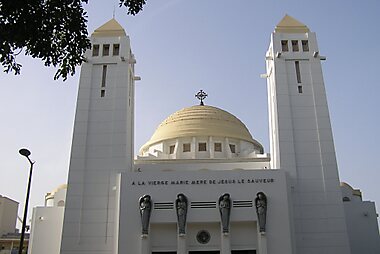
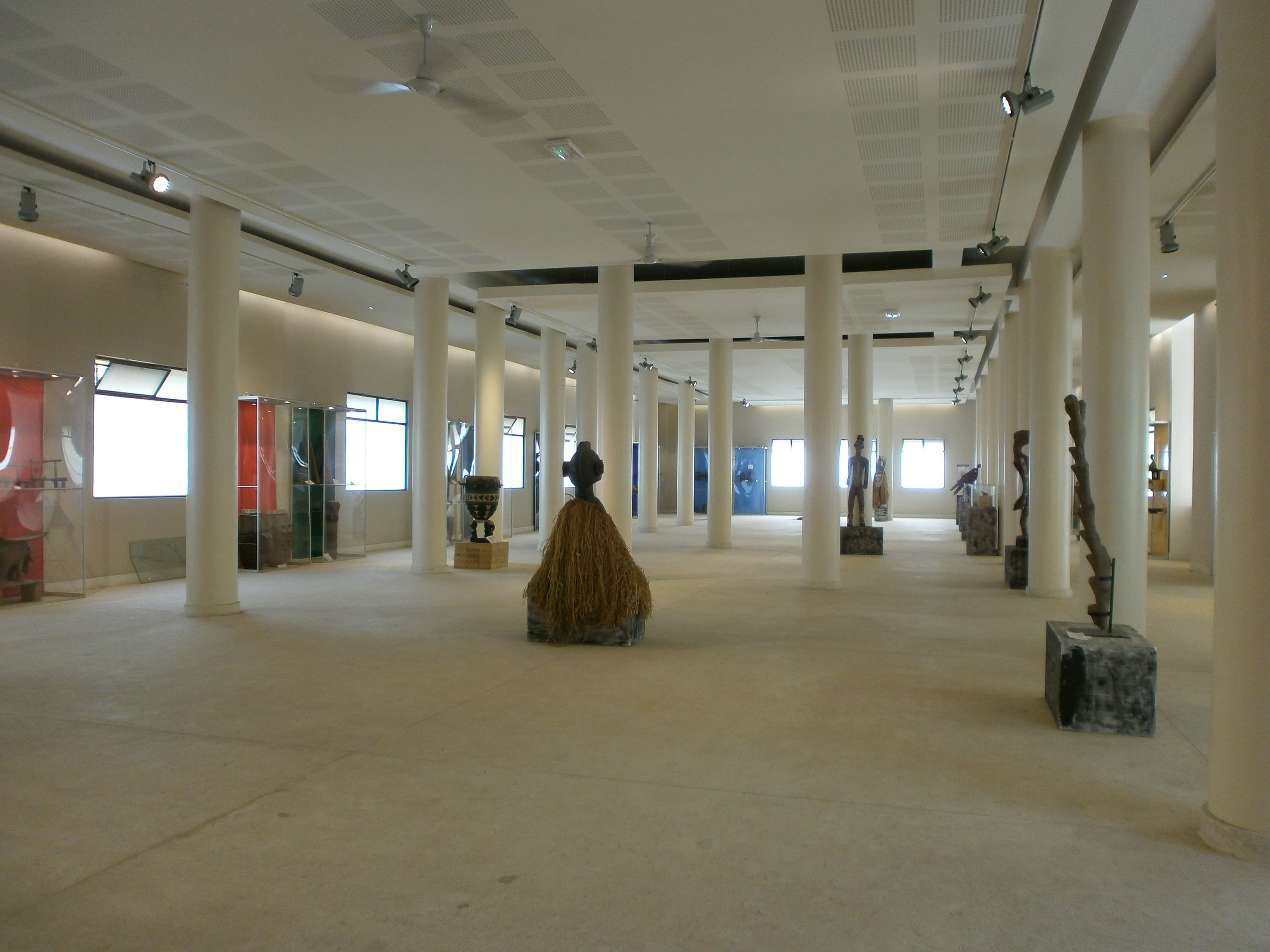
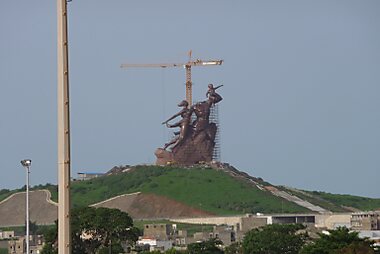
Dakar is the natural starting point: a busy coastal capital with the African Renaissance Monument, the Grand Mosque of Dakar, the Our Lady of Victories Cathedral, Dakar, and the Théodore Monod African Art Museum, plus a short ferry crossing to Island of Gorée.
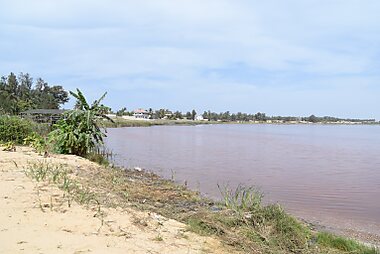
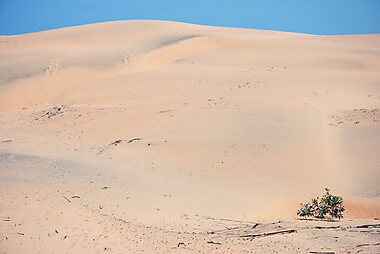
Along the coast north and west of the capital are the pink, salt-crusted waters of Lake Retba and the Sahara-like dunes of Lompoul desert. The Thiès Region holds Senegal's main beach resorts around Saly and M'bour, plus wildlife watching at Réserve de Bandia.
Saint-Louis is a former colonial capital on the Atlantic coast. Its old town sits on a narrow island in the Senegal River. It is also the gateway to Parc National des oiseaux du Djoudj, one of the world's most important bird sanctuaries. Inland, the Sufi holy city of Touba is home to Great Mosque of Touba and draws pilgrims from across West Africa.
Further south, Kaolack is a base for exploring the mangrove channels and fishing villages of the Saloum Delta. Ziguinchor opens up Casamance, a lush, distinct region south of Gambia known for its Diola culture and slower pace of life.
In the southeast, Tambacounda and Kédougou Region are the main access points for Niokolo-Koba National Park, Senegal's premier wildlife reserve and a UNESCO World Heritage Site, along with waterfalls and hiking in the hills around Kédougou.
Senegal – Plan Your Trip
Pick the places you want to see and Tripomatic turns them into a day-by-day route, with smart routing, time estimates, and everything you need for a perfect trip.