


Sesimbra
Sesimbra is a fishing town on a sheltered bay, about 40 km south of Lisbon. It sits at the foot of the Arrábida hills. A medieval castle looks over the harbour and the town beaches.
The town suits a relaxed coastal stay. Visitors come for grilled fish, swimming, boat trips and walks on the cliffs. It is also a base for Cabo Espichel and the Arrábida Natural Park, whose beaches start just east of town, and some people visit from Lisbon for a day.
Download this guide as a PDFPrintable tourist mapPublic holidays in Portugal

Sesimbra – Planning a Trip?
Build your day-by-day itinerary in the Tripomatic app.


When to visit
Summer is dry and sunny, and the sea is warmest from August to October. May, June and September are good months for the beach and for walking. Winter is mild but wetter.
The biggest annual event is the pilgrimage festival of Our Lady of Cabo Espichel. It usually takes place in late September. Pilgrims arrive at the sanctuary, and there is a mass, a procession and an entertainment programme.
Best time to visit: May, June, July, August, September, October
Top sights
Most sights are in the town or on the cape to the west.
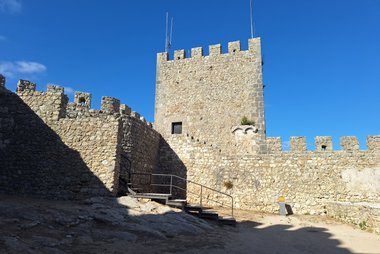
- Castelo de Sesimbra stands above the town. It was a Muslim stronghold, and King Afonso Henriques took it in 1165. You can walk along the walls for views over the bay. It has been a National Monument since 1910.
- Forte de Santiago is a 17th-century fort on the seafront. The tourist office is inside.
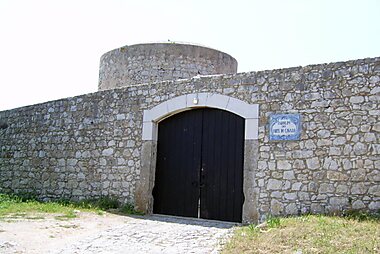
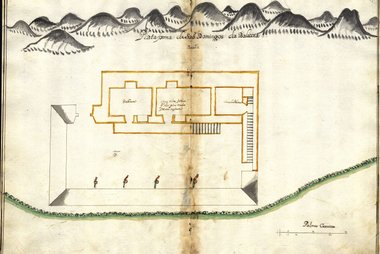
- Forte do Cavalo is a coastal fort at the western end of the bay. It was built between 1648 and 1652.
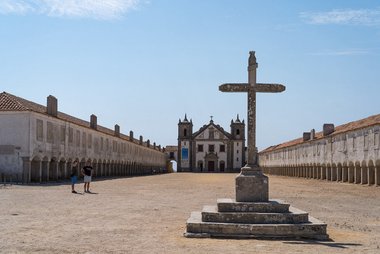
- Santuário da Nossa Senhora do Cabo Espichel is a baroque pilgrimage sanctuary on the windswept cape. Long rows of pilgrim lodgings flank the church. A walk of about 15 minutes along the cliffs leads to the lighthouse, built in 1790.
- Dinosaur footprints lie on the cliffs near the cape. The Pedra da Mua tracks are from the Late Jurassic. Look at them from the clifftop lookout, because the climb down to the rocks is dangerous.
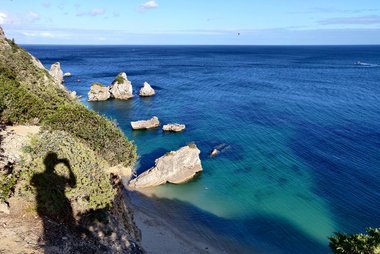
- Praia do Ribeiro do Cavalo is a sandy cove at the foot of a valley, with rocky islets just offshore. The trail down is steep and of medium difficulty. A boat shuttle is easier and depends on sea conditions.
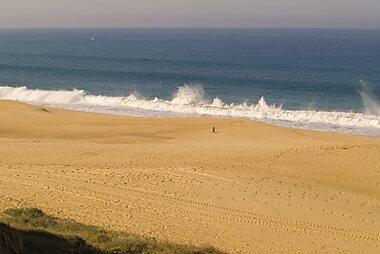
- Praia do Meco (Tramagueira) is a long beach northwest of Sesimbra. It is popular with naturists.
Featured Lists

Sesimbra's Essential Charm
Sesimbra’s landscape is defined by its strategic coastal defense and maritime heritage. The medieval Castelo de Sesimbra and the 17th-century Fortress of Saint James offer panoramic views of the Atlantic, while the Fort of São Teodósio protects the western bay. Archaeological sites like Outeiro Redondo reveal Copper Age origins, and the town's museum displays regional history. The central bay features the sandy expanse of Praia da California, complemented by a seafood scene focused on fresh Atlantic catches at local institutions like A Lota.
8 placesWhat to experience
- Boat trips leave from Sesimbra to look for dolphins in the Arrábida marine park.
- Diving is popular. A cargo-ship wreck, the River Gurara, sank off the coast in 1989.
- Walk from the sanctuary to the lighthouse at Cabo Espichel for the view over the cliffs. It takes about 15 minutes each way.
- Look for the dinosaur footprints at Pedra da Mua from the clifftop lookout. Bring binoculars, because the tracks are hard to see.
- Join the pilgrimage festival at Cabo Espichel in late September.
Tours & Activities
Sesimbra — Map

 Open the interactive map
Day trips
Setúbal and the Arrábida coast are close. Lisbon is about an hour away.
- Setúbal: about 30 minutes by car, or about 55 minutes by bus 3642 (roughly every 2 hours). From Setúbal, a catamaran crosses to the Tróia peninsula in about 15 minutes. A single ticket costs about 5 €.
- Portinho da Arrábida: a small beach in the Arrábida Natural Park, about 25 minutes by car. In summer, car access to the Arrábida beaches is restricted at peak times, so check the Setúbal municipality website before you go. Public transport is slow and needs changes.
- Lisbon: about 70 minutes by bus 3721 from Sete Rios, or about 40 minutes by car.
Where to explore
Getting there
Sesimbra has no airport or railway station.
- By air: Lisbon Airport (LIS) is the gateway. It is about 40 minutes from Sesimbra by car or taxi. There is no direct bus, so public transport needs a change in Lisbon.
- By bus: Carris Metropolitana line 3721 runs from Sete Rios in Lisbon to the Sesimbra bus terminal. It takes about 70 minutes and runs roughly every hour. Sete Rios is a rail and metro interchange. See Carris Metropolitana.
- By train: Fertagus trains run from Roma-Areeiro, Entrecampos and Sete Rios to Setúbal. From there, bus 3642 continues to Sesimbra in about 55 minutes. See Fertagus.
Getting around
- Buses: Carris Metropolitana buses link the Sesimbra terminal with nearby villages and beaches. Line 3205 goes to Cabo Espichel in about 30 minutes, but only a few times a day, so check times first. Pay the driver for a single ticket, or use a prepaid Navegante card, which is cheaper. See Carris Metropolitana for lines and timetables.
- On foot: the harbour, the seafront and the old streets are compact. A footpath of about 600 m climbs from the upper town to the castle. The cape and most Arrábida beaches are too far to walk.
Driving
- Is a car worth it? Yes, if you want Cabo Espichel, remote beaches or the Arrábida coast. Buses to the cape run only a few times a day. For the town and the main beaches, you do not need one.
- Parking: parking is limited in the town in summer, so arrive early or use the car parks near the harbour. Check signs for paid zones.
- Tolls: the 25 de Abril Bridge charges a toll only when you enter Lisbon, so you pay on the return. The A2 motorway is also tolled.
Food & drink
Sesimbra is known for fresh fish and seafood. Look for grilled fish, swordfish, black scabbardfish and shellfish platters. Grilled fish is the local classic.
Most good places for a meal are on the seafront and in the streets just behind it. The municipal market is also worth a visit. Local fairs celebrate apples, sweets and bread during the year.
Safety & health
Sesimbra is a calm town. Normal precautions are enough. Keep valuables out of sight in parked cars, especially at remote car parks.
The main risks are in nature. The trail to Ribeiro do Cavalo is steep. Do not climb down the cliffs to the dinosaur footprints.
History
People have lived on the castle hill since prehistoric times. The Moors held Castelo de Sesimbra from the 9th century. It fell to Afonso Henriques in 1165 and to the Almohads in 1191. King Sancho I took it back in 1199.
In 1323 the walls were strengthened and a tower was added to watch for pirates. In the 17th century, forts such as Forte de Santiago and Forte do Cavalo were built to defend the bay.
Pilgrims have gone to Santuário da Nossa Senhora do Cabo Espichel since the Middle Ages. The present church dates from the early 18th century.
Country facts
Quick practical facts for Portugal at a glance:
- Currency
- Euro EUR € · Card payments · Widely accepted
- Emergency numbers
- 112
- Electricity
- 230 V · 50 HzType C / Type F
- Languages
- Portuguese
- Tap water
- Safe to drink
- Driving side
- Right
- Calling code
- +351


Sesimbra – Plan Your Days
Turn the places from this guide into a real itinerary, with smart routing, time estimates, and everything you need for a perfect trip.


Related destinations


Data: © OpenStreetMap contributors, Wikidata, Wikipedia, Tripomatic, Official websites. Tours by GetYourGuide. We earn commission from bookings. Travel guide generated with AI.
Plan your trip with Tripomatic
- AI-Powered PlanningGet a ready-made day in one tap, let AI spread your shortlist across your trip, or plan everything by chatting.
- Travel AlertsOfficial advisories, severe weather, strikes, and natural hazards for the places on each day of your trip.
- Public Holidays & EventsSee holidays, festivals, and closures on the days of your trip, and what they mean for your plans.
- Cost EstimationAI-powered trip cost breakdowns so you know what to budget before you go.
- Tours & TicketsBook tours, skip-the-line tickets, and activities directly in your plan.