



Skopje
Skopje is the capital and largest city of North Macedonia, built along the Vardar River between the Skopje valley and the surrounding mountains. Centuries-old mosques and a working Ottoman-era bazaar sit close to a wave of large bronze statues and neoclassical facades added during a government building campaign in the 2010s, giving the city center an unusual, layered look.
Most visitors spend two or three nights here, enough time to see the old town and add a day trip into the nearby mountains or lakes. Skopje suits travelers who want an affordable, walkable city with a strong café and food scene, rather than a polished, museum-piece old town. Mother Teresa was born here in 1910, and the city marks the connection with a small memorial house near the main square.

Skopje – Planning a Trip?
Build your day-by-day itinerary in the Tripomatic app.


When to visit
Spring (April–May) and autumn (September–October) are mild and the most comfortable times to visit. Summer is hot and dry, with July and August regularly reaching the mid-30s °C, while winter is cold and the valley traps smog on still days.
The Skopje Jazz Festival is one of the city's biggest annual events: running since 1982, it fills clubs and outdoor stages for several days in October and regularly draws well-known international acts.
Best time to visit: May, October
Late September and October combine warm, sunny days with the cleanest air of the year — winter's still, cold air traps pollution in the valley, which is worth knowing if you have respiratory sensitivities.
Top sights


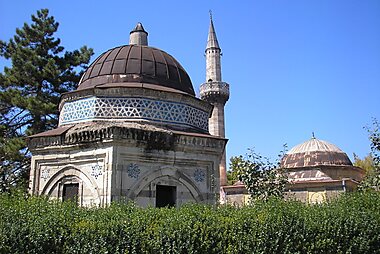




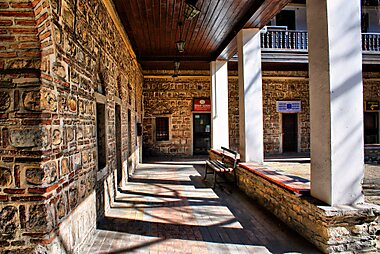

Stone Bridge is the city's best-known landmark, a stone footbridge over the Vardar that has linked the old and new town for centuries and appears on Skopje's coat of arms.
Cross it into the Old Bazaar, the largest bazaar in the Balkans outside Istanbul, where mosques, hammams and craft workshops line narrow cobbled lanes.
Above the bazaar, Skopje Fortress has been fortified since Byzantine times and gives the best rooftop view over the old town and river.
Near the main square, the Memorial House of Mother Teresa stands on the site of the church where she was baptized, marking her childhood years in the city.
Warrior on a Horse, a 22-meter bronze fountain and statue complex, is the centerpiece of Macedonia Square and the most visible symbol of the government's 2010s building campaign.
A short walk away, the Church of St. Clement of Ohrid is the largest Macedonian Orthodox cathedral in the city, notable for its modern take on Byzantine church design.
Just outside the center, Lake Matka fills a narrow canyon on the Treska River with caves, cliffside monasteries and short hiking trails.
For a wider view, ride the cable car up Mount Vodno to the Millennium Cross, a 66-meter steel monument that is visible from most of the city below.
Featured Lists

Skopje Essentials
Skopje’s landscape is defined by the Vardar River, spanned by the 15th-century Stone Bridge connecting the modern Macedonia Square to the historic Old Bazaar. This Ottoman-era marketplace houses the 15th-century Mustafa Pasha Mosque and leads to the Byzantine-era Skopje Fortress. Modern additions include the 66-meter Millennium Cross on Mount Vodno and the monumental Warrior on a Horse statue. Cultural heritage is preserved in the Archaeological Museum and the Memorial House of Mother Teresa, while the nearby Lake Matka offers natural limestone canyons and medieval monasteries.
10 places

Historical Gems
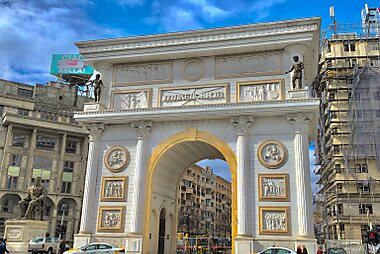
Skopje's architectural landscape spans centuries, from the 6th-century defensive walls of the Skopje Fortress to the sprawling 12th-century Old Bazaar, the largest Ottoman marketplace in the Balkans outside Istanbul. Religious heritage is showcased through the 15th-century Mustafa Pasha’s Mosque and the modern rotunda-style St. Clement of Ohrid cathedral. The city’s skyline is further defined by the Porta Macedonia memorial arch and the 66-meter-tall Millennium Cross on Mount Vodno, which serves as a significant viewpoint for the entire Skopje valley.
6 places
Notable Religious Sites
This collection highlights religious sites around Skopje, from Ottoman-era mosques in the Old Bazaar to medieval Byzantine and post-medieval Orthodox monasteries and churches in surrounding villages and canyons. Entries include 12th-century Byzantine frescoed churches, rural monastic complexes such as Marko’s Monastery and Gorno Nerezi, as well as active Sunni mosques and several Muslim cemeteries, offering architectural details, historical periods, and precise locations.
20 places


Parks and Nature
Skopje’s green spaces range from central memorial gardens to high-altitude glacial lakes. The city’s urban core is anchored by the expansive City Park and the monument-filled Park of the Woman - Freedom-fighter. Beyond the center, the Skopje valley contains the protected Katlanovo Swamp, a key site for birdwatching, while the Jakupica mountain range hosts the Salakovski Ezera, two glacial lakes situated at over 2,100 meters above sea level.
5 places
Balkan Markets & Cuisine
This list groups Skopje's traditional markets and restaurants where regional Balkan cuisine is served. It includes the Ottoman-era Old Bazaar along the Vardar with bakeries, spice and souvenir stalls, street-food vendors selling kebap and burek, and nearby eateries (including restaurants by Matka Canyon) that specialize in grilled meats, meze, freshwater fish and outdoor-café service.
12 places
What to experience
- Ride the Vodno cable car up to the Millennium Cross in the late afternoon and stay for the sunset over the city and valley.
- Rent a kayak or join a short boat trip on the reservoir inside Lake Matka, framed by cliffs and cave entrances.
- Join the evening korzo along Macedonia Square and the riverside promenade, when locals turn out for a slow walk and a coffee.
- Settle in at one of the cafés in the Debar Maalo neighborhood for a macchiato or a glass of rakija — the city's main after-work social ritual.
Tours & Activities
Skopje — Map

 Open the interactive map
 Day trips
Skopje sits close to some of North Macedonia's best mountains and lakes, so a rental car or a day tour easily reaches beyond the city.
- Tetovo — ≈45 min by car or bus. A small city at the foot of the Šar Mountains, known for the brightly painted Šarena Džamija mosque and a lively student population.
- Mavrovo National Park — ≈1.5 hr by car. North Macedonia's largest national park, built around Lake Mavrovo, the Bigorski Monastery and hiking or skiing on the surrounding peaks.
- Ohrid — ≈2.5–3 hr by car or bus. A UNESCO World Heritage lake town with a well-preserved old quarter and dozens of medieval churches; a long day trip, but a strong pick for travelers with the time for it.
Getting there
- By air: Skopje International Airport (SKP) is the country's main gateway, about 20 km southeast of the center, near Petrovec. A shuttle bus and metered taxis run into town; the shuttle takes roughly 30 minutes.
- By train: Skopje's central railway station has direct international trains to Thessaloniki in Greece and connections toward Belgrade in Serbia; services are limited and slower than the bus.
- By bus: The main bus station, next to the railway station, has frequent international coaches from Belgrade, Sofia, Pristina and Tirana, and is often faster and more comfortable than the train.
Getting around
- Public transit: City buses, run by JSP Skopje, cover the whole urban area; there is no metro or tram. Buy a ticket from the driver or a kiosk, or use a rechargeable Skopje Card for cheaper fares. JSP Skopje
- Taxi: Taxis are inexpensive by European standards and easy to flag down; confirm the fare uses the meter.
- On foot: The old town, Macedonia Square and the riverside are flat and walkable; the wider city is spread out and better covered by bus or taxi.
Driving
- Is a car worth it?: Not for the center, which is compact and walkable, but useful for reaching Matka Canyon, Mavrovo or Ohrid at your own pace.
- Parking: The center is divided into paid parking zones, charged by SMS or a parking app; a few multi-story garages sit near Macedonia Square and City Mall.
- Restrictions: There is no congestion charge or low-emission zone, but the Old Bazaar's narrow lanes are largely pedestrian-only.
Food & drink
Skopje's kitchens mix Ottoman, Balkan and Mediterranean influences: grilled meats, filled pastries and slow-cooked bean stews dominate menus across the city.
For traditional food, head to the Old Bazaar, where small bakeries sell burek and grills serve ćevapi late into the evening; for a more modern dining scene, the Debar Maalo neighborhood has the city's highest concentration of contemporary restaurants and wine bars.
Safety & health
Skopje is a safe city for tourists, with low rates of violent crime. The main risks are ordinary ones: watch for pickpockets in the crowded Old Bazaar and on city buses, and use only metered or app-based taxis.
The one health note worth planning around is air quality: Skopje's valley setting traps pollution during still, cold weather, and the city regularly ranks among Europe's most polluted capitals in winter. Travelers with respiratory conditions should check air-quality readings before a winter visit.
History
Skopje's Old Bazaar and its mosques date to the roughly 500 years the city spent under Ottoman rule, after the Ottomans took the city in 1392. The Stone Bridge across the Vardar dates from this era and became the traditional line between the Ottoman old town and the newer districts that grew up on the opposite bank.
A devastating earthquake on 26 July 1963 destroyed much of the city center and killed over 1,000 people. The rebuilding that followed, partly designed by Japanese architect Kenzo Tange, gave Skopje its modernist boulevards and concrete public buildings. Decades later, the government's Skopje 2014 project added the neoclassical facades and statues, including Warrior on a Horse in Macedonia Square, that now define the city center — a project that remains debated among Macedonians for its cost and its historical claims.
Country facts
Quick practical facts for North Macedonia at a glance:
- Currency
- Macedonian Denar MKD · Card payments · Commonly accepted
- Emergency numbers
- 112
- Electricity
- 230 V · 50 HzType C / Type F
- Languages
- Macedonian, Albanian
- Tap water
- Drink with caution
- Driving side
- Right
- Calling code
- +389


Skopje – Plan Your Days
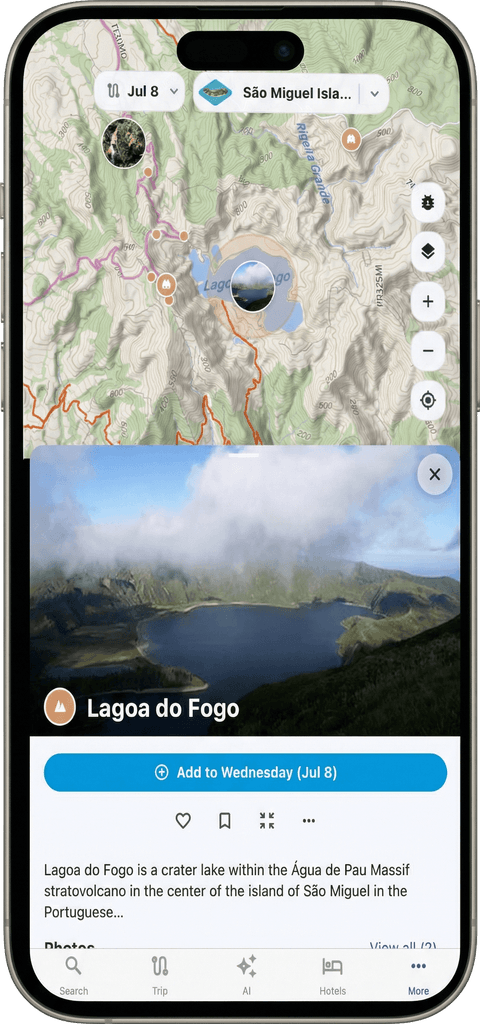
Turn the places from this guide into a real itinerary, with smart routing, time estimates, and everything you need for a perfect trip.

Related destinations


Data: © OpenStreetMap contributors, Wikidata, Wikipedia, Tripomatic, Official websites, geoBoundaries (CC BY 4.0). Tours by GetYourGuide. We earn commission from bookings. Travel guide generated with AI.