


Sønderborg
Sønderborg sits on both banks of the Als Sound, the narrow strait between the Jutland mainland and the island of Als. The old town, the castle and the harbour front are on the Als side, and the hills of Dybbøl rise on the mainland side. It is a small, easy town with water views from almost every street.
History is the main reason to come. In 1864 the Battle of Dybbøl decided a war that put this region under German rule until 1920, and the story is told on the battlefield, in the castle and in the town's German and Danish institutions. Add royal palaces, quiet beaches and a long coastal trail, and Sønderborg works well for two or three nights, with a car or bus for the countryside.

Sønderborg – Planning a Trip?
Build your day-by-day itinerary in the Tripomatic app.


When to visit
June to August is the best time, with long days, mild weather and life on the harbour front. May and September are quieter and still good for walks. Winter is dark, damp and windy, and some attractions close or shorten their hours.
The biggest yearly event is Sønderborg Ringridning, usually on the second weekend of July. Riders on horseback try to spear small rings at full gallop, with tournaments on Friday and Sunday and music in between.
Best time to visit: July
Top sights




Sønderborg Slot stands at the water's edge in the centre, on a site fortified since the 12th century. Its museum covers the region's history, with a focus on the wars of 1848–50 and 1864, reunification in 1920 and World War II. Do not miss Queen Dorothea's Chapel from 1568–70, one of Europe's oldest preserved Lutheran royal chapels.
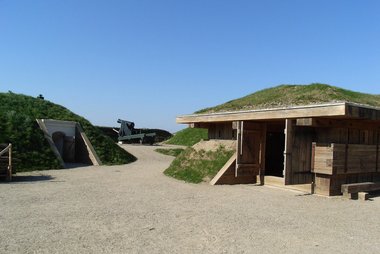
Battle of Dybbøl took place on the hills just west of town, where you can still walk among the earthworks of the Danish redoubts. The Prussian assault on 18 April 1864 decided the war, and graves and memorials for both sides line the slopes.
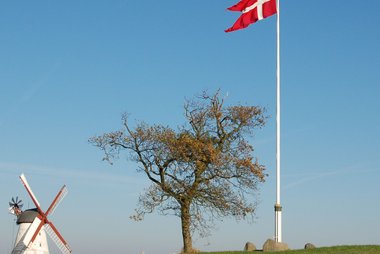
Dybbøl Mølle is the white windmill on the battlefield and a Danish national symbol. It was destroyed in both Schleswig wars and rebuilt each time, and today it holds exhibitions on the mill and on Dybbøl as a place of memory.
History Centre Dybbøl Banke explains the war with films, a rebuilt redoubt and, in summer, staff in period uniform. It is usually open daily from April to early September; outside the season it admits pre-booked groups only, so check 1864.dk before visiting.
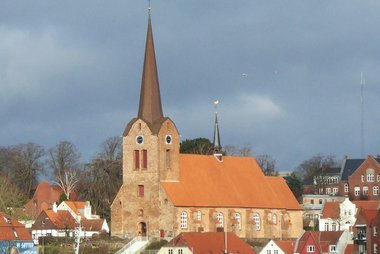
Sankt Marie Kirke sits on a hill above the old town, so its tower is one of the town's landmarks. The climb up from the harbour gives a good view over the sound.
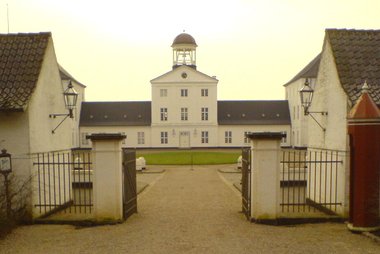
Gråsten Palace is the royal family's summer residence, about 15 km west of town. Its English-style garden is open to the public all year, except while the royal family is in residence, usually for several weeks in July and August; the Royal Kitchen Garden stays open then (check kongehuset.dk for this year's dates).
Augustenborg Palace is a Rococo palace on Augustenborg Fjord, about 8 km from Sønderborg. The buildings are offices and closed to visitors, but you can walk in the park and visit the palace church outside service times.
Danfoss Universe is a science-themed adventure park near Nordborg in the north of Als. Families can spend a full day on its hands-on experiments and rides. Check the opening season before you go.
Featured Lists

What to experience
A few activities that are special to Sønderborg and the area around it:
- Watch tilting at the ring at the castle: on Tuesday evenings (around 5 pm) in the school summer holidays, late June to early August, riders show the old sport on a course rebuilt from a 1680 engraving of Sønderborg Slot. The show lasts about half an hour, and you can pat the horses afterwards.
- Join the Ringridning weekend: the town's big July tournament draws crowds from across the region.
- Hike the Gendarmstien: this marked 84 km trail follows the coast from Padborg on the German border to Skovby on Als. Border guards patrolled it on foot from 1920 to 1958. The stretch via Dybbøl into Sønderborg has views over the water.
- Cross the fjord by boat: from May to October the excursion boat Feodora II links the harbour with Langballigau in Germany on selected weekdays, one return trip a day, a crossing of about one hour. You see the castle and the Dybbøl hills from the water. Bring your passport.
Tours & Activities
Sønderborg — Map

Day trips
The island of Als and the coast around Sønderborg are easy to explore in a day. Flensburg in Germany is close enough for a half-day visit.
- Augustenborg (about 8 km, 15 minutes by car or bus): a small palace town on its fjord, with the palace park, the palace church and a waterside path.
- Gråsten (about 15 km, a short train or bus ride): the royal summer palace and its garden, plus the Royal Kitchen Garden, which stays open when the main garden closes.
- Nordborg and North Als (about 20 km, around 25 minutes by car): the adventure park, Nordborg Castle by its lake, and quiet beaches and farmland along the coast.
- Aabenraa (about 35 km, 40 minutes by car): a harbour town on a deep fjord with a well-kept old centre.
- Flensburg (about 40 km, 45 minutes by car or bus): a German harbour city with a long pedestrian street, old merchant courtyards and a maritime museum. Bring your passport or ID card for the border.
Where to explore
Several other destinations in Southern Denmark make good next stops after Sønderborg.
- Towns on the east coast of Jutland: Aabenraa, Kolding, Fredericia and Vejle.
- The west coast and the Wadden Sea: Esbjerg, the island of Fanø, the beaches at Blåvand and the national park at Wadden Sea.
- For families: Billund, home of LEGOLAND, and Vejen.
- Islands to the east: Langeland, reached across Funen.
Getting there
- By air: Sønderborg Airport is about 7 km from town, with Alsie Express flights to Copenhagen up to five times a day. There is no airport bus, so take a taxi or rent a car. Billund Airport and Hamburg Airport have many more international flights and are roughly 1.5 to 2 hours away by car.
- By train: DSB InterCity trains run to Sønderborg station next to the Alsion building, with some direct services to Copenhagen in about 3.5 to 4 hours. Other trips change at Tinglev, Kolding or Fredericia. Book on DSB.
- By bus: FlixBus links Sønderborg with Flensburg in about 45 minutes, with connections onward into Germany.
- By ferry: AlsLinjen sails from Fynshav on Als to Bøjden on Funen in about 45 minutes, a useful shortcut towards Odense and Copenhagen by car.
Getting around
- Public transport: Sydtrafik runs the city and regional buses, with routes to towns across Als and the mainland. Buy single tickets in the Rejsebillet app, which is in English and takes foreign cards. Drivers do not take cards, only cash in Danish kroner. See Sydtrafik tickets.
- On foot: The old town, the castle, the harbour and the station are all within a 15-minute walk. King Christian X's Bridge connects the two banks and has a footpath.
- Cycling: The town is mostly flat apart from the climbs to St Mary's Church and Dybbøl. A bike is a good way to reach the battlefield, about 2 km west of the centre.
Driving
- Is a car worth it? Not for the town itself, which is easy on foot. A car is the simplest way to see Als, the royal palaces and the coast, since buses outside town are infrequent.
- Parking: there are several central car parks, including the multi-storey Havnens P-hus by the harbour. Rules and fees differ between car parks, so read the signs.
- Crossing the sound: two bridges link Als with the mainland, King Christian X's Bridge in the centre and the larger Alssund Bridge north of town. Neither charges a toll.
Food & drink
The local speciality is the Sønderjysk kaffebord, the South Jutland coffee table. It is a generous spread of many cakes, pies and layer cakes served with coffee. The custom grew after 1864, when Danish-minded people met over coffee and home-baked cakes in their own assembly houses. Cafés and country inns in the region still serve it, often by booking.
For meals, head to the harbour front on the Als side of the sound. Restaurants and cafés with outdoor terraces line the water there, and the pedestrian street Perlegade has more cafés. On a warm evening, a meal by the water with a view of the bridge is the classic choice.
Safety & health
Sønderborg is a very safe town, and serious crime against visitors is rare. Watch your bags during the crowded Ringridning weekend, as you would at any festival.
The main practical risks are outdoors. The coastal paths can be muddy and slippery after rain, and the wind off the water feels cold even in summer. Bring a jacket. Carry your passport or ID card on any trip across the German border.
History
Sønderborg grew up around a fortified tower that King Valdemar the Great is thought to have built around 1158. This later became Sønderborg Slot. The deposed King Christian II was held there as a prisoner from 1532 to 1549, although in comfortable rooms rather than a dungeon.
The town's defining moment came in 1864. Prussian troops besieged the Danish redoubts on the hills west of town from 2 April, and the final assault on 18 April ended in a heavy Danish defeat. Battle of Dybbøl decided the war, and the whole region became part of Prussia and later Germany. Dybbøl Mølle, destroyed and rebuilt, became the symbol of that loss.
After World War I, a plebiscite in 1920 returned North Schleswig to Denmark. A majority in the town itself voted to stay in Germany, but the region as a whole voted Danish, and reunification was celebrated on the Dybbøl hills on 11 July 1920. A German minority still lives here today, with its own schools, library and museum, so you will hear and see both languages in town.
Country facts
Quick practical facts for Denmark at a glance:
- Currency
- Danish Krone DKK kr · Card payments · Widely accepted
- Emergency numbers
- 112
- Electricity
- 230 V · 50 HzType C / Type E / Type F / Type K
- Languages
- Danish
- Tap water
- Safe to drink
- Driving side
- Right
- Calling code
- +45


Sønderborg – Plan Your Days
Turn the places from this guide into a real itinerary, with smart routing, time estimates, and everything you need for a perfect trip.


Related destinations




Data: © OpenStreetMap contributors, Wikidata, Wikipedia, Tripomatic, Official websites. Tours by GetYourGuide. We earn commission from bookings. Travel guide generated with AI.