


Stuttgart
Stuttgart is the capital of Baden-Württemberg. The city lies in a green basin, with hills, forests and vineyards around the centre. It is the home of Mercedes-Benz and Porsche, and it suits a trip of two or three days.
The city combines car museums, art, palaces and parks. Wine grows on slopes close to the main station. The philosopher Hegel was born here. Visitors who like cars, architecture or wine will find the most to do. The Christmas market and the autumn Volksfest are the big seasonal draws.
Plan your visit: Stuttgart Tourist Information
Download this guide as a PDFPrintable tourist mapPublic holidays in Germany

Stuttgart – Planning a Trip?
Build your day-by-day itinerary in the Tripomatic app.


When to visit
Late spring and early autumn are the most pleasant seasons. Summer is warm, with some rain. Winter is cold and grey, but the Christmas market makes it worth a visit.
The biggest event is the Cannstatter Volksfest. It is a beer and funfair festival on the Cannstatter Wasen meadow. It runs for about three weeks from late September into early October. Book hotels early for this period.
Best time to visit: June, September
Top sights
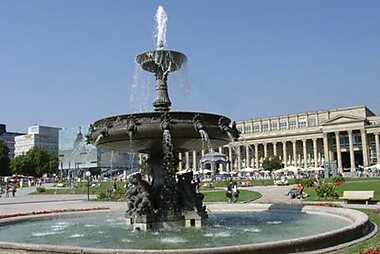

- Schlossplatz is the central square. Palaces, museums and a large park meet here, so it is the best place to start.
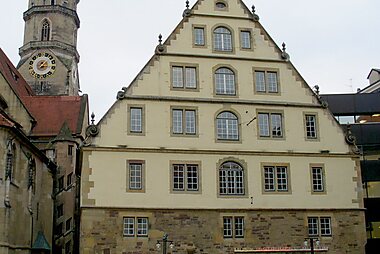
- Landesmuseum Württemberg fills the Old Castle next to the square. It shows the history of Württemberg, from ice age finds to the royal crown.
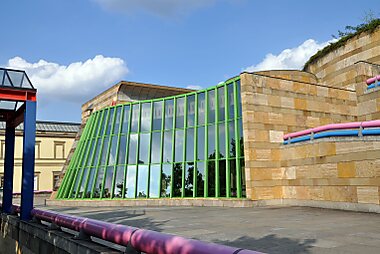
- Staatsgalerie is the main art museum. The new wing by James Stirling opened in 1984. It holds Old Masters and modern art, including works by Picasso and Mondrian.
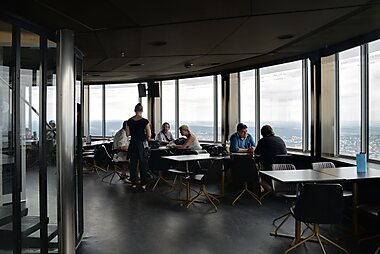
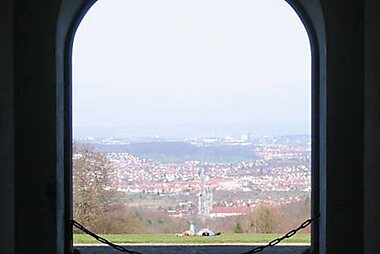
- Fernsehturm was opened in 1956. It was the first telecommunications tower in the world built from reinforced concrete. The view platform shows the city basin and the hills.
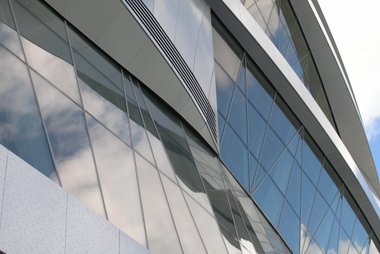
- Mercedes-Benz Museum tells the story of the Mercedes-Benz brand with more than 160 vehicles. The building opened in 2006. Audio tours are free.
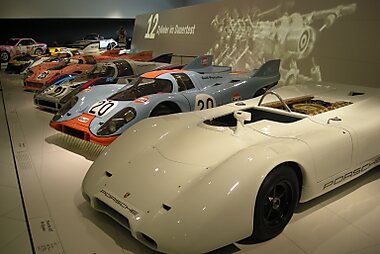
- Porsche Museum is in the north of the city, next to the Porsche headquarters. It opened in 2009 and shows a rotating selection of cars.
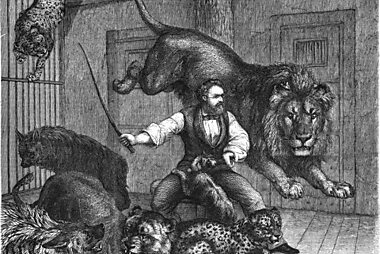
- Wilhelma is a zoo and a botanical garden in one park. Its Moorish-style buildings date from the 19th century.
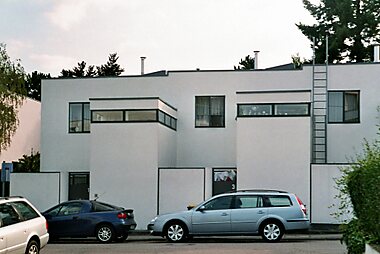
- Weißenhofsiedlung was built for a housing exhibition in 1927. Mies van der Rohe led the project. Two houses by Le Corbusier are on the UNESCO World Heritage list.
Featured Lists


Museums & Galleries
Stuttgart’s cultural landscape is anchored by its automotive heritage, featuring the architecturally striking Porsche and Mercedes-Benz museums. The city’s art scene ranges from the Staatsgalerie’s 14th-century masterpieces to the contemporary collections of the glass-cube Kunstmuseum. Architectural highlights include the UNESCO-listed Weissenhof Estate, showcasing Le Corbusier’s modernism, and the classical Rosenstein Palace. Diverse regional history is preserved at the Württemberg State Museum and specialized sites like the Pig Museum and the Museum of Viniculture.
16 places

Performing Arts & Theatre
Stuttgart’s performing arts scene is anchored by the Staatstheater Stuttgart, one of the world's largest multi-genre theaters encompassing opera, ballet, and drama. The historic Opernhaus, a landmark of Neoclassical architecture, hosts the award-winning Stuttgart Ballet. Contemporary culture thrives at Theaterhaus Stuttgart, home to the Gauthier Dance company, while the SI-Centrum serves as the city's hub for major international musical productions at the Stage Palladium Theater. For artistic innovation, Akademie Schloss Solitude provides a unique residency space for international creators within a historic palace setting.
6 places
What to experience
Stuttgart has seasonal events and local rituals that suit a short visit.
- Christmas market: It runs from late November until 23 December. It has more than 200 stands and is one of the oldest and largest in Europe. Try hot mulled wine and look at the handmade gifts.
- Cannstatter Volksfest: A funfair and beer festival on the Cannstatter Wasen in autumn. A smaller spring edition takes place on the same ground.
- Stuttgarter Weindorf: A wine festival in late August or early September. Local winegrowers sell wine on the squares around Schillerplatz Stuttgart and the market square.
- Ride the Zacke: Take the Zacke from Marienplatz up to Degerloch for the ride itself. It is a rack railway that is part of the city transit system.
- Mineral bath: Stuttgart has many mineral springs. Swim in a mineral bath such as Mineralbad Berg or Mineralbad Leuze.
- Sunset on the Birkenkopf: Rubble from the war was piled on this 511 m hill. The view over the city is best at dusk.
- Walk the vineyards: Vines cover the slopes above the city. Some vineyards are less than 500 m from the main station.
Tours & Activities
Stuttgart — Map

 Open the interactive map
Day trips
These trips are easy by train. They are listed from closest to farthest.
- Esslingen am Neckar: about 15 min by S-Bahn. A medieval old town with half-timbered houses and parts of the old city wall.
- Ludwigsburg: about 20 min by S-Bahn. A large Baroque palace with gardens.
- Tübingen: about 1 hour by regional train. A university town with narrow lanes and flat boats on the river.
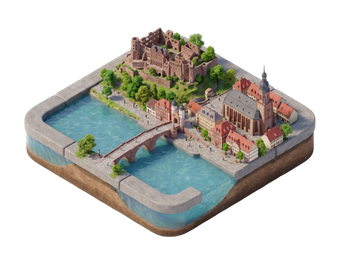
- Heidelberg: about 40 min by direct ICE. A castle ruin above the old town.
Where to explore
Larger destinations in the region are reachable by train for a longer trip.
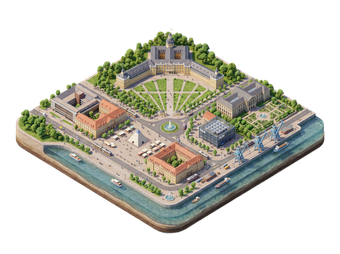
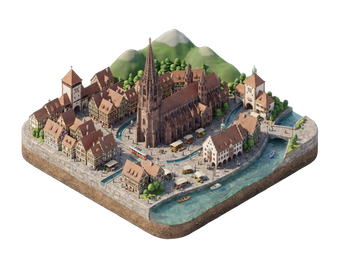
- For a city break: Karlsruhe and Freiburg im Breisgau.
- For spa and forest: Baden-Baden and the Black Forest.
- For lakes: Lake Constance and Konstanz.
Getting there
- By air: Stuttgart Airport (STR) is about 13 km south of the centre. The S-Bahn (S2 or S3) reaches the main station in about 30 min. Many travelers also fly to Frankfurt and continue by train.
- By train: Stuttgart Hauptbahnhof has direct ICE trains to Frankfurt (about 1 h 20 min), Munich (about 2 h 15 min) and Heidelberg (about 40 min). Direct trains also run to Strasbourg, Zurich, Vienna and Paris. Book at Deutsche Bahn.
- By bus: Long-distance coaches serve the city and are cheaper than trains. The coach station is at the airport, so use the S-Bahn to reach the centre.
Airport information: Stuttgart Airport
Getting around
- Public transit: The Stadtbahn (U-Bahn), S-Bahn and buses share one fare system. A 1-zone ticket covers travel inside Stuttgart.
- Tickets: Buy a mobile ticket in the VVS app. It is cheaper than a machine ticket. You can also use station machines, which have an English option, or buy from the bus driver. Day tickets are available.
- Rack railway: Line 10, the Zacke, runs from Marienplatz up to Degerloch. Normal VVS tickets are valid.
- On foot or by bike: The centre is compact and good on foot. The hills around it are steep, so e-bikes work better than normal bikes.
Journey planner: VVS Stuttgart
Driving
- Is a car worth it?: Not for a city stay. The Stadtbahn and S-Bahn reach every sight. A car helps only for trips into the countryside.
- Parking: Use a car park in the centre or a park-and-ride lot at an S-Bahn stop. Continue into the centre by train.
- Restrictions: The city is a low-emission zone. Cars need a green sticker. Older diesel cars may be banned, so check before you drive.
Food & drink
Look for Swabian dishes. Maultaschen are filled pasta squares, often served in broth. Spätzle are soft egg noodles, eaten with lentils and sausage or with roast beef and onions. Local wine comes from Württemberg. Red Trollinger and white Riesling are common.
- The food stalls and snack counters inside Markthalle.
- The restaurants and bars of Bohnenviertel Stuttgart.
- The wine stands at the Weindorf in late summer.
Safety & health
Stuttgart is safe for visitors. Violent crime against tourists is rare.
- Pickpockets work in crowds around the main station and on the main shopping street. Keep bags closed.
- Crowds at the Volksfest and the Christmas market also attract thieves.
- The Leonhardsviertel is lively at night. Stay aware late in the evening.
- Call 112 for ambulance and fire, and 110 for police.
History
The name Stuttgart comes from Stuotgarten, an old word for stud farm. Duke Liudolf of Swabia founded a stud farm here in 950 to breed warhorses.
The Württemberg rulers later made the city their capital. Neues Schloss is their Baroque residence. Building began in 1746. Today it houses state ministries. The Old Castle next to it is now a museum. In the 1760s Duke Charles Eugene built the Rococo Schloss Solitude as a hunting retreat on a hill west of the centre.
In the 19th and 20th centuries Stuttgart became an industrial city. Gottlieb Daimler built early engines and cars in Bad Cannstatt. Mercedes-Benz and Porsche are still headquartered here.
Air raids in the Second World War destroyed most of the old centre. The heaviest raid came on 12 September 1944. Many buildings were rebuilt after the war, including the palace, which was rebuilt in the 1950s and 1960s. Rubble from the ruins was piled on the Birkenkopf hill.
Country facts
Quick practical facts for Germany at a glance:
- Currency
- Euro EUR € · Card payments · Commonly accepted
- Emergency numbers
- 112 Ambulance · Fire brigade
- Electricity
- 230 V · 50 HzType C / Type F
- Languages
- German
- Tap water
- Safe to drink
- Driving side
- Right
- Calling code
- +49


Stuttgart – Plan Your Days
Turn the places from this guide into a real itinerary, with smart routing, time estimates, and everything you need for a perfect trip.


Related destinations
Data: © OpenStreetMap contributors, Wikidata, Wikipedia, Tripomatic, Official websites, geoBoundaries (CC BY 4.0). Tours by GetYourGuide. We earn commission from bookings. Travel guide generated with AI.
Plan your trip with Tripomatic
- AI-Powered PlanningGet a ready-made day in one tap, let AI spread your shortlist across your trip, or plan everything by chatting.
- Travel AlertsOfficial advisories, severe weather, strikes, and natural hazards for the places on each day of your trip.
- Public Holidays & EventsSee holidays, festivals, and closures on the days of your trip, and what they mean for your plans.
- Cost EstimationAI-powered trip cost breakdowns so you know what to budget before you go.
- Tours & TicketsBook tours, skip-the-line tickets, and activities directly in your plan.