


Tomar
Tomar is a small town on the Nabão river in central Portugal. It was the seat of the Knights Templar in Portugal, and later of the Order of Christ. Their castle and convent on the hill are a UNESCO World Heritage Site and the reason most people come.
The old centre is compact and easy to walk. It has a medieval synagogue, a few quiet churches and river gardens. Tomar suits a relaxed one- or two-night stay, and it works well between Lisbon and Coimbra.

Tomar – Planning a Trip?
Build your day-by-day itinerary in the Tripomatic app.


When to visit
April, May and October are the most comfortable months for walking and sightseeing. July and August are hot and dry, so visit the convent early in the day. Autumn and winter bring the most rain, but the sights are quiet then.
The biggest event is the Festa dos Tabuleiros. It takes place every four years in July, and the next edition is in 2027. Girls in white carry tall towers of decorated bread through streets covered in paper flowers. Book rooms well ahead if you plan to attend.
Best time to visit: April, May, October
Top sights
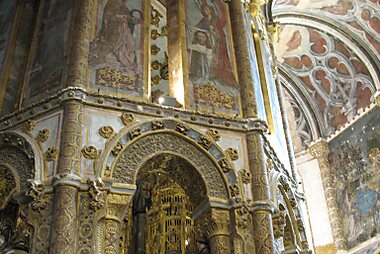
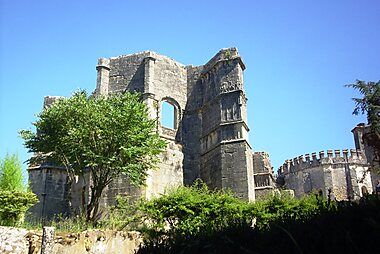
- Convento de Cristo is the main reason to visit. Templars founded it in the 12th century, and its round church is modelled on buildings in Jerusalem. The Manueline chapter house window is one of Portugal's best-known carvings.
- Castelo de Tomar is the Templar fortress on the same hill. It is part of the convent visit, and its walls give views over the town.
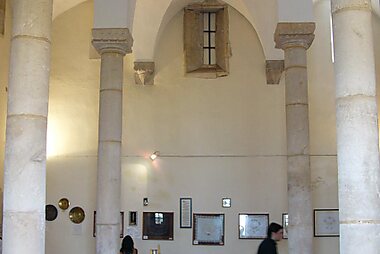
- Sinagoga de Tomar is a 15th-century synagogue. It now holds a small museum about the town's Jewish history.
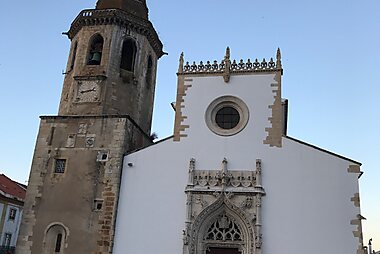
- Igreja de São João Baptista stands on the main square, Praça da República. It is a good start for a walk around the old centre.
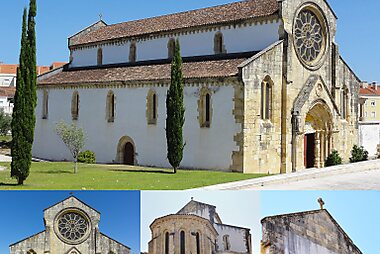
- Igreja de Santa Maria dos Olivais is a Templar church from the 12th century. It holds the tomb slab of Gualdim Pais, who founded the town's castle.
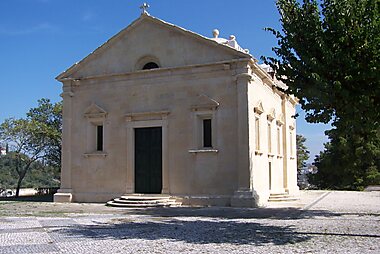
- Ermida de Nossa Senhora da Conceição is a small Renaissance chapel on the path up to the convent. It was planned in the 16th century as a royal tomb.
- Parque do Mouchão is a park on an island in the Nabão river. It is a good place for a break after the convent.
Tickets for the convent cost €15. It is open 9:00 to 17:30 from October to May and 9:00 to 18:30 from June to September. The last entry is 30 minutes before closing. It is closed on 1 January, 1 March, Easter Sunday, 1 May, and 24 and 25 December. Buy tickets online at Museus e Monumentos de Portugal.
Featured Lists

Tomar's Essential Heritage
Tomar’s historical center preserves centuries of religious and civic architecture, spanning from Roman foundations to the legacy of the Knights Templar. This list highlights key sites including the 15th-century Synagogue of Tomar, the Manueline-style Church of St. John the Baptist, and the Church of Santa Maria do Olival, the former pantheon of the Templar Masters. Visitors can explore the city’s Roman roots at the forum, visit the monument to city founder Gualdim Pais, or see the traditional wooden waterwheel in Mouchão Park.
8 places

What to experience
- Festa dos Tabuleiros: Every four years in July (next in 2027). Residents decorate the old town with paper flowers. Girls carry towers of 30 decorated loaves in a parade to the main square. See Turismo Tomar for the programme.
- Climb to the Nossa Senhora da Piedade chapel: A staircase of 292 steps leads to a hilltop chapel with a view over the town and the convent. The chapel is closed on Mondays.
- Walk along the Nabão river: The riverside gardens link the old centre with Parque do Mouchão.
Tours & Activities
Tomar — Map

 Open the interactive map
Day trips
Tomar sits in the middle of Portugal, so several big sights are within an hour by car.
- Almourol Castle, about 25 minutes by car. A Templar castle on a small island in the Tagus river. You reach it by a short boat ride from the river bank, so check boat times before you go.
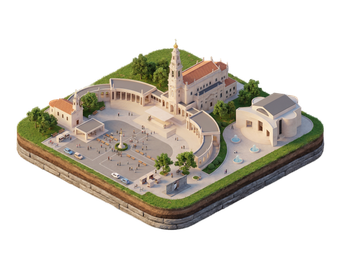
- Nossa Senhora de Fátima, about 30 minutes by car. A major Catholic pilgrimage site. A bus also runs from Tomar bus station.
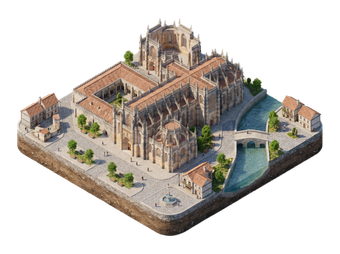
- Batalha, about 40 minutes by car. Its Gothic monastery is a UNESCO World Heritage Site, built after the 1385 Battle of Aljubarrota.
- Coimbra, about 1 hour by car. A university city with a historic old town on a hill.
Where to explore
Getting there
- By air: Lisbon airport (LIS) is the main gateway. Take the metro to Oriente station, then a train or coach to Tomar.
- By train: Regional trains run from Lisboa Oriente to Tomar in about 2 hours. Tomar station is the end of a short branch line. Book on CP Comboios de Portugal.
- By bus: Rede Expressos coaches run from Lisbon (Sete Rios) in about 1 hour 45 minutes. Other routes link Tomar with Coimbra (about 2 hours), Fátima and Leiria. The bus station is next to the train station.
- By car: About 1.5 hours from Lisbon and about 1 hour from Coimbra.
Getting around
- On foot: The old centre, the river and the path up to the convent are all walkable. The convent is about 10 minutes uphill from the main square. The train and bus stations are about a 10-15 minute walk from the centre.
- Local buses: Rodotejo runs the urban lines, including two circular routes (Linha Azul and Linha Verde) from the bus station. Buy tickets in advance or with the Moov-U app, and validate at the start of the trip. See Rodotejo for lines and fares.
- Cycling: Flat along the river, hilly elsewhere.
Driving
- Is a car worth it?: No, for the town itself. It is compact and easy on foot. A car helps for Almourol, Fátima and Batalha.
- Parking: Paid street parking is available near the convent at Terreiro de Gualdim Pais.
- Tolls: Part of the road from Lisbon uses the A1, which has tolls. Check current toll prices before you travel. The ex-SCUT motorways elsewhere in Portugal are toll-free since 1 January 2025.
Food & drink
Tomar is known for convent sweets. Fatias de Tomar are egg-yolk slices first made at the Convent of Christ. Beija-me depressa ("kiss me quickly") is a small almond sweet. The pastry shop Estrelas de Tomar is a local favourite.
For lunch or dinner, look along the streets around Praça da República and the main street towards the convent. Tavernas in the old centre serve small plates (petiscos) at low prices.
Safety & health
Tomar is a calm, safe town. As anywhere, keep an eye on your bags in crowds, especially during the Festa dos Tabuleiros.
Tap water is safe to drink. In summer, forest fires are a risk across central Portugal. Follow local warnings if you plan to hike in the hills.
Emergency number: 112.
History
The land around Tomar was given to the Knights Templar in 1159. In 1160, Gualdim Pais, the Templar master in Portugal, laid the first stone of the castle and convent. His tomb slab is in Igreja de Santa Maria dos Olivais.
In the early 14th century the Templars were dissolved. King Denis created the Order of Christ in 1319 and kept their property in Portugal. Its seat moved to Tomar in 1357. Henry the Navigator led the order from 1420 to 1460, and it supported the voyages of discovery.
King Manuel I paid for the Manueline decoration of the convent from 1499. In 1581, Portuguese nobles met in the convent and recognised Philip II of Spain as king. UNESCO listed the site in 1983.
Tomar had a Jewish community in the Middle Ages, and Jewish refugees from Spain arrived after 1492. The 15th-century synagogue, Sinagoga de Tomar, still stands. It was closed in 1496.
Country facts
Quick practical facts for Portugal at a glance:
- Currency
- Euro EUR € · Card payments · Widely accepted
- Emergency numbers
- 112
- Electricity
- 230 V · 50 HzType C / Type F
- Languages
- Portuguese
- Tap water
- Safe to drink
- Driving side
- Right
- Calling code
- +351


Tomar – Plan Your Days
Turn the places from this guide into a real itinerary, with smart routing, time estimates, and everything you need for a perfect trip.


Related destinations


Data: © OpenStreetMap contributors, Wikidata, Wikipedia, Tripomatic, Official websites. Tours by GetYourGuide. We earn commission from bookings. Travel guide generated with AI.
Plan your trip with Tripomatic
- AI-Powered PlanningGet a ready-made day in one tap, let AI spread your shortlist across your trip, or plan everything by chatting.
- Travel AlertsOfficial advisories, severe weather, strikes, and natural hazards for the places on each day of your trip.
- Public Holidays & EventsSee holidays, festivals, and closures on the days of your trip, and what they mean for your plans.
- Cost EstimationAI-powered trip cost breakdowns so you know what to budget before you go.
- Tours & TicketsBook tours, skip-the-line tickets, and activities directly in your plan.