


Tux
Tux is a village at the start of the Tux valley, a side valley of the Zillertal in Tyrol, with the villages of Vorderlanersbach, Lanersbach, Juns and Hintertux stretching up to the Hintertux glacier. The valley is surrounded by the Tux Alps and the Zillertal Alps, and is known for the Hintertux glacier ski area, which offers skiing almost all year.
The valley is a mix of farms, small hotels and mountain lifts. It suits skiers, glacier visitors, hikers and anyone who wants a high-alpine base near Mayrhofen and Innsbruck.

Tux – Planning a Trip?
Build your day-by-day itinerary in the Tripomatic app.


When to visit
December to April is ski season in the valley. The Hintertux glacier is open for skiing in summer and autumn. June to September is best for hiking. Spring and November are quiet.
Top sights
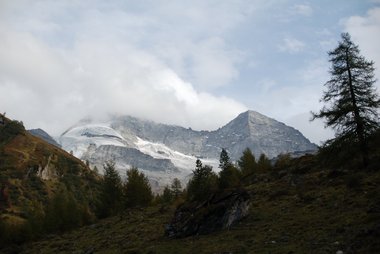


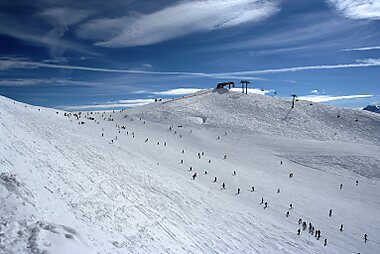


- The Hintertux glacier is a year-round ski area at the end of the valley, with lifts and views of the ice.
- Spannagelhöhle is a high alpine cave near Hintertux that can be visited on guided tours.
- Olperer is a famous high peak above the valley.
- Gefrorene-Wand-Spitzen are glacier peaks above Hintertux.
- Schleierfall is a waterfall on a short walk.
- Tuxerjoch Haus and Tuxer Joch are a mountain hut and pass above the valley.
- Geier, Rastkogel, Hoher Riffler and Frauenwand are peaks for hikers and ski tourers.
Featured Lists

What to experience
- Ski on the glacier.
- Hike to a mountain hut.
- Visit the high alpine cave.
- Soak in a spa hotel.
- Ski tour in winter.
Tours & Activities
Tux — Map

 Open the interactive map
Day trips
- Mayrhofen is about 30 minutes away by car.
- Strass im Zillertal is about 40 minutes away by car.
- Innsbruck is about 1 hour away by car.
- Wattens is about 50 minutes away by car.
- Eben am Achensee is about 1 hour away by car.
- Kitzbühel is about 1 hour 30 minutes away by car.
Where to explore
- Mayrhofen and Strass im Zillertal are the nearest preferred destinations.
Getting there
- By air: Innsbruck Airport is about 1 hour away by car. Munich is about 2 hours 15 minutes.
- By train: Take a train to Jenbach, then the Zillertalbahn to Mayrhofen, then a bus up the Tux valley of about 30 minutes. Check times on ÖBB.
- By car: Leave the A12 at Zillertal and follow the valley road.
Getting around
A valley bus runs the length of the Tux valley, and ski buses link the lifts. A car helps for side valleys. The villages are spread out.
Driving
The valley road is well kept but can be busy at ski weekends. Winter tyres or chains are required in snow. Parking at the glacier cable car may be limited. Motorways in Austria need a vignette.
Food & drink
Tyrolean food is hearty. Try Tiroler Gröstl, a pan of potatoes and meat, and Zillertaler Krapfen, filled dough pockets. Mountain huts serve soups and cakes.
Safety & health
Tux is very safe, but the high mountains are serious. Glacier and ski routes carry avalanche risk, so check the bulletins. Weather changes fast. Tap water is clean and safe to drink. The emergency number is 112. The mountain rescue number is 140.
History
The Tux valley was a farming area for centuries. A cave in the valley was explored in the early 20th century. In the 1960s lifts opened up the Hintertux glacier, and the valley became one of the first to offer year-round skiing in Austria.
Country facts
Quick practical facts for Austria at a glance:
- Currency
- Euro EUR € · Card payments · Commonly accepted
- Emergency numbers
- 112
- Electricity
- 230 V · 50 HzType C / Type F
- Languages
- German
- Tap water
- Safe to drink
- Driving side
- Right
- Calling code
- +43

Tux – Plan Your Days
Turn the places from this guide into a real itinerary, with smart routing, time estimates, and everything you need for a perfect trip.


Related destinations




Data: © OpenStreetMap contributors, Wikidata, Wikipedia, Tripomatic, Official websites, geoBoundaries (CC BY 4.0). Tours by GetYourGuide. We earn commission from bookings. Travel guide generated with AI.
Plan your trip with Tripomatic
- AI-Powered PlanningGet a ready-made day in one tap, let AI spread your shortlist across your trip, or plan everything by chatting.
- Travel AlertsOfficial advisories, severe weather, strikes, and natural hazards for the places on each day of your trip.
- Public Holidays & EventsSee holidays, festivals, and closures on the days of your trip, and what they mean for your plans.
- Cost EstimationAI-powered trip cost breakdowns so you know what to budget before you go.
- Tours & TicketsBook tours, skip-the-line tickets, and activities directly in your plan.