



Pamplona/Iruña
Pamplona is the capital of Navarre, in northern Spain. It is world famous for the San Fermín festival and the running of the bulls each July.
Outside the festival, the city is calm and green, with a walled old town, a Gothic cathedral and lively pintxo bars. It suits one or two days, and it is on the Camino de Santiago.

Pamplona/Iruña – Stai pianificando un viaggio?
Costruisci il tuo itinerario giorno per giorno nell'app Tripomatic.


Quando andare
Summer is the warmest season, with pleasant days. Spring and autumn are mild but rainy, and winters are cold and wet.
San Fermín runs from 6 to 14 July. The city is crowded and expensive then, so book rooms months ahead. The bull run takes place at 8 a.m. each morning, and it is dangerous.
Periodo migliore per la visita: giugno, luglio, agosto, settembre
Attrazioni principali
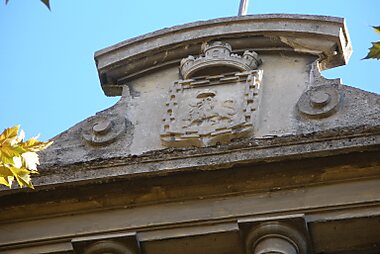
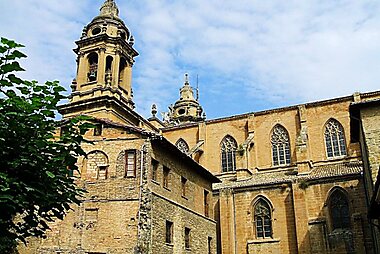
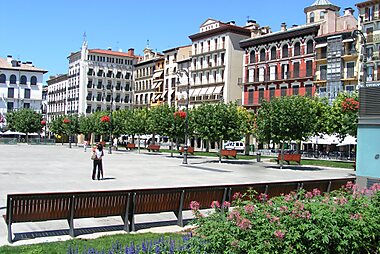
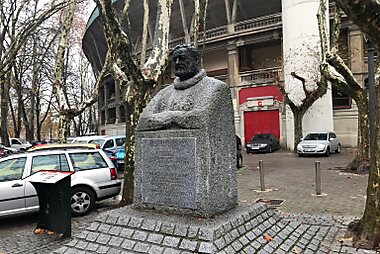
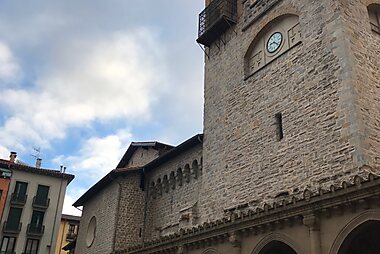
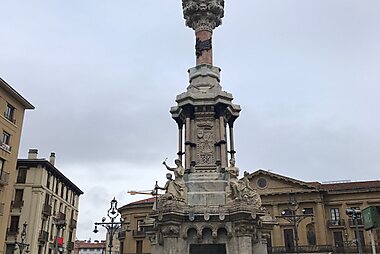
- Catedral de Pamplona has a neoclassical façade and a Gothic interior, with a fine cloister.
- Bullring of Pamplona is the bullring where the bull run ends. It is one of the largest in Spain.
- Plaza del Castillo is the main square, with cafés. It appears in Hemingway's The Sun Also Rises.
- Estatua a Ernest Hemingway is a statue of the writer Ernest Hemingway, outside the bullring.
- Monumento a los Fueros de Navarra is a monument to the old laws of Navarre.
- Iglesia de San Nicolás is a fortified Gothic church in the old town.
- Casa natal de Sabicas is the birthplace of the flamenco guitarist Sabicas.
- The Ciudadela is a 16th-century star-shaped fortress with a large park.
- The Encierro route runs through the old town, along Calle Santo Domingo and Calle Estafeta.
Elenchi in evidenza


Luoghi Storici
Scopri la storia architettonica e politica di Pamplona attraverso i suoi luoghi più significativi. Questa selezione include la Ciudadela del XVI secolo, un eccellente esempio di ingegneria militare rinascimentale spagnola, e il Palacio de los Reyes de Navarra, che oggi custodisce gli archivi medievali della regione. Esplora monumenti dedicati alle tradizioni locali come la corsa dei tori di San Fermín e la difesa dell'autogoverno navarro, insieme al medievale Puente de Santa Engracia e a omaggi a figure come Ernest Hemingway.
6 luoghi
Pamplona Parks and Sports
Pamplona's recreational landscape spans from the historic 16th-century fortifications of the Ciudadela to modern venues like the Navarra Arena. The city is characterized by distinct green spaces, including the Japanese-designed Yamaguchi Park and the French-style Taconera, which features a small zoo within its moats. Sports enthusiasts can find major football stadiums like El Sadar alongside numerous riverside athletic clubs and municipal centers providing facilities for swimming, tennis, and traditional Basque sports.
18 luoghiCosa provare
- Walk the route of the bull run through the old town, outside festival time.
- Go on a pintxo crawl on Calle Estafeta and Calle San Nicolás, tasting small snacks on bread with a glass of wine.
Tour e attività
Pamplona/Iruña — Mappa

 Apri la mappa interattiva
Gite in giornata
- Logroño (about 90 km, 1 hour by car): the capital of the Rioja wine region.
- Zaragoza (about 170 km, 1.5 hours by train): a large city with a basilica and Roman remains.
- Olite (about 40 km, 35 minutes by car): a town with a fairy-tale royal palace.
- Roncesvalles (about 50 km, 1 hour by car): a mountain pass on the Camino de Santiago, on the way to France.
Cosa esplorare
Come arrivare
- By air: Pamplona airport (PNA) has limited flights, mostly from Madrid and Barcelona. Bilbao airport is about 160 km away, and San Sebastián airport is about 90 km.
- By train: Trains run from Madrid, Barcelona and Zaragoza. Book on Renfe.
- By bus: Coaches run to San Sebastián, Bilbao, Logroño and Zaragoza.
Come muoversi
- On foot: The old town and the center are compact and mostly flat.
- Cycling: The city has a good network of cycle paths.
Guidare
- Is a car worth it?: Not for the city, but a car helps for the Pyrenees and the wine towns.
- Parking: Use an underground car park near the old town.
- Restrictions: The old town has restricted access, and streets close for the festival.
Cibo e bevande
Navarre has excellent pintxos (small snacks, often on bread). Try pimientos del piquillo (red peppers), chistorra (a thin cured sausage), cordero al chilindrón (lamb with peppers) and trucha a la navarra (trout with ham). The local rosé (rosado) is well known, and pacharán is a sloe liqueur.
Sicurezza e salute
Pamplona is a safe city. During San Fermín, the crowds are dense, so watch your belongings. The bull run is dangerous and injuries are common, so watch from a balcony or on TV rather than joining.
Storia
Pamplona is named after Pompey, the Roman general who founded it in 74 BC. It became the capital of the Kingdom of Navarre in the 10th century.
In the Middle Ages the city was a stop on the Camino de Santiago. Navarre joined the Crown of Castile in 1512. Hemingway made the San Fermín festival famous worldwide in 1926.
Informazioni sul paese
Quick practical facts for Spain at a glance:
- Valuta
- euro EUR € · Pagamenti con carta · Ampiamente accettata
- Numeri di emergenza
- 112
- Elettricità
- 230 V · 50 HzTipo C / Tipo F
- Lingue
- spagnolo
- Acqua del rubinetto
- Potabile
- Senso di marcia
- A destra
- Prefisso telefonico
- +34


Pamplona/Iruña – Pianifica le tue giornate
Trasforma i luoghi di questa guida in un vero itinerario, con percorsi intelligenti, stime dei tempi e tutto il necessario per un viaggio perfetto.


Destinazioni correlate
Data: © OpenStreetMap contributors, Wikipedia, Tripomatic, Official websites, geoBoundaries (CC BY 4.0). Tours by GetYourGuide. We earn commission from bookings. Travel guide generated with AI.