


Agrigento
Agrigento is a hilltop town on the south coast of Sicily, and most people come for one reason: the Greek temples below it. The ancient city of Akragas was one of the richest in the Greek world. Its Doric temples still stand in a line on a ridge between the modern town and the sea, inside the UNESCO-listed Valley of the Temples.
Plan at least one full day for the temples and the archaeological museum. Stay a night or two to see the temples lit up after dark, walk the steep lanes of the medieval old town and spend time on the nearby coast. Agrigento is the home town of the writer Luigi Pirandello, winner of the Nobel Prize in Literature, and of the ancient philosopher Empedocles.

Agrigento – planujesz wycieczkę?
Stwórz swój plan podróży dzień po dniu w aplikacji Tripomatic.


Kiedy jechać
Spring (April to early June) and autumn (September and October) are the best times to visit. Days are warm and the temples are pleasant to walk. July and August are hot and dry, often well above 30 °C, and the archaeological park has very little shade. Winter is mild but wetter, with short days.
The biggest annual event is the Almond Blossom Festival (Mandorlo in Fiore) in late winter, usually in February or March. Folk groups from many countries parade through the streets and perform in town, when the almond trees around the temples are in flower.
Najlepszy czas na wizytę: kwiecień, maj, czerwiec, lipiec, sierpień, wrzesień, październik
Główne zabytki
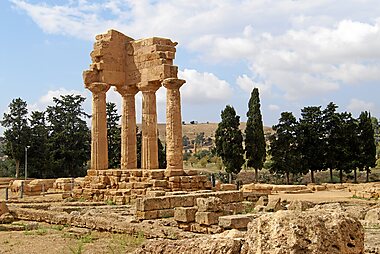
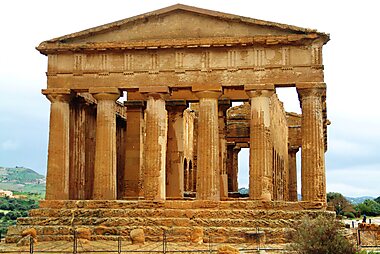
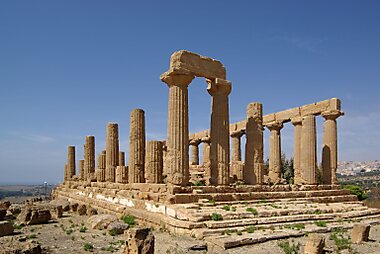
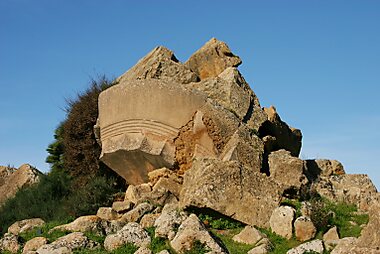
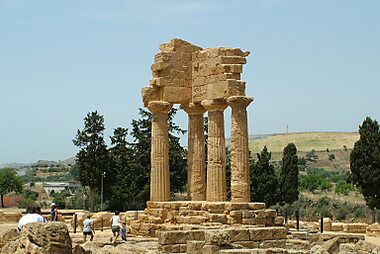
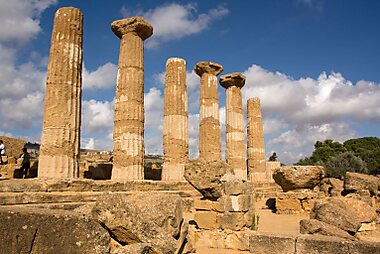
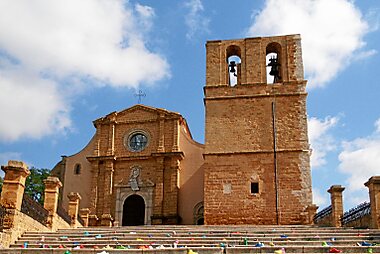
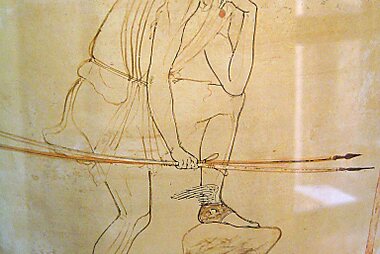
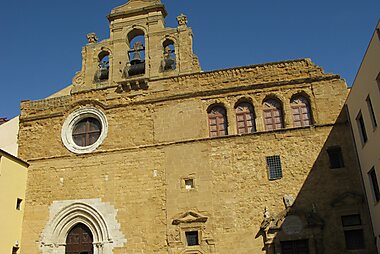
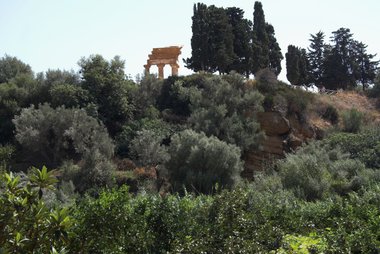
Valley of the Temples is the reason to come. The main path runs for about 2 km along a ridge. Start at the eastern entrance and finish at Porta V in the west, and allow 2 to 3 hours. The basic ticket does not include the archaeological museum, but a combined ticket valid for 3 days does. Buying online in advance is recommended. Go early or late in the day to avoid the heat.
Temple of Concordia is still almost complete. It survived because it was turned into a church in the 6th century.
Temple of Juno stands at the highest, eastern end of the ridge. Many columns are still standing, and it is the classic place to watch the sunset.
Temple of Heracles is the oldest temple in the valley, from the late 6th century BC. Eight of its columns were raised again in the 1920s.
Temple of Olympian Zeus was planned as the largest Doric temple of the Greek world. Today it is a field of huge fallen blocks, with a copy of one of the giant stone figures that once held up its roof.
Temple of Castor and Pollux is only four columns and a corner of the roof, rebuilt in the 19th century. They have become the symbol of Agrigento.
Museo Archeologico Regionale Pietro Griffo sits between the temples and the town. It holds the finds from the ancient city, including an original stone giant almost 8 metres tall from the Temple of Olympian Zeus.
Kolymbetra is a garden of citrus, almond and olive trees in a small valley between the temples. It is run by the FAI heritage trust and needs a combined ticket with the Valley, bought at the park entrances.
In the old town, Santa Maria dei Greci is a small medieval church built over a Greek temple, with the ancient base visible inside. Nearby, Chiesa di Santo Spirito has white Baroque stucco work by the workshop of Giacomo Serpotta.
Polecane zestawienia


Czego warto doświadczyć
Agrigento is at its best in the cool hours, when the light turns the temple stone golden.
- From late June to around 20 September, the archaeological park stays open late in the evening. Walking past the lit-up temples after dark is cooler and quieter than a midday visit.
- Time your walk along the ridge so you reach Temple of Juno as the sun goes down over the sea.
- In July, the feast of San Calogero fills the old town with drummers, and the statue of this popular saint is carried in procession. People throw small loaves of bread towards it, following an old tradition.
- On summer evenings, join local families on the seafront promenade at San Leone, the city's beach district about 7 km below the old town.
Wycieczki i aktywności
Agrigento — Mapa

 Otwórz interaktywną mapę
Wycieczki jednodniowe
The coast west of Agrigento has white cliffs, long beaches and more Greek ruins. A car makes these trips much easier.
- About 15 minutes by car, the Scala dei Turchi, Turkish Steps, is a white marl cliff that drops to the sea in wide steps, with sandy beaches on each side. Entry costs about €6, paid on arrival, with timed groups and a daily limit, so arrive early in summer. In summer, Trenitalia also runs a train and bus link here.
- About 25 minutes by car, Punta Bianca is a quieter white headland east of the city, with wild beaches and a short coastal walk.
- About 25 minutes by car, Torre Salsa Nature Reserve near Siculiana protects a stretch of coast with long sandy beaches, dunes and walking paths.
- About 40 minutes by car, Eraclea Minoa is a small Greek city with a theatre on a cliff above a long sandy beach.
- About 50 minutes by car, Sciacca is a fishing and spa town with a Baroque centre, ceramic workshops and a busy harbour.
- About 70 minutes by car, near Piazza Armerina, the Roman Villa of Casale is famous for its huge, well-preserved Roman floor mosaics.
Gdzie warto się udać
Agrigento is the main sight on the south coast of Sicily. Most visitors combine it with the island's big cities and the Baroque south-east.
Jak dotrzeć
- By air: Agrigento has no airport. The nearest are Palermo Falcone Borsellino and Catania Fontanarossa, each about 2 hours away by car. A few direct trains a day run from Palermo airport to Agrigento Centrale and take about 3 hours. Buses link Catania airport with Agrigento in about 2.5 to 3 hours.
- By train: Regional trains run from Palermo to Agrigento Centrale in about 2 hours. The station is at the foot of the old town. Rail links to Catania need a change and are slow, so the bus is usually better. Trenitalia
- By bus: Coaches run to Agrigento from Palermo (about 2 hours), Catania and Catania airport (about 2.5 to 3 hours) and other Sicilian towns.
Poruszanie się na miejscu
- On foot: The old town is compact but built on a steep hill, with many steps. The temples are about 3 km below the town, too far and too hot to walk in summer.
- Buses: City buses run by TAG – Trasporti Agrigento (formerly TUA) leave from the square in front of Agrigento Centrale station for the Valley of the Temples and for San Leone, the seaside district. Buy tickets in the operator's app (TUA Bus Agrigento), which shows a QR code to scan on board. Trenitalia also sells a combined train and city bus ticket to the temples. Trasporti Agrigento
- Taxi: Taxis wait outside the station. A taxi is the easiest way to get back to your starting point if you walk the temple ridge from one entrance to the other.
- Car: Useful for the coast and day trips, but not needed inside the town.
Prowadzenie samochodu
- Is a car worth it?: Not for the town and the temples, which you can reach by bus or taxi. A car is the best way to explore the coast and the inland sites, where buses are infrequent.
- Parking: The archaeological park has paid car parks at its main entrances, by the Temple of Juno and at Porta V. In town, park on the edge of the old town and walk up.
- Restrictions: The old town's main street, Via Atenea, and many lanes around it are closed to normal traffic, and the lanes are steep and very narrow. Watch for limited traffic zone (ZTL) signs, which are camera-enforced.
- Unofficial attendants: Near the temples and beaches, informal parking attendants sometimes ask for money. Use the official car parks.
Jedzenie i napoje
Agrigento's food is classic Sicilian, with a strong taste for almonds, which grow all around the temples. Look for almond pastries and cuscusu, a sweet couscous with pistachios and almonds made by the nuns of the Chiesa di Santo Spirito convent. Arancine (fried rice balls), granita and cannoli are everywhere. Nearby Favara is known for its marzipan Easter lambs, sold around Easter.
For eating out, the best areas are Via Atenea and the small squares and lanes off it in the old town, where you will find trattorias and pastry shops. For fish and seafood, head to the restaurants along the seafront in San Leone, especially on summer evenings.
Bezpieczeństwo i zdrowie
Agrigento is a safe place to visit. Petty theft is not a major problem, but do not leave valuables visible in parked cars, especially at beach and temple car parks.
- The archaeological park has almost no shade. In summer, visit early or late, wear a hat and carry plenty of water.
- The white cliffs at the Scala dei Turchi (Turkish Steps) and Punta Bianca are soft and can crumble. Stay out of closed areas and away from cliff edges.
- Agrigento has long-standing problems with its water supply, and many buildings store water in rooftop tanks. Most visitors drink bottled water.
Historia
Greek settlers founded Akragas around 580 BC. Under the tyrant Theron, the city defeated Carthage at Himera in 480 BC and grew rich. Prisoners of war helped build the temples, including the giant Temple of Olympian Zeus. The philosopher Empedocles was born here in the 5th century BC.
Carthage sacked the city in 406 BC, and Rome took it in 210 BC as Agrigentum. You can walk its Roman streets and see house mosaics in the Quartiere Ellenistico Romano. In the 6th century, the Temple of Concordia became a Christian church, which is why it still stands almost complete today.
In the Middle Ages, the town moved up to the hill above the temples. Under the Arabs it was called Kerkent, and it later became Girgenti, a name it kept until 1927. The Normans founded the Cattedrale di San Gerlando at the top of the hill in the 11th century. Luigi Pirandello was born in 1867 in a farmhouse just outside town, now Casa natale di Luigi Pirandello e museo. The Valley of the Temples became a UNESCO World Heritage Site in 1997.
Informacje o kraju
Quick practical facts for Italy at a glance:
- Waluta
- euro EUR € · Płatności kartą · Powszechnie akceptowane
- Numery alarmowe
- 112
- Elektryczność
- 230 V · 50 HzTyp C / Typ F / Typ L
- Języki
- włoski
- Woda z kranu
- Zdatna do picia
- Ruch drogowy
- Prawostronny
- Numer kierunkowy
- +39


Agrigento – zaplanuj swoje dni
Zmień miejsca z tego przewodnika w prawdziwy plan podróży z inteligentnym wyznaczaniem tras, szacowanym czasem i wszystkim, czego potrzebujesz na udaną wycieczkę.


Powiązane cele podróży


Data: © OpenStreetMap contributors, Wikidata, Wikipedia, Tripomatic, Official websites, geoBoundaries (CC BY 4.0). Tours by GetYourGuide. We earn commission from bookings. Travel guide generated with AI.
Zaplanuj wycieczkę z Tripomatic
- Planowanie z asystentem AIZyskaj gotowy plan dnia jednym stuknięciem, pozwól AI rozmieścić miejsca z listy życzeń w Twojej wycieczce lub zaplanuj wszystko na czacie.
- Ostrzeżenia podróżneOficjalne komunikaty, trudne warunki pogodowe, strajki i zagrożenia naturalne dla miejsc w każdym dniu wycieczki.
- Dni wolne od pracy i wydarzeniaSprawdzaj święta, festiwale i dni zamknięcia w trakcie wycieczki oraz ich wpływ na Twoje plany.
- Szacowanie kosztówZestawienia kosztów wycieczki oparte na sztucznej inteligencji, dzięki którym poznasz budżet przed wyjazdem.
- Wycieczki i biletyRezerwuj wycieczki z przewodnikiem, bilety wstępu bez kolejki i aktywności bezpośrednio w swoim planie.