


Braga
Braga is one of the oldest cities in Portugal. The Romans founded it around 16 BCE as Bracara Augusta. Today it is the seat of Portugal's oldest archdiocese, and the churches, sanctuaries and Holy Week processions still shape city life.
It is also a young city. The University of Minho brings many students, so cafés, small art spaces and evening life are lively. Braga suits a two-night trip. Visit the old centre on foot and the hill sanctuaries by bus or taxi. Use it as a calmer base for the Minho region, with Porto about an hour away by train.
Download this guide as a PDFPrintable tourist mapPublic holidays in Portugal

Braga – Planning a Trip?
Build your day-by-day itinerary in the Tripomatic app.


When to visit
May and June are the most comfortable months, with sun and mild heat. July and August are hot and dry. Spring and autumn bring some rain. Winter is mild but wet, and some days are cold.
The biggest event is Holy Week, in the days before Easter in March or April. Processions cross the old centre, some at night, and some are silent. The city is busy, so book hotels early.
Best time to visit: May, June
Top sights
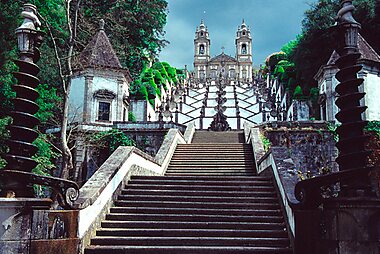
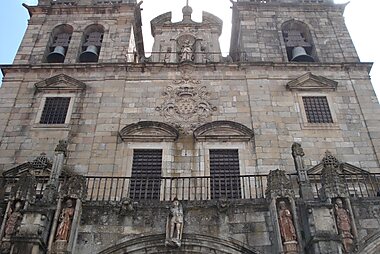
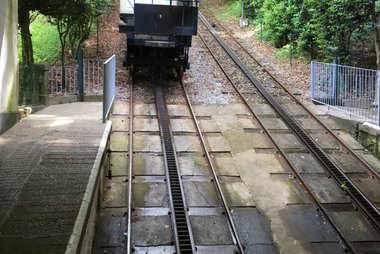
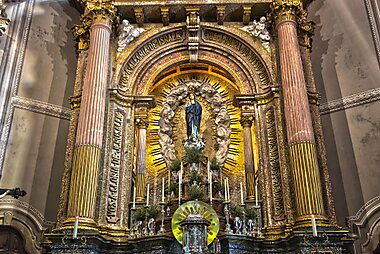
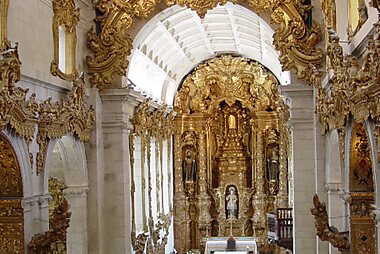
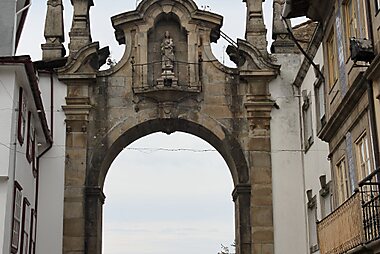
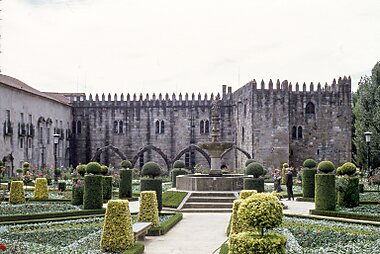
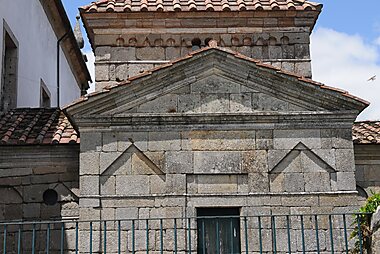
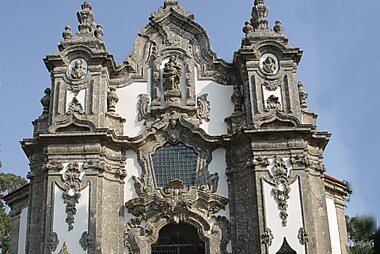
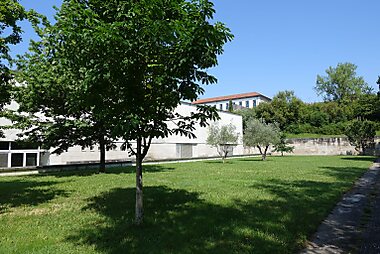
Braga's sights split into the old centre, which is compact and walkable, and three sites on the hills and edges, which need a bus or taxi.
- Basilica of the Good Jesus of the Mount is the city's best-known site, about 5 km east of the centre. A baroque stairway climbs the wooded hill to the sanctuary. It is a UNESCO World Heritage Site, and the view over Braga from the top is worth the effort.
- Elevador do Bom Jesus do Monte is a water-balanced funicular that has run beside the stairway since 1882. Walk up the stairs and ride down, or ride both ways.
- Sé Catedral de Santa Maria Maior is the cathedral. Rebuilding began after the bishopric was restored in 1070, and later work added Gothic, Manueline and baroque elements. Inside are medieval tombs, gilded organs and choir stalls, and a museum of sacred art.
- Arco da Porta Nova is a baroque gateway at the edge of the old town. It is a good starting point for a walk to the cathedral.
- Jardim de Santa Bárbara is a small garden of clipped hedges and flower beds next to the former Archbishop's palace. It is a pleasant place for a short rest.
- Santuário de Nossa Senhora da Conceição do Sameiro is a large pilgrimage sanctuary on a hill east of the city. Construction began in 1861. The terraces give wide views over Braga and the hills.
- Capela de São Frutuoso is a small chapel on the northwest edge of the city. It is one of the oldest chapels in Portugal.
- Mosteiro de São Martinho de Tibães is a former Benedictine monastery west of the city. It dates from the 17th and 18th centuries and is known for its gilded wood altars.
Featured Lists


What to experience
- Holy Week processions: processions pass through the old centre in the week before Easter, some of them at night. Some are silent.
- São João night: on the night of 23 June, the streets fill with music and crowds. Locals carry leeks and basil and tap each other with small plastic hammers. 24 June is a city holiday.
- Riding the Bom Jesus funicular: the ride itself is the point. Two cabins balance each other with water and meet halfway. See Elevador do Bom Jesus do Monte.
- Braga Romana: every May the city holds a Roman reenactment festival that recalls Bracara Augusta.
Tours & Activities
Braga — Map

 Open the interactive map
Day trips
Braga is a good base for the Minho. These trips are listed from nearest to farthest.
- Barcelos: about 20 minutes by car. Its Thursday market is the main reason to go, and the town is known for pottery and the rooster legend.
- Guimarães: about 25 minutes by bus. The historic centre is a UNESCO World Heritage Site, with a medieval castle and a ducal palace.
- Ponte de Lima: about 30 minutes by car. It is a quiet riverside town with a historic bridge over the Lima river. Buses are slow, so a car is easier.
- Esposende: about 30 minutes by car. It is a small town at the Cávado river mouth with beaches nearby.
- Viana do Castelo: about 45 minutes by car. It is a coastal town at the mouth of the Lima river.
- Peneda-Gerês National Park: about 1 hour by car. This is the only national park in Portugal, with granite peaks, waterfalls and reservoirs. A car makes the day much easier.
- Porto: about 1 hour by urban train, or about 40 minutes on a fast train. It works well as a full day out.
Where to explore
Nearby destinations with their own guides:
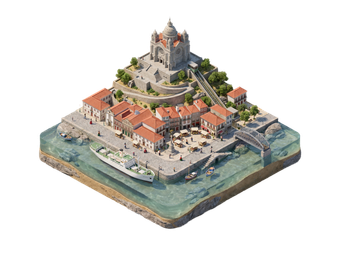
- For history and a castle: Guimarães is the closest large neighbour.
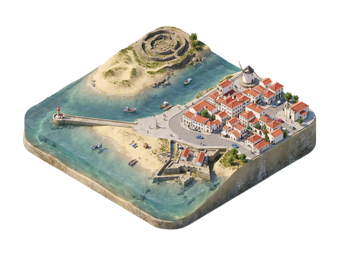
- For the coast: Esposende and Viana do Castelo.
- For a big-city day: Porto.
- For mountains and hiking: Peneda-Gerês National Park and the small mountain town of Vieira do Minho.
Getting there
- By air: The nearest airport with scheduled flights is Porto Francisco Sá Carneiro (OPO), about 50 km away. A direct coach to Braga takes about 40 minutes and fares start around 2.50 €. It stops in central Braga.
- By train: Fast trains from Porto take about 40 minutes. Urban trains take about 1 hour. Direct trains also run from Lisbon in about 3 hours 20 minutes. Book at CP Comboios de Portugal. The station is a short walk from the old centre.
- By bus: Long-distance coaches link Braga with Porto and Lisbon. The Braga coach terminal is at Praça da Galiza. Buses to Guimarães take about 25 minutes.
Getting around
- Public transit: City buses are run by TUB. Buy single tickets and day passes on board or in the app. See TUB Braga buses.
- Taxi: Taxis are the easiest way to reach Bom Jesus, Sameiro and Tibães if you do not want to take a bus.
- On foot: The old centre is flat and mostly pedestrian, so walking is the best way to see it. The hill sanctuaries are steep, and stairways there can be slippery in the rain.
Driving
- Is a car worth it?: Not for the city. Everything in the old centre is close, and the hill sights are easy by bus or taxi. A car helps for Peneda-Gerês and the villages around Braga.
- Parking: Underground car parks near the centre are easier than street parking.
- Restrictions: Much of the historic centre is pedestrian or has restricted access. Check signs before you drive in.
- Tolls: The motorway from Porto uses tolls. Ask your rental company how to pay.
Food & drink
Braga cooking follows the Minho tradition: hearty pork dishes and stews. Try rojões à minhota, which is fried pork cubes with potatoes, and papas de sarrabulho, a thick stew. Dessert is often pudim Abade de Priscos, a rich egg-yolk pudding with port wine. It was created in the Braga area in the 19th century. The local white wine is vinho verde.
For eating, look at the streets around Praça da República and the old centre. Cafés there are good for pastries and coffee.
Safety & health
Braga is a safe city for visitors. Violent crime is rare. Pickpockets can work in crowded places, such as Holy Week events, São João night and busy buses. Keep bags closed.
Tap water is safe. Wet stone stairs and steep paths at Bom Jesus and Sameiro can be slippery, so wear shoes with grip.
History
The Romans founded Bracara Augusta around 16 BCE, and it became an important regional capital. Roman remains are spread through the centre. The Roman baths of Maximinos and the Fonte do Ídolo, a 1st-century Roman fountain, are good examples. Roman milestones and other finds are shown in Museu de Arqueologia Dom Diogo de Sousa.
Braga became a major Christian centre early. Its first known bishop lived around 400 CE, and Capela de São Frutuoso is among the oldest chapels in Portugal. After the bishopric was restored in 1070, the archbishops built Sé Catedral de Santa Maria Maior and ruled much of the region. Their legal privileges gave the area the old name "Country of Braga".
Much of the baroque look of Braga comes from the 18th century. Work on Bom Jesus do Monte began in 1722, and Arco da Porta Nova also dates from this period. The University of Minho opened in 1973 and gave the city a new student life.
Country facts
Quick practical facts for Portugal at a glance:
- Currency
- Euro EUR € · Card payments · Widely accepted
- Emergency numbers
- 112
- Electricity
- 230 V · 50 HzType C / Type F
- Languages
- Portuguese
- Tap water
- Safe to drink
- Driving side
- Right
- Calling code
- +351


Braga – Plan Your Days
Turn the places from this guide into a real itinerary, with smart routing, time estimates, and everything you need for a perfect trip.


Related destinations


Data: © OpenStreetMap contributors, Wikidata, Wikipedia, Tripomatic, Official websites. Tours by GetYourGuide. We earn commission from bookings. Travel guide generated with AI.
Plan your trip with Tripomatic
- AI-Powered PlanningGet a ready-made day in one tap, let AI spread your shortlist across your trip, or plan everything by chatting.
- Travel AlertsOfficial advisories, severe weather, strikes, and natural hazards for the places on each day of your trip.
- Public Holidays & EventsSee holidays, festivals, and closures on the days of your trip, and what they mean for your plans.
- Cost EstimationAI-powered trip cost breakdowns so you know what to budget before you go.
- Tours & TicketsBook tours, skip-the-line tickets, and activities directly in your plan.