


Guimarães
Guimarães is a compact city in the green Minho region of northern Portugal. Many Portuguese call it the "cradle of the nation", because the first king, Afonso Henriques, is traditionally said to have been born here. The medieval centre, together with the old leather-working quarter of Couros, is a UNESCO World Heritage Site.
It suits a relaxed one- or two-night stop. The old town is small and walkable, with granite squares, a hilltop castle and a ducal palace. A cable car takes you to a forested hill with wide views. The city is also a good base for Braga and the Minho countryside.

Guimarães – Planning a Trip?
Build your day-by-day itinerary in the Tripomatic app.


When to visit
Late spring and early autumn are the most comfortable times. Summer is hot and dry. Winter is mild but wet, so bring a rain jacket.
The biggest event is the Festas da Cidade e Gualterianas, held around the first weekend of August. It has parades, street decoration and concerts. Book your room early if you visit then. The student Nicolinas festivities run from late November to early December.
Best time to visit: May, June
Top sights
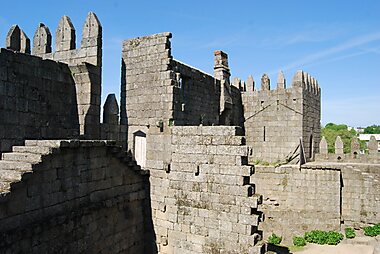


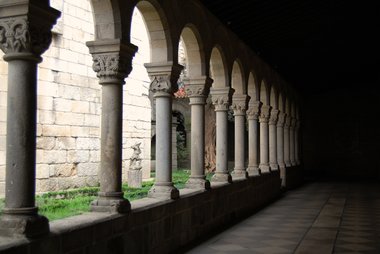

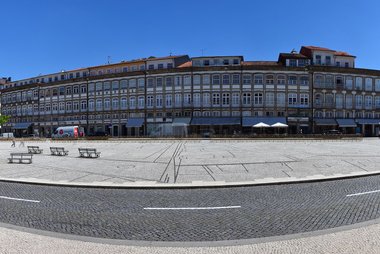
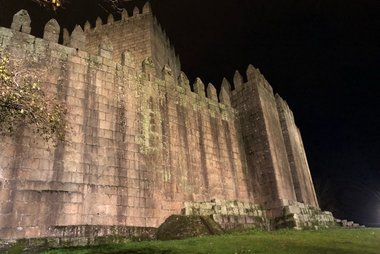
- Castelo de Guimarães is a medieval hilltop fortress and the symbol of the city. Its origins go back to the 10th century. It is open daily 10:00–18:00 (last entry 17:30).
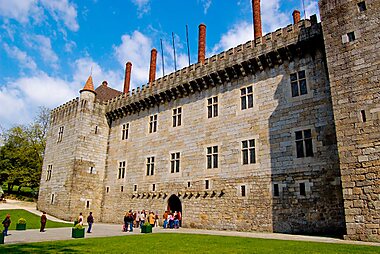
- Paço dos Duques de Bragança is a 15th-century noble residence with four towers around a courtyard. Inside is a museum with tapestries and porcelain. Palace tickets are 10 €, castle tickets 5 €, and a combined ticket is 13 €. Both are closed on 1 January, Easter Sunday, 1 May, 24 June and 25 December.
- Igreja de São Miguel do Castelo is a small Romanesque chapel next to the castle. It is linked to the early history of Portugal.
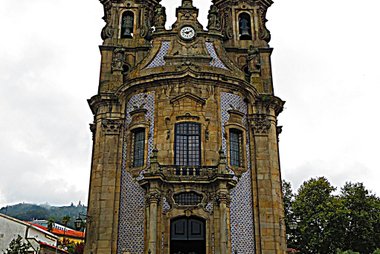
- Largo da Oliveira is the most photogenic square in the old town. Igreja de Nossa Senhora da Oliveira stands on it, together with a Gothic monument for the Battle of Salado.
- Largo do Toural is the lively main square on the edge of the old town. It is a good place to start a walk.
- Museu de Alberto Sampaio shows religious art in a former church and cloister. It is open Tuesday to Sunday, 10:00–18:00.
- Penha is a wooded hill above the city with a pilgrimage church, boulders, paths and views over the valley. You can reach it by cable car.
Featured Lists


What to experience
- Ride the cable car up to Penha and walk down the forest paths. Late afternoon gives the best light over the city.
- Join the Festas Gualterianas in early August. The city has street parades and a Battle of the Flowers.
- Watch the Nicolinas student festivities from 29 November to 7 December. The main event is the Pinheiro, when a pine tree is pulled through the streets.
Tours & Activities
Guimarães — Map

 Open the interactive map
Day trips
Close options come first. The Minho region is small, so most trips are short.
- Braga, about 25 to 30 minutes by bus. A larger city with a cathedral and the UNESCO-listed Bom Jesus do Monte sanctuary.
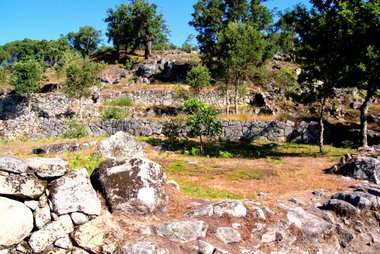
- Citânia de Briteiros, about 15 km north-west of Guimarães. An excavated Iron Age hill fort with round stone houses. Go by car or taxi.
- Porto, about 1 hour 5 minutes to 1 hour 25 minutes by direct train. A full day is enough for the river and the old centre.
Where to explore
Other destinations nearby:
- For a bigger city with more sights, see Braga.
- For hills and rural villages in the Minho mountains, see Vieira do Minho.
- For the Atlantic coast, see Esposende.
Getting there
- By air: Porto airport (OPO) is the nearest airport with scheduled flights. Direct buses (FlixBus, Rede Expressos) reach Guimarães in about 40 minutes. A taxi takes a similar time.
- By train: Direct trains from Porto São Bento take about 1 hour 5 minutes to 1 hour 25 minutes. They run roughly hourly, with gaps at midday. Guimarães station is about a 10-minute walk south of the old town. Book on CP – Comboios de Portugal.
- By bus: Buses from Braga take about 25 to 30 minutes. Long-distance buses arrive at the Estação Central de Camionagem.
Getting around
- On foot: The old town is compact and flat. Most sights are within 15 minutes of each other. The streets are cobbled, so wear good shoes.
- Cable car: The cable car runs from Teleférico de Guimarães (Estação das Hortas) up to Teleférico de Guimarães (Estação da Penha) on Penha hill. The ride takes under 8 minutes and climbs about 366 m.
- City bus: Guimabus runs the local bus network. See Guimabus for lines and timetables.
- Taxi: Taxis are the easy option for Citânia de Briteiros and the villages.
Driving
- Is a car worth it?: Not for the old town. A car helps only for villages, hill forts and wine estates in the countryside.
- Parking: The centre has narrow streets. Use paid car parks at the edge.
Food & drink
Look for toucinho do céu, a rich almond and egg pudding cake, and tortas de Guimarães, a flaky pastry.
For a meal, walk around the old town. Restaurants and cafés cluster around the old squares and the streets near Largo da Oliveira and Largo do Toural.
Safety & health
Guimarães is very safe for visitors. Pickpocketing is rare but can happen at festivals and on crowded buses. Keep an eye on your bag in crowds.
Wet granite pavements are slippery. Wear shoes with grip, and expect steep streets near the castle.
History
The city grew around a monastery and a fortress in the 10th century. Today you can still see the fortress at Castelo de Guimarães.
Afonso Henriques is traditionally said to have been born here. In 1128 he won the Battle of São Mamede near the city. This is seen as a key step towards the independent Kingdom of Portugal. Later he became the first king.
In 1340 Portuguese and Castilian forces won the Battle of Salado. A Gothic monument beside Igreja de Nossa Senhora da Oliveira recalls this. In the 15th century the Duke of Braganza built Paço dos Duques de Bragança. The old leather-working quarter of Couros is part of the World Heritage area. Guimarães was a European Capital of Culture in 2012.
Country facts
Quick practical facts for Portugal at a glance:
- Currency
- Euro EUR € · Card payments · Widely accepted
- Emergency numbers
- 112
- Electricity
- 230 V · 50 HzType C / Type F
- Languages
- Portuguese
- Tap water
- Safe to drink
- Driving side
- Right
- Calling code
- +351


Guimarães – Plan Your Days
Turn the places from this guide into a real itinerary, with smart routing, time estimates, and everything you need for a perfect trip.


Related destinations


Data: © OpenStreetMap contributors, Wikidata, Wikipedia, Tripomatic, Official websites. Tours by GetYourGuide. We earn commission from bookings. Travel guide generated with AI.
Plan your trip with Tripomatic
- AI-Powered PlanningGet a ready-made day in one tap, let AI spread your shortlist across your trip, or plan everything by chatting.
- Travel AlertsOfficial advisories, severe weather, strikes, and natural hazards for the places on each day of your trip.
- Public Holidays & EventsSee holidays, festivals, and closures on the days of your trip, and what they mean for your plans.
- Cost EstimationAI-powered trip cost breakdowns so you know what to budget before you go.
- Tours & TicketsBook tours, skip-the-line tickets, and activities directly in your plan.