



Frenštát pod Radhoštěm
Frenštát pod Radhoštěm is a small Moravian-Silesian town of about 10,500 people, set where the flat Moravian Gate meets the Beskydy mountains. Its skyline is dominated by Radhošť, the wooded peak that gives the town its name and its reputation as the main gateway for hiking in the Beskydy.
The historic core keeps a compact main square, a Baroque parish church, and reminders of a long textile-milling past. It suits travelers who want a quiet Moravian base with genuine mountain access rather than a big-city itinerary. The sculptor Albín Polášek, later celebrated in the United States, was born here in 1879.

Frenštát pod Radhoštěm – Planning a Trip?
Build your day-by-day itinerary in the Tripomatic app.


When to visit
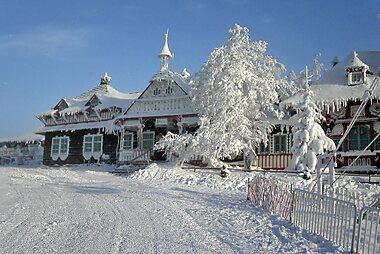
Summers are warm and the best time for hiking Radhošť and the wider Beskydy, with July and August bringing the most sunshine. Spring and autumn stay cool and often wet. Winters are cold and snowy, with cross-country and downhill skiing on the nearby slopes.
Plan around Frenštátské slavnosti, a folk festival held over a weekend in late August, when traditional dance and music groups from the region and abroad perform on the main square.
Best time to visit: June, August
July and August are the warmest, sunniest months; January and February are the coldest, with the most reliable snow cover.
Top sights


Kostel sv. Martina anchors the main square, a Baroque parish church rebuilt in 1661 and known for its onion-domed tower and a rare hanging triptych called the Wallachian Madonna.
Climb Radniční věž, the town hall's neo-Renaissance tower, for a view over the square and toward Radhošť.
A memorial to Albín Polášek honors the Frenštát-born sculptor who became one of the best-known Czech-American artists of his generation, and who later carved the Radegast statue that still stands above Pustevny.
Families head to Aquapark Frenštát p. R., an open-air water park with a 60-meter slide that runs from mid-May to the end of September.
For a short walk with a view, climb Vlčina, a 532-meter hill on the town's western edge in the Horečky area.
What to experience
- Walk the ridge from Pustevny up to Cyril and Methodius Chapel on the summit of Radhošť, one of the region's classic day hikes, with sweeping views over the Beskydy on a clear day.
- Try the barefoot sensory trail in the town's Dolní park, a short path over stones, sand, and wood chips, popular for cooling off after a summer walk.
- In winter, ski or cross-country ski on the small local slopes at Horečky, on the edge of town.
Tours & Activities
Frenštát pod Radhoštěm — Map

Day trips
Frenštát sits close to several easy day trips, with the Beskydy high country a longer hike or drive further out.
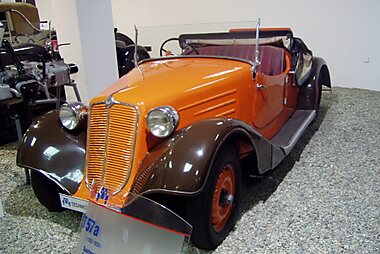
- Kopřivnice — about 10 minutes by car or bus. Home to Tatra Technical Museum and Tatra Truck Museum, tracing the history of the Tatra car and truck maker, plus the restored 1936 Slovenská strela Depository.
- Štramberk — about 15 minutes by car. A walled medieval town known for its round Štramberk Castle Tower and gingerbread bakeries, with the Botanic Garden and Arboretum nearby in a former limestone quarry.
- Rožnov pod Radhoštěm — about 15 minutes by car or bus. Home to the Wallachian Village, the country's largest open-air museum, with historic wooden cottages and farms brought in from across the region.
- Radhošť and Pustevny — roughly 2 to 2.5 hours on foot from town, or about 30 minutes by car to the trailhead near Trojanovice. Pustevny is the mountain saddle with Dušan Jurkovič's wooden chalets and the Radegast statue; from there it is another 45 minutes uphill to Cyril and Methodius Chapel on Radhošť's 1,129-meter summit.
Where to explore
Frenštát belongs to the Nový Jičín district, home to several other historic Moravian towns.
Kopřivnice and Štramberk make easy half-day trips (see Day Trips above). Nový Jičín is the district's administrative center, with an arcaded Renaissance square. Příbor is a small town best known as the birthplace of Sigmund Freud.
Getting there
- By air: the nearest airport is Leoš Janáček Airport Ostrava, about 30 km away, with a limited range of scheduled European routes; a taxi or rental car covers the transfer in under an hour. For wider international connections, most travelers fly into Prague or Vienna and continue by train or car.
- By train: regional trains connect Frenštát pod Radhoštěm's own station to Ostrava, with onward connections across the Czech rail network; journey time to Ostrava is roughly an hour.
- By bus: direct regional buses run to Ostrava, Nový Jičín, Kopřivnice, and Rožnov pod Radhoštěm.
Getting around
- Public transit: the historic center is small enough to cover on foot. Regional ODIS buses reach the outlying parts of town and nearby villages; buy a ticket from the driver or through the ODIS app.
- On foot / cycling: the town center is flat and walkable. Cycling is possible but the surrounding terrain climbs quickly toward the Beskydy foothills, so expect real hills once you leave the center.
Driving
- Is a car worth it?: not needed for the town center, which is fully walkable, but useful for reaching Radhošť trailheads, Pustevny parking, and nearby towns on your own schedule.
- Parking: paid parking around the main square, pay by ticket machine; free unmetered spaces are usually available a short walk further out.
- Restrictions: none in town; parking at the Pustevny/Radhošť trailheads fills up and charges a fee on busy summer and autumn weekends.
Food & drink
Frenštát has no signature dish of its own; expect the same hearty Wallachian and Moravian cooking found across the wider Beskydy foothills — smoked meats, potato dumplings, and kyselo, a sour rye-and-mushroom soup traditional in this part of Moravia.
The main square and the streets just off it hold the best concentration of cafés and pubs.
Safety & health
Frenštát is a safe, quiet town with very little crime that affects visitors. The main risk here is not urban but the mountains: check the weather before hiking up to Radhošť or Pustevny, wear proper footwear, and expect ice on shaded trails well into spring even when the town itself is clear of snow.
History
Frenštát pod Radhoštěm received town rights in the late 14th century and grew for centuries as a market town in the shadow of Radhošť. Its economy long depended on weaving and, later, cotton milling; former mill buildings still stand on the edge of the historic center as reminders of that era.
Fires repeatedly damaged the largely wooden old town over the centuries, which is why Kostel sv. Martina and most of the buildings around the square today are Baroque or later rebuilds rather than medieval originals. The town's most famous son, the sculptor Albín Polášek, emigrated to the United States as a young man and later carved the Radegast statue that now stands on Pustevny above his birthplace, a piece every local hiker eventually passes.
Country facts
Quick practical facts for the Czech Republic at a glance:
- Currency
- Czech Koruna CZK Kč · Card payments · Commonly accepted
- Emergency numbers
- 112
- Electricity
- 230 V · 50 HzType C / Type E
- Languages
- Czech
- Tap water
- Safe to drink
- Driving side
- Right
- Calling code
- +420


Frenštát pod Radhoštěm – Add to Your Trip
Create a detailed travel itinerary with smart routing, time estimates, and everything you need for a perfect trip.




