


Saxon Switzerland
Saxon Switzerland is a hiking region of sandstone cliffs, rock towers and deep valleys. It lies along the Elbe river in eastern Saxony, next to the Czech border. The national park is Saxony's only one.
The region suits walkers and first-time visitors who want views more than museums. Most visits are day trips or a few nights in small towns and villages along the Elbe.
Download this guide as a PDFPrintable tourist mapPublic holidays in Germany

Saxon Switzerland – Planning a Trip?
Build your day-by-day itinerary in the Tripomatic app.


When to visit
Late spring to early autumn is best for walking. Summer is warm, and rain is common. Autumn is quieter and good for views.
Winter is cold, and some trails are icy or closed. Königstein Fortress holds a Christmas market.
Best time to visit: June, August, September
Top sights
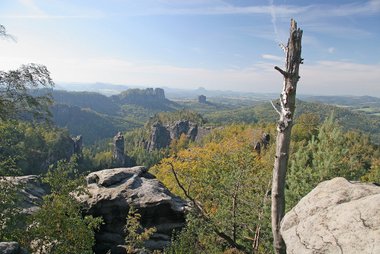

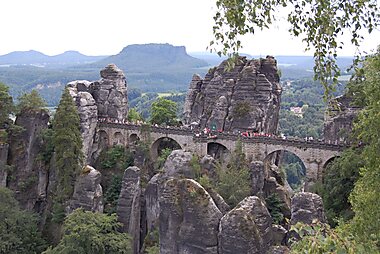
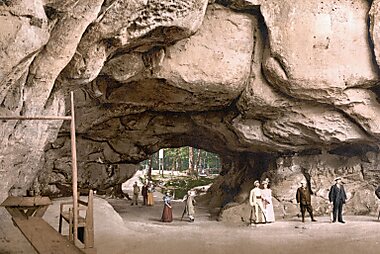
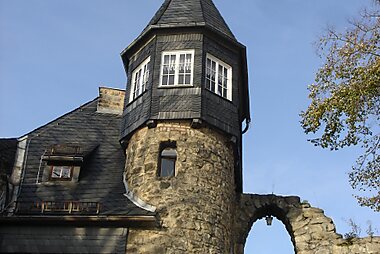
- Sächsische Schweiz is the national park and the main hiking area. It has a marked trail network with many viewpoints.
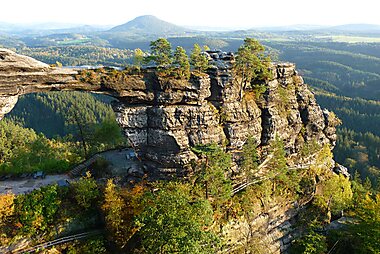
- Basteibrücke is a stone bridge between rock towers high above the Elbe. It is very popular, so go early.
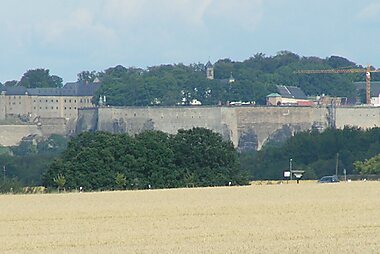
- Königstein Fortress is a large fortress on a rock above the Elbe. It has exhibitions and underground tours.
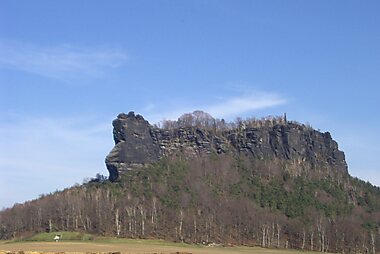
- Lilienstein is a table mountain beside the Elbe. The summit has wide views over the valley.
- Burg Hohnstein is a castle above the town of Hohnstein.
- Pravčická brána is a natural sandstone arch across the border in the Czech Republic.
- Kuhstall is a natural rock gate in the cliffs. Walk to it on a forest trail.
- Burg Altrathen is a castle ruin on a rock near Rathen.
Featured Lists


Historic Heritage Sites
Saxon Switzerland’s history is preserved through its diverse architecture, ranging from the massive Königstein Fortress, one of Europe's largest hilltop fortifications, to the medieval castles of Hohnstein and Altrathen. The town of Pirna serves as a cultural hub, featuring the late Gothic St. Mary's Church and the historic Sonnenstein Castle. Industrial and transit heritage is represented by the 1904 Bad Schandau elevator and 19th-century Elbe bridges, while post milestones mark the region's historical importance as a trade route.
13 places

Regional Food & Drink
Sample Saxon Switzerland’s culinary heritage through its historic mountain inns and traditional breweries. This selection features the themed casemates of Königstein Fortress and the organic Gasthof zur Mühle in the eco-village of Schmilka. Many locations, such as Brand-Baude and Felsbaude Lilienstein, are situated on high plateaus offering panoramic views of the Elbe Sandstone Mountains. Experience house-brewed beers at Brauhaus Pirna or regional specialties at historic stops along the Kirnitzschtal tram line.
13 placesWhat to experience
- Hike the Malerweg. It is an 8-stage trail of 116 km, and you can walk single stages.
- Ride the Kirnitzschtalbahn, a tram in the Kirnitz valley that starts in Bad Schandau.
- Cross the Elbe on the ferry at Rathen.
- See a performance at the Felsenbühne Rathen, an open-air theatre in the rocks.
- Go rock climbing on the sandstone towers with a local guide.
Tours & Activities
Saxon Switzerland — Map

 Open the interactive map
Where to explore
- Dresden is the state capital and the usual gateway to the region.
Getting there
- By air: Dresden Airport is the nearest airport. Continue from Dresden by train.
- By train: Dresden has direct S-Bahn trains into the region. The S1 line follows the Elbe through the main towns.
- Tourist information is in Pirna.
Getting around
- S-Bahn and buses: Stops include Kurort Rathen, Königstein and Bad Schandau. Regional buses reach villages and trailheads. Overnight guests in many towns receive a guest card that covers local buses, trains and the Kirnitzschtalbahn.
Safety & health
- Stay on marked paths. Some trails have steep steps and iron ladders.
- Sandstone is slippery when wet. Wear shoes with good grip.
History
- The name "Saxon Switzerland" comes from two Swiss artists who taught in Dresden in the 18th century. They thought the landscape looked like Switzerland.
- Painters of the Romantic period followed. The Malerweg follows routes that early artists and travellers walked.
Country facts
Quick practical facts for Germany at a glance:
- Currency
- Euro EUR € · Card payments · Commonly accepted
- Emergency numbers
- 112 Ambulance · Fire brigade
- Electricity
- 230 V · 50 HzType C / Type F
- Languages
- German
- Tap water
- Safe to drink
- Driving side
- Right
- Calling code
- +49


Saxon Switzerland – Plan Your Days
Turn the places from this guide into a real itinerary, with smart routing, time estimates, and everything you need for a perfect trip.


Related destinations
Other Destinations
Data: © OpenStreetMap contributors, Wikidata, Wikipedia, Tripomatic, Official websites. Tours by GetYourGuide. We earn commission from bookings. Travel guide generated with AI.
Plan your trip with Tripomatic
- AI-Powered PlanningGet a ready-made day in one tap, let AI spread your shortlist across your trip, or plan everything by chatting.
- Travel AlertsOfficial advisories, severe weather, strikes, and natural hazards for the places on each day of your trip.
- Public Holidays & EventsSee holidays, festivals, and closures on the days of your trip, and what they mean for your plans.
- Cost EstimationAI-powered trip cost breakdowns so you know what to budget before you go.
- Tours & TicketsBook tours, skip-the-line tickets, and activities directly in your plan.