



Uzbekistan
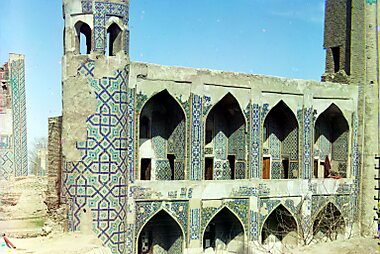
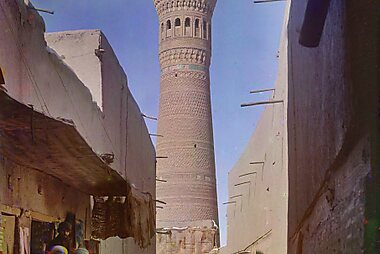
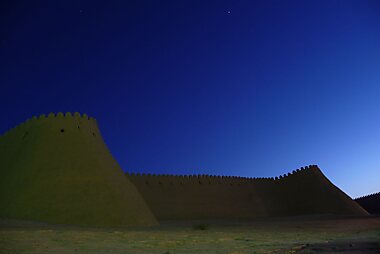
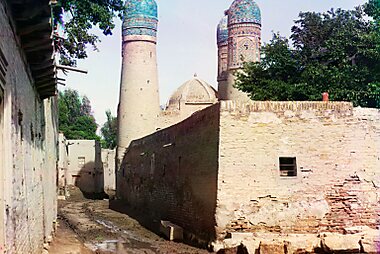
Uzbekistan is the historical heart of the Silk Road. Three of Central Asia's great Islamic cities are within a few hours of each other: Samarkand, once the capital of Amir Timur's 14th-century empire, Bukhara, and Khiva. Turquoise-domed mosques, mausoleums, and madrasahs stand beside busy bazaars and irrigated farmland, in a landlocked country bordered by five others.
The capital, Tashkent, is a modern, Soviet-planned city with wide boulevards and an ornately tiled metro system. The Fergana Valley, in the east, is known for silk and ceramics, and the shrinking Aral Sea, in the west, draws travelers curious about one of the world's starkest environmental stories. Uzbekistan suits travelers who enjoy history and architecture, and who don't mind covering long distances by train or car between cities.





Uzbekistan – Planning a Trip?
Build your day-by-day itinerary in the Tripomatic app.


Money & payments
Small coins exist alongside banknotes, but most day-to-day spending is in notes.
Cards are accepted in hotels, larger restaurants, and shops in Tashkent and the main tourist cities, but bazaars, small cafes, and rural areas are usually cash-only. ATMs are common in cities but can run dry or reject foreign cards, so carry some backup cash rather than relying on a single card.
Featured Lists

Uzbekistan Essentials
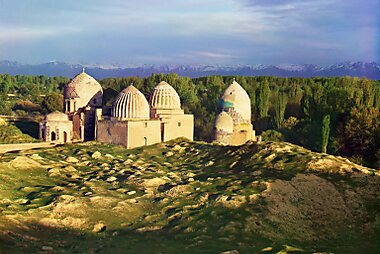
Uzbekistan’s Silk Road heritage is preserved within the historic centers of Samarkand, Bukhara, and Khiva. This collection highlights the evolution of Islamic architecture, from the 10th-century Samanid Mausoleum to the grand Timurid monuments of Registan Square. It includes scientific landmarks like Ulugh Beg’s 15th-century observatory, the intricately carved wooden columns of Khiva’s Juma Mosque, and the turquoise-tiled necropolis of Shakhi Zinda, representing centuries of artistic and scholarly achievement.
15 places
Bazaars and Shopping Centers
Uzbekistan’s retail landscape spans from ancient Silk Road trading hubs to sleek contemporary malls. In Samarkand and Bukhara, historic bazaars like Siyob and the spice markets offer traditional Samarkand bread, hand-woven suzanis, and regional spices beneath turquoise domes. In Tashkent, modern complexes like Next and Ecobozor provide climate-controlled shopping with international brands and entertainment. The Fergana Valley’s Kumtepa Bazaar remains a primary source for authentic Ikat silks and traditional textiles.
12 places


Scenic Views and Peaks
Uzbekistan’s diverse topography ranges from the high-altitude peaks of the Western Tian Shan to the stark, arid landscapes of the Ustyurt Plateau. This collection highlights the country's natural landmarks, including the highest point at Hazrati Sulton and the historical Syr Darya river. In the west, the Muynak ship cemetery serves as a testament to the Aral Sea's recession, while the eastern highlands feature alpine lakes like Shovurkul and the steep table mountains of the Chatkal Range.
14 placesTours & Activities
Uzbekistan — Map

Tipping
Tipping is becoming more common in Uzbekistan, especially in restaurants used to foreign visitors, but it isn't expected the way it is in Western Europe or the US. Guides and drivers on organized tours are the clearest exception — a daily tip is standard practice. At bars, no one expects a tip at all.
round up or ~10%
round up
a few USD-equivalent per day
small tip for porters/housekeeping
Electricity
Sockets take Type C and F plugs at 220 V / 50 Hz — the same as continental Europe, so most European chargers work without an adapter.
Language
Uzbek is the official language, written in the Latin alphabet since the 1990s, though older Cyrillic signage still appears in places. Russian remains widely spoken and understood, especially in Tashkent and among older generations, and is often more useful than English for basic transactions. English is spoken in tourist-facing hotels and agencies in the main cities, but not much beyond that — a translation app is genuinely useful outside Tashkent, Samarkand, and Bukhara.
Staying connected
Prepaid SIM cards are cheap and widely available at kiosks and mobile-operator shops in the airport and city centers. Buying one requires showing your passport, which the vendor registers against the SIM — a step most travelers from Europe or North America aren't used to.
An eSIM from an international provider is a simpler alternative if your phone supports one.
Safety & emergencies
Uzbekistan is a safe country for tourists, with low rates of violent crime. The most common issues are opportunistic pickpocketing in crowded bazaars and stations, and taxi drivers or vendors overcharging visitors who don't know the going rate — agree on a price before you get in or buy. Police presence is heavy around major monuments and can generally be trusted to help.
Health
Tap water is not safe to drink — stick to bottled or boiled water, including for brushing teeth if you're prone to stomach upsets. Pharmacies are easy to find in every city and can help with minor ailments, though English is rarely spoken there. No vaccinations are mandatory for entry, but check current recommendations for hepatitis A and typhoid with a travel clinic before you go, since food and water hygiene outside hotels and established restaurants can be inconsistent.
Visas & entry
Uzbekistan has one of the more open visa regimes in Central Asia. Citizens of the EU, UK, and many other countries can enter visa-free for up to 30 days. Travelers from many other countries can apply for an e-visa online before departure, and a small number of nationalities still need a visa arranged through an embassy. Land border crossings from neighboring Kazakhstan, Kyrgyzstan, Tajikistan, and Turkmenistan are open to tourists, though hours and paperwork vary by crossing.
Visa and entry requirements change frequently. Verify current requirements with the official immigration authority or your country's embassy before travel.
Etiquette
- Dress modestly at mosques and mausoleums — shoulders and knees covered for everyone; some sites ask women to cover their hair, and scarves are usually available to borrow at the entrance.
- Remove your shoes before entering a mosque's carpeted prayer area, though most historic monuments open purely as sightseeing sites don't require this.
- A handshake is the standard greeting between men; wait for a woman to offer her hand first.
- Ask before photographing people, especially at markets and in rural areas.
- Bargaining is expected at bazaars and with souvenir sellers, but not in shops with marked prices.
- Being invited for tea or a meal is a common expression of hospitality — accepting is polite, and a small gift such as sweets or fruit is appreciated if you're visiting someone's home.
Holidays & opening hours
Public holidays can affect opening hours, especially around Navruz (the Persian new year, in March) and the Islamic holidays of Eid al-Fitr and Eid al-Adha, when many shops and offices close for a day or more. Most shops and bazaars open daily, including Sundays, though some smaller shops take a midday break in the hottest summer months.
Getting around
- By train: Uzbekistan Railways runs fast, comfortable trains between the main tourist cities — Tashkent, Samarkand, Bukhara, and Khiva — including the high-speed Afrosiyob service that cuts the Tashkent-Samarkand trip to about two hours. Book ahead in high season via Uzbekistan Railways e-ticket.
- By air: domestic flights connect Tashkent with Nukus and Urgench, the gateway airport for Khiva, useful for skipping the long overland stretch to Karakalpakstan.
- By shared taxi: on routes without a convenient train, shared taxis are the fastest option between cities and leave when full from a fixed departure point.
Distances between the Silk Road cities are long enough that most itineraries mix train travel with a car or driver for day trips around each stop.
Driving
- Key rules: the legal blood-alcohol limit is 0.03% — low enough that it's safest to avoid alcohol entirely before driving. Seatbelts are mandatory for front-seat passengers. Road quality varies a lot outside the main highways, so allow extra time on rural routes.
- Tolls: a few newer expressways charge a toll at gated checkpoints, paid in cash or by card; budget a little extra if your route includes one.
- Parking: metered street parking is common in city centers, paid via an app or at a nearby kiosk; hotels usually offer free or low-cost parking.
- Fuel: stations are typically attended, not self-service, and take cash more reliably than card. Pumps are labeled AI-92 and AI-95 for petrol and Dizel for diesel.
- Electric vehicles: charging infrastructure is still limited outside Tashkent, so an EV rental isn't practical for a multi-city Silk Road trip yet.
Food & drink
Breakfast is usually simple — bread, jam, and tea — while lunch and dinner center on rice, noodles, or dumplings with meat, alongside a large shared salad of tomatoes and cucumbers. Osh, the national rice pilaf, is the dish most associated with Uzbekistan, and a proper pot of it, cooked over an open fire, is a common sight at weddings and celebrations. Meals are eaten slowly, and green tea is poured constantly throughout.
Street food and market stalls sell samsa, grilled shashlik skewers, and fresh non bread straight from tandoor ovens, especially in the bazaars of Samarkand and Bukhara. Most everyday eating happens in simple canteen-style restaurants or at market stalls, not fine dining — a proper sit-down restaurant is more of a special-occasion choice, even in the bigger cities.
Where to explore
The Silk Road triangle of Samarkand, Bukhara, and Khiva holds most of the country's headline architecture and is the backbone of almost every Uzbekistan itinerary. Shakhrisabz, Amir Timur's birthplace, makes an easy day trip from Samarkand over a mountain pass.
Tashkent, the capital, is most travelers' entry and exit point, with enough Soviet-era architecture and museums to fill a day or two on its own.
In the Fergana Valley, east of Tashkent, Kokand, Margilan, Fergana, Andijan, and Namangan are known for silk weaving, ceramics, and a slower, more rural pace than the Silk Road cities.
Nukus, in the autonomous region of Karakalpakstan, is remote but rewards the trip with Savitsky Art Museum's collection of banned Soviet avant-garde art, and is the usual base for visiting the shrinking Aral Sea. Termez, on the border with Afghanistan, has some of the country's oldest Buddhist archaeological sites and sees far fewer visitors than the main circuit.
Uzbekistan – Plan Your Trip
Pick the places you want to see and Tripomatic turns them into a day-by-day route, with smart routing, time estimates, and everything you need for a perfect trip.


Related destinations


Data: © OpenStreetMap contributors, Wikidata, Wikipedia, Tripomatic, Official websites, geoBoundaries (CC BY 4.0). Tours by GetYourGuide. We earn commission from bookings. Travel guide generated with AI.