


Algarve
The Algarve is Portugal's southern coast and its main beach region. It has golden cliffs, sea caves and rock arches in the west, and long sandy islands and a lagoon in the east. The wild Atlantic coast in the southwest is a different world, with big surf and few buildings.
It suits beach holidays, families, walkers and anyone who wants sun outside the summer months. Most visitors base themselves in one or two towns and use day trips to see the rest. Faro is the regional capital and the gateway. Lagos and Albufeira are the best-known resort bases.

Algarve – Planning a Trip?
Build your day-by-day itinerary in the Tripomatic app.


When to visit
April to June and September to October are the best months. The weather is warm and dry, and the crowds are smaller. July and August are hot, busy and the most expensive. The sea breeze cools the coast, but the hills inland are hotter. The Atlantic stays cool, and the west coast is colder and windier than the south coast. Winter is mild but wetter, and some seasonal businesses close.
A major annual event is the Silves Medieval Fair in August. It runs for more than a week, with parades, markets and banquets in the castle town of Silves.
Best time to visit: April, May, June, July, August, September, October, November
Top sights

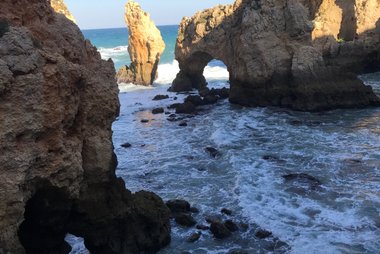
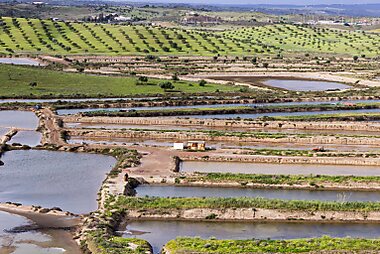
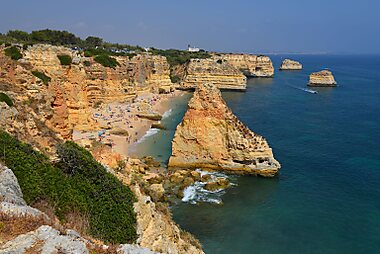
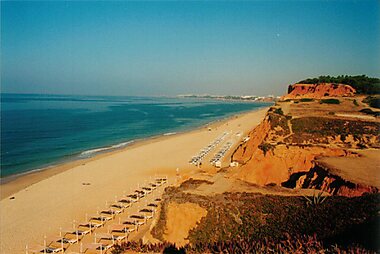
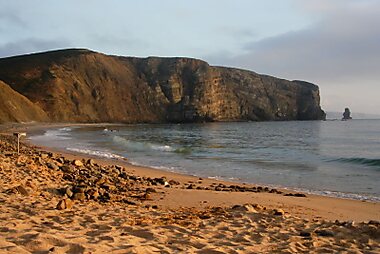
The best sights are on the coast. Each area has its own character.
- Benagil Cave is a sea cave with a hole in its roof and a small beach inside. Most visitors arrive by sea. Take a licensed boat or a guided kayak tour. Landing in the cave and swimming in are restricted.
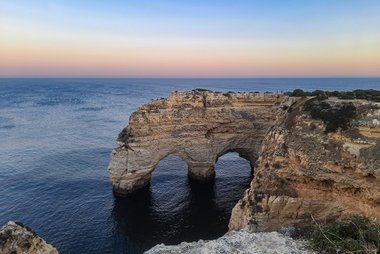
- Praia da Marinha has cliffs, arches and rock stacks above clear water. The Percurso dos Sete Vales Suspensos starts here. It is an easy 5.7 km clifftop walk to Praia do Vale de Centeanes, with little shade, so start early.
- Ponta da Piedade is a headland of arches and caves next to Lagos. The light is best in the evening.
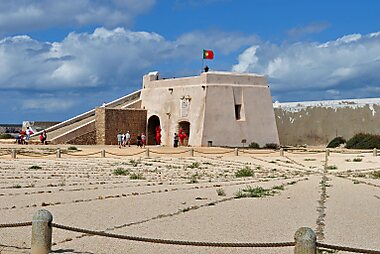
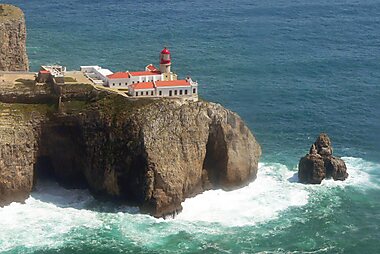
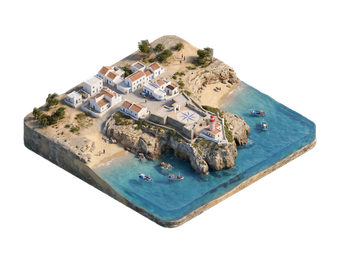
- Fortaleza de Sagres stands on a windy headland in the far southwest. Nearby, the Farol do Cabo de São Vicente marks the southwestern tip of mainland Europe.
- Parque Natural da Ria Formosa is a lagoon of channels, salt marsh and sandy barrier islands. Boats leave from Faro, Olhão and Tavira.
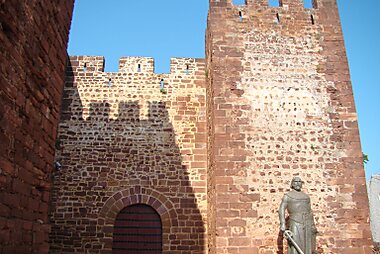
- Castelo de Silves is a red sandstone fortress above the old Moorish capital of Silves. It has good views over the town and the countryside.
- Praia da Falésia Alfamar is a very long beach under red and orange cliffs. It has room to spread out, even in summer.
- Praia da Arrifana is a surf beach in a cliff bay on the west coast. The water is cold and the waves are strong.
Featured Lists

Algarve's Unmissable Coastline & Culture
The Algarve's southern coastline is defined by dramatic limestone cliffs and sea caves, notably the Gruta de Benagil with its natural skylight. Along the Lagos coast, Ponta da Piedade displays intricate rock arches and a historic lighthouse, while beaches like Praia da Marinha and Praia do Camilo are accessed via steep staircases carved into the bluffs. In Faro, the 18th-century Igreja do Carmo showcases Baroque architecture and houses a chapel constructed from human bones.
8 places


Algarve's Sacred Sites
Explore the religious architecture of southern Portugal and the borderlands through this collection of historic churches, convents, and chapels. Highlights include Faro’s 18th-century Igreja do Carmo, known for its bone chapel, and the Church of São Lourenço, famous for its extensive Baroque tilework. The list spans from the 12th-century mosque-turned-church in Mértola to the secluded cemeteries of Sabóia and Colos, showcasing centuries of spiritual heritage, Manueline details, and traditional Portuguese craftsmanship.
18 places
Algarve Viewpoints
This collection spans the Algarve's diverse topography, from the dramatic limestone stacks of Ponta da Piedade to the 156-meter-high cliffs of Torre de Aspa. It features a mix of historical ruins like the Torre d'Aires watchtower, modern bird-watching observatories in the Ria Formosa wetlands, and elevated inland points such as the Monchique fire lookouts. These sites offer specific vantage points over the Atlantic coastline, the Guadiana River border with Spain, and the region's rugged western surf beaches.
15 places
Algarve's Culinary Delights
This collection highlights the diverse flavors of Southern Portugal, spanning the Algarve’s coastline to the rustic interiors of Alentejo. It features establishments like A Tasca do Petrol in the Monchique mountains, known for hearty wild boar, and Gigi’s in Quinta do Lago, which focuses on the daily catch. From traditional fish markets in Ferragudo to wine cellars in Vila de Frades, these spots offer authentic regional specialties such as razor clam rice, slow-cooked meats, and local Talha wines.
20 placesWhat to experience
- Boat trip along the cliffs: Small boats leave from Lagos, Portimão, Carvoeiro and Albufeira to visit sea caves and look for dolphins. Calm mornings are best.
- Island day in the Ria Formosa: Take a boat to a barrier island for a long empty beach. Bring water and shade, as the islands have few shops.
- Lagoon by kayak: Paddle the calm channels of the Ria Formosa early in the morning for birdwatching.
- Surf lesson on the west coast: Schools near Arrifana and Aljezur teach beginners in season. Water is cold, so wear a wetsuit.
- Spa and forest walk in the hills: Combine the spa waters of Caldas de Monchique with a walk in the Serra de Monchique. It is a cool break on a hot day.
- Sunset at the far southwest: Watch the sun go down from the cliffs near Sagres. It gets busy, so arrive early.
Tours & Activities
Algarve — Map

 Open the interactive map
Where to explore
The Algarve is long and narrow, so pick one or two bases and travel along the coast.
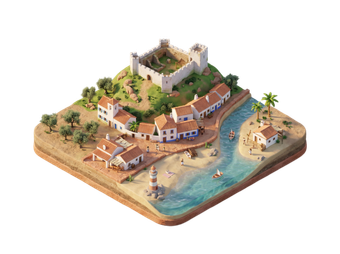
- Capital and east: Faro for the airport, the old town and the lagoon. Olhão for a fishing town and island boats. Tavira for a calm historic town and island beaches. The Ria Formosa Nature Park covers the whole lagoon coast.
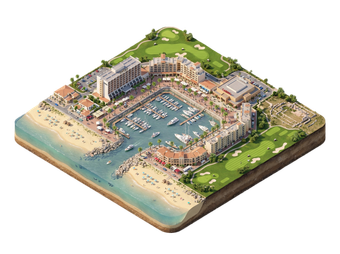
- Centre: Albufeira for the biggest resort and nightlife. Vilamoura for its marina and golf. Loulé is an inland market town.
- West: Lagos for cliffs and boat trips. Portimão and Carvoeiro for wide beaches and cove beaches. Sagres for the wild southwest tip.
- Inland and west coast: Silves for the castle. Monchique for forested hills and spa water. Aljezur and the Rota Vicentina for Atlantic beaches and coastal walking.
Getting there
- By air: Faro Airport (FAO) is the main gateway and lies next to Faro. Most resorts are 30 minutes to 1.5 hours away by road. Lisbon Airport (LIS) is an option if you combine the trip with Lisbon. See Faro Airport.
- By train: Fast Alfa Pendular and Intercity trains run from Lisbon to Faro in about 3 to 3.5 hours. Change at Tunes for Silves, Portimão and Lagos. Some fast trains stop at Albufeira. Book on Comboios de Portugal.
- By bus: Long-distance coaches run from Lisbon to Faro and other Algarve towns in about 3.5 to 4 hours.
- By car: Lisbon to Faro is about 3 hours by the A2 motorway. The A2 charges tolls.
Getting around
- Train: The Algarve line runs along the coast from Lagos to Vila Real de Santo António. It serves Portimão, Silves, Albufeira, Faro, Olhão and Tavira. It is the best way to travel between the main towns. The Albufeira station is about 6 km from the old town. Book on Comboios de Portugal.
- Regional buses: Vamus Algarve runs the intercity buses and reaches towns without a station, such as Sagres and Monchique. Buy tickets in the Vamus app, at ticket offices or from the driver. A multi-day tourist pass covers the intercity network.
- Local transport: Each resort has its own town buses.
- Boats: Ferries and boats from Faro, Olhão and Tavira reach the barrier islands. Services run more often in summer.
- Car: A car is the easiest way to reach the western beaches, Sagres, Monchique and inland villages. See the driving section.
Driving
- Is a car worth it?: Yes for the west coast, Sagres, Monchique and inland villages. It is not needed for a stay in one resort town with beach access on foot. Rent at Faro Airport.
- Motorways: The A22 runs along the coast and has no tolls. The A2 from Lisbon is tolled. Ask your rental company about a toll transponder.
- Coast road: The EN125 is slower and runs through every town. Use the A22 for long distances.
- Parking: Beach car parks fill early in July and August. Arrive early or use a bus or taxi.
- Mountain roads: Roads in the Serra de Monchique and on the west coast are narrow and winding.
Food & drink
Seafood is the main reason to eat in the Algarve. Look for grilled fish, grilled sardines in summer, octopus and clams. Try cataplana, a seafood stew cooked in a copper pan. For dessert, try sweets made with almonds, figs and eggs, such as Dom Rodrigo. In the hills around Monchique, look for medronho, a strong fruit spirit, and for smoked ham.
Fishing towns are the best places to eat fish. The sardine restaurants of Portimão and the waterfront of Olhão are good starting points. Covered markets sell fish and local produce. The market in Loulé is busiest on Saturday mornings. Walk a street or two away from the main beach strips for better prices.
Safety & health
The Algarve is safe for visitors. Petty theft is the main risk. Watch bags on beaches and in busy streets, and do not leave valuables in parked cars, especially at beach and viewpoint car parks.
- Stay away from cliff edges and do not sit under cliffs. They can collapse.
- Obey the beach flags. Atlantic currents can be strong, especially on the west coast.
- The summer sun is strong. Use sun protection and carry water on walks, as many trails have no shade.
- The hills are dry in summer and wildfires can happen. Follow local warnings and do not light fires.
History
The name Algarve comes from the Arabic al-Gharb, "the west". The Phoenicians, Romans and then the Moors all settled the coast. The Moors held the region for about five centuries. Today you can see this period in the red sandstone castle at Castelo de Silves in Silves, which was the Moorish capital. The Romans left remains such as Milreu Roman Villa, near Faro.
Portuguese forces completed the conquest of the Algarve in the 13th century. In the 15th century, the coast became a base for Portuguese voyages along the African coast. Prince Henry the Navigator is linked to Fortaleza de Sagres. Ships also sailed from Lagos.
The 1755 earthquake and tsunami damaged many Algarve towns. Faro later became the regional capital. Fishing towns grew into beach resorts from the 1960s, and tourism is now the main industry.
Country facts
Quick practical facts for Portugal at a glance:
- Currency
- Euro EUR € · Card payments · Widely accepted
- Emergency numbers
- 112
- Electricity
- 230 V · 50 HzType C / Type F
- Languages
- Portuguese
- Tap water
- Safe to drink
- Driving side
- Right
- Calling code
- +351
Algarve – Plan Your Trip
Pick the places you want to see and Tripomatic turns them into a day-by-day route, with smart routing, time estimates, and everything you need for a perfect trip.


Related destinations



Data: © OpenStreetMap contributors, Wikidata, Wikipedia, Tripomatic, Official websites. Tours by GetYourGuide. We earn commission from bookings. Travel guide generated with AI.
Plan your trip with Tripomatic
- AI-Powered PlanningGet a ready-made day in one tap, let AI spread your shortlist across your trip, or plan everything by chatting.
- Travel AlertsOfficial advisories, severe weather, strikes, and natural hazards for the places on each day of your trip.
- Public Holidays & EventsSee holidays, festivals, and closures on the days of your trip, and what they mean for your plans.
- Cost EstimationAI-powered trip cost breakdowns so you know what to budget before you go.
- Tours & TicketsBook tours, skip-the-line tickets, and activities directly in your plan.