


Faro
Faro is the capital of the Algarve and the region's main gateway. Many visitors only see its airport, but the city is worth a night or two. The walled old town is small and calm, with churches, tiled houses and white storks on the towers.
The Ria Formosa lagoon starts at the edge of the city. Boats take visitors to sandy barrier islands within minutes. Faro is quieter than the resort towns to the west. It works well as a base for the eastern Algarve and for travelers who like towns more than resorts.

Faro – Planning a Trip?
Build your day-by-day itinerary in the Tripomatic app.


When to visit
Spring and early autumn are warm and good for both sightseeing and the beach. Summer is hot, dry and busy, and it is the best season for the island beaches. Winter is mild but wetter. Boats to the islands run more often in summer.
The biggest annual event is the Faro International Motorcycle Rally. It takes place each July, with events just outside the city. Thousands of riders come from across Europe, so book rooms early if you visit in that week.
Best time to visit: April, May, June, July, August, September, October, November
Top sights


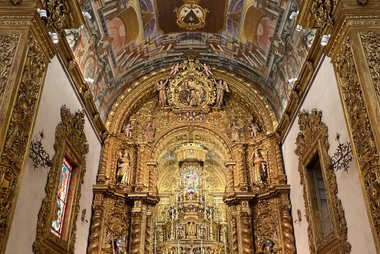
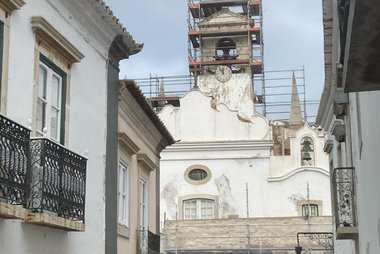

- Igreja da Sé has stood at the top of the old town since the late 13th century. It was rebuilt after English forces sacked the city, and it mixes Gothic, Renaissance and Baroque styles.
- Arco da Vila is the neoclassical gate into the old town, finished in 1812 by the Genoese architect Francisco Xavier Fabri. Inside the passage is an older horseshoe-arch doorway, probably from the 11th century. Storks nest on its tower.
- Igreja do Carmo is an 18th-century Baroque church with a gilded, tiled interior. Behind it is the Capela dos Ossos, a small chapel from 1816 covered in the bones and skulls of monks. It is entered through the church and can be crowded in summer.
- Paço Episcopal is the former bishop's palace next to the cathedral. It has hand-painted tiles and an exhibition of sacred art.
- The Museu Municipal de Faro is in a 16th-century convent with a quiet cloister. Its highlights include a Roman mosaic of Neptune and the Four Winds.
- Jardim Manuel Bívar is the garden square by the marina, where the old town meets the waterfront. It is a good place to start and end a walk.
- Ria Formosa is the protected lagoon behind the city, with channels, salt marshes and sandy islands. It was voted one of Portugal's seven natural wonders in 2010. Birdlife is rich.
What to experience
- Island day by boat: Boats leave from the waterfront for Ilha Deserta, Ilha do Farol and Ilha da Culatra. Ilha Deserta has about 7 km of undeveloped beach and only one restaurant. Bring water and shade.
- Lagoon by kayak or paddleboard: Kayak tours leave from the marina. Early morning is best for birdwatching. The lagoon side of Praia de Faro is calm and good for beginners at stand-up paddleboarding.
- Oyster farm visit: Boat trips from Faro or Olhão visit oyster farms in the lagoon and usually end with a tasting.
- Sunset from the hill: The hilltop chapel Ermida de Santo António do Alto gives a wide view over the city and the lagoon.
- Fado evening: Some restored old-town houses host fado shows a few nights a week, often with dinner.
Tours & Activities
Faro — Map

Day trips
Faro has several easy trips nearby. The closest ones are by train, and the Algarve line runs along the coast.
- Olhão is under 15 minutes by train. It is a working fishing town with flat-roofed white houses, a waterfront market and ferries to the islands.
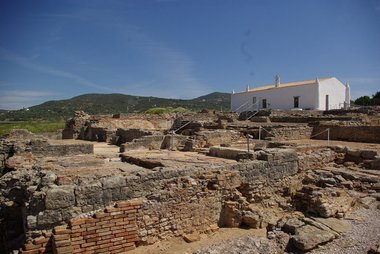
- Estói and Milreu Roman Villa are about 10 km north, 15 minutes by car or taxi. Milreu is the best-preserved Roman site in the Algarve, with baths, sea-themed mosaics and a temple to a water deity. Estói also has a rococo palace with gardens, now a hotel.
- Loulé is about 25 minutes by car. It has a historic centre and a large market on Saturdays.
- Tavira is about 35 minutes by train. It is a relaxed town on the Gilão river with an old bridge, churches and a castle. A boat links it to a long island beach.
- Silves is about 1 hour by car. It was a Moorish capital and has a red sandstone castle.
- Lagos is about 1 hour by car or 1 h 45 min by train. It has a walled old town and sea cliffs with rock arches.
Getting there
- By air: Faro Airport (FAO) is the main airport of the Algarve and lies just west of the city. Bus 16 takes about 20 minutes to the city bus station near the marina. Pay the driver; cash is the most reliable. A taxi takes 10 to 15 minutes and costs about 15 to 18 €.
- By train: Faro station is a short walk from the old town. Lisbon is about 3 hours by Alfa Pendular and about 3.5 hours by Intercity, with around five direct trains a day. Some Alfa Pendular trains continue to Porto. Regional trains run along the coast to Olhão and Tavira. Book on Comboios de Portugal.
- By bus: The coach terminal is close to the train station. Coaches to Lisbon take about 3.5 to 4 hours. Local buses connect Faro to the other Algarve towns.
Getting around
- On foot: The old town, the marina and the main shopping streets are compact and flat. Most sights are within a 10-minute walk of each other.
- City buses: Buses are run by Próximo. Buy tickets from the driver; cash is the most reliable way to pay. Bus 16 serves the airport and Praia de Faro. See Próximo.
- Boats: Ferries and boat tours to the islands leave from the waterfront near the Porta Nova gate. More leave from Olhão.
- Cycling: The city is flat, so a bike works well for short trips.
Driving
- Is a car worth it?: Not for the city. It is useful if you want to explore the wider Algarve, the western beaches or inland villages.
- Parking: Streets in the old town are narrow and parking is paid. A large car park lies southeast of the centre.
- Tolls: the A22 motorway along the Algarve has been toll-free since 1 January 2025.
Food & drink
The lagoon and the Atlantic supply the local menu. Look for clams, oysters, grilled fish and cataplana, a seafood stew cooked in a copper pan. For dessert, try Dom Rodrigo or morgado. Both are sweets made with almonds and eggs.
Eat within a short walk of Jardim Manuel Bívar and the marina, where many restaurants cluster. Rua de Santo António is lined with cafés. The covered Mercado Municipal, just outside the old town, has fish on the ground floor and local produce upstairs. It is busiest on Saturday mornings.
Safety & health
Faro is a safe city for visitors. Petty theft is the main risk. Pickpockets work crowded places in summer, so keep bags closed and valuables out of sight.
On Praia de Faro, the ocean side is rougher than the lagoon side. The islands have little shade and almost no shops, so bring water and sun protection.
History
Faro began as a Phoenician and Roman port named Ossonoba. Muslim rule began in 713, and the walls of the old town date from that period. King Afonso III took the city in 1249. The horseshoe arch inside Arco da Vila is a surviving trace of that era.
In 1487 a Hebrew Pentateuch was printed in Faro, one of the first books printed in Portugal. In the late 16th century English forces under the Earl of Essex sacked the city. They took the bishop's library to England, and the books are now in the Bodleian Library in Oxford. The bishop's seat had moved to Faro from Silves, and Igreja da Sé was rebuilt after the attack.
The 1755 earthquake damaged the city, and the sandbanks of the Ria Formosa protected it from the worst of the tsunami. After the disaster Faro became the capital of the Algarve. Many churches, including Igreja do Carmo, were rebuilt or finished in the 18th century.
Country facts
Quick practical facts for Portugal at a glance:
- Currency
- Euro EUR € · Card payments · Widely accepted
- Emergency numbers
- 112
- Electricity
- 230 V · 50 HzType C / Type F
- Languages
- Portuguese
- Tap water
- Safe to drink
- Driving side
- Right
- Calling code
- +351


Faro – Add to Your Trip
Create a detailed travel itinerary with smart routing, time estimates, and everything you need for a perfect trip.


Related destinations


Data: © OpenStreetMap contributors, Wikidata, Wikipedia, Tripomatic, Official websites. Tours by GetYourGuide. We earn commission from bookings. Travel guide generated with AI.
Plan your trip with Tripomatic
- AI-Powered PlanningLet AI build your itinerary, answer travel questions, and file your booking documents into your trip.
- Travel AlertsOfficial advisories, severe weather, strikes, and natural hazards for the places on each day of your trip.
- Public Holidays & EventsSee holidays, festivals, and closures on the days of your trip, and what they mean for your plans.
- Cost EstimationAI-powered trip cost breakdowns so you know what to budget before you go.
- Tours & TicketsBook tours, skip-the-line tickets, and activities directly in your plan.