


Nimes
Nîmes is a city in southern France, in the Gard, between Provence and Languedoc. It has some of the best-preserved Roman buildings in Europe. A Roman arena and a Roman temple stand in the middle of a lively modern centre.
The old town is small and walkable, with shaded squares and 18th-century town houses. Nîmes suits a short stay of two nights and works well as a base for the Pont du Gard, Uzès, Arles and Avignon. The city also gave its name to denim, from the fabric called serge de Nîmes. Bullfighting and the big ferias are part of local life.
Download this guide as a PDFPrintable tourist mapPublic holidays in France

Nimes – Planning a Trip?
Build your day-by-day itinerary in the Tripomatic app.


When to visit
May, June, September and October are the best months: warm, sunny and good for walking. July and August are very hot, so plan sights for the morning and evening. Winter is cool and quiet, with some grey days. Autumn can bring heavy rain.
The biggest event is the Féria de Pentecôte, a bullfighting and street festival around Whitsun in May or June. The old town fills with music and crowds, and the arena is the main stage. A second Féria takes place in September. Book hotels well ahead for both.
Best time to visit: May, September, October
Top sights
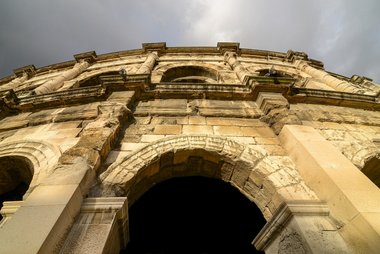
- Arena of Nimes is a Roman amphitheatre from around 100 AD and one of the best preserved in the world. It once held about 24,000 people. Today it hosts bullfights, concerts and Roman-style games, and you can climb to the upper tiers for views of the city.
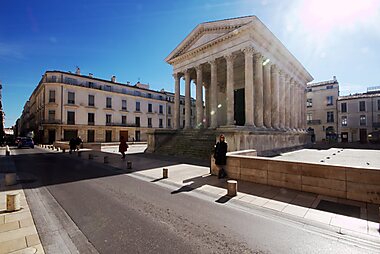
- Maison Carrée is a Roman temple from the time of Augustus. Its tall columns and deep porch are almost complete, and it is a UNESCO World Heritage Site. Its design later inspired buildings in other countries.
- Musée de la Romanité is a museum of Roman history opposite the arena. It shows mosaics, statues and objects from Nîmes and the region, and has a rooftop view over the arena.
- Carré d'Art is a glass and steel art museum facing the Roman temple, designed by Norman Foster. It shows contemporary art, and its roof terrace has a good view of the old town.
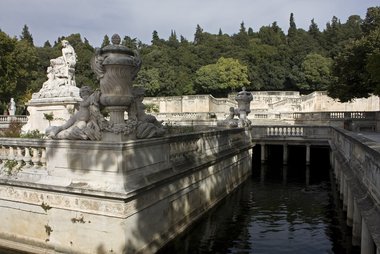
- Les Jardins de la Fontaine is a shaded 18th-century garden built around a Roman spring. It has canals, stairs and statues. It is a cool place to walk on a hot day.
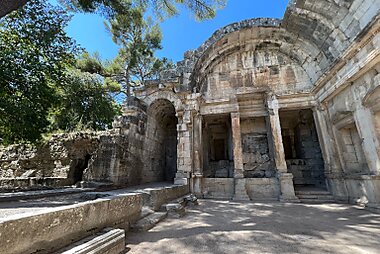
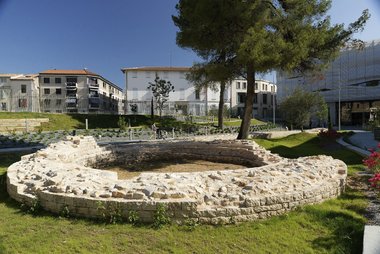
- Temple de Diane is a Roman ruin in the gardens, with a half-open vault. It is probably a part of a sanctuary linked to the spring.
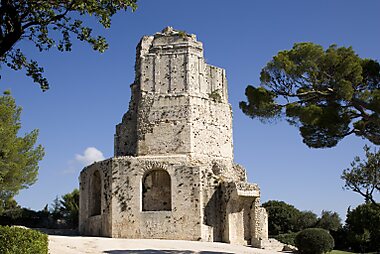
- Tour Magne is a Roman tower on the hill above the gardens. It was built on an older Celtic tower, and the top has the best view of Nîmes.
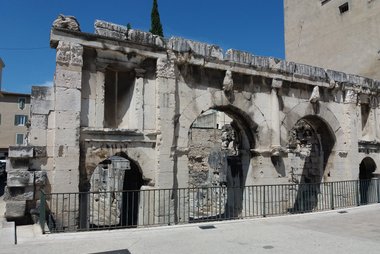
- Porte d'Auguste is a Roman city gate with four arches. It stood on the Via Domitia, the road to Spain and Italy, and it is a short walk from the old town.
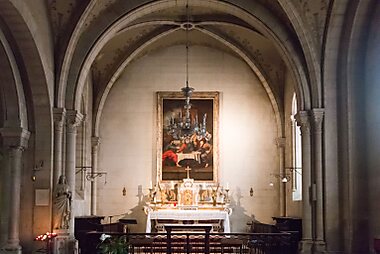
- Cathédrale Notre-Dame et Saint-Castor is the cathedral in the old town. It has a Romanesque frieze on the front, and it sits on a quiet square.
Featured Lists


What to experience
- Féria de Pentecôte and Féria des Vendanges: Twice a year the city turns into a street party for several days, with bullfights in the arena, bands and open-air bars. Bullfighting is part of the tradition here. Visitors who prefer to skip it can still enjoy the streets.
- Roman games: The arena hosts shows with gladiators and chariots in costume. Dates change from year to year, so check the arena's program.
- Concert in the arena: Each summer the Festival de Nîmes brings big concerts to the Roman stage. It is an unusual setting for live music.
- Evening at the Tour Magne: Walk up through the gardens at the end of the day. The view over the city and the Garrigue hills is at its best in the evening light.
Tours & Activities
Nimes — Map

 Open the interactive map
Day trips
Nîmes is a good base for day trips in the Gard and the Rhône valley.
- Pont du Gard: about 30 minutes by car. This three-level Roman aqueduct bridge is a UNESCO World Heritage Site. It carried water to Nîmes, and you can walk beside it and swim in the river in summer.
- Uzes: about 40 minutes by car. It is a pretty hill town with a ducal castle, arcaded square and market days. It is often combined with the Pont du Gard.
- Arles: about 30 minutes by train. It has a Roman arena and theatre and links to the painter Vincent van Gogh.
- Avignon: about 30 minutes by train. It is a walled city with the large papal palace and a famous broken bridge.
- Montpellier: about 30 to 50 minutes by train. It is a student city with a car-free centre and good cafés.
- Aigues-Mortes: about 45 minutes by car. This medieval walled town stands near the salt marshes. You can walk along the ramparts.
- Camargue: about 1 hour by car. It is a wetland area of lagoons, white horses and pink flamingos. A guided boat, horse or jeep tour is the easiest way to see it.
Where to explore
Getting there
- By air: Nîmes–Alès–Camargue–Cévennes Airport (FNI) is about 10 km southeast of the city. It has a few daily flights, mostly from Ryanair. An airport shuttle bus runs to Nîmes bus station, next to the train station; tickets cost about 7 € and are sold on board. Most travelers fly to Montpellier (about 50 km away) or Marseille Provence (about 1 hour 15 minutes by car) and take a train or bus.
- By train: High-speed TGV trains from Paris take about 3 hours. Direct trains also link Lyon, Marseille and Montpellier, and regional TER trains serve Avignon and Arles. Nîmes station is a 10-minute walk from the old town. A second station, Nîmes–Pont-du-Gard, lies outside the city and is used by a few TGVs. Book at SNCF Connect.
- By bus: Long-distance coaches connect Nîmes with regional towns such as Montpellier, Avignon and Uzes. The train is usually faster.
Getting around
- On foot: The old town is compact, mostly pedestrian and flat. Most sights are within 15 minutes of each other. Only the Tour Magne needs a short uphill walk.
- Public transport: The Tango network runs buses and two bus rapid-transit lines (T1 and T2). Buy tickets from the driver. Most visitors do not need it in the centre. The tourist office has information and a combined pass for monuments and museums: Nîmes Tourisme.
- Taxi: Taxis wait at the train station. They are useful for late evenings and for the airport.
Driving
- Is a car worth it?: Not for the city. The old town is walkable and many streets are pedestrian. A car is useful for the Pont du Gard, Uzès and the Camargue.
- Parking: Use the underground car parks around the Esplanade and near the arena, then walk in. Street parking in the centre is limited and paid.
- Restrictions: Access is limited or closed on many streets inside the old town. Follow local signs.
Food & drink
Food here mixes Provençal and Languedoc cooking. Look for brandade de morue, a creamy purée of salt cod, and gardiane, a slow stew of bull meat from the Camargue. Local wines from the Costières de Nîmes are easy to find by the glass.
For a food visit, go to the covered market Les Halles, in the old town. For a meal, try the cafés and restaurants around Place du Marché and the streets near the arena and the cathedral. Choose a set lunch menu for better value. In the evenings, terraces are full, so book ahead during a Féria.
Safety & health
Nîmes is generally safe for visitors. Pickpocketing is the main risk, especially around the station, the arena and the crowds of a Féria. Keep bags closed and phones in front pockets. At night, stay in the lit streets of the centre.
Summer heat is strong. Drink water, use sun protection and plan outdoor sights for morning or evening. In autumn, heavy storms can cause flash floods. Follow local weather alerts and avoid low roads and underpasses during red or orange warnings.
History
Nîmes started around a sacred spring, which is now the Les Jardins de la Fontaine. It became a Roman colony called Nemausus, and Augustus gave it walls and gates. The city grew rich on the road from Italy to Spain, and Porte d'Auguste marks the old road to Rome.
The Romans built Maison Carrée, Arena of Nimes and a long aqueduct, whose best-known part is the Pont du Gard, to bring water from Uzès. The city's coat of arms shows a crocodile chained to a palm tree, a symbol linked to veterans of Augustus. In the Middle Ages, the arena became a small fortified neighbourhood with houses inside.
Later, Nîmes became a major Protestant city and a centre of textile trade. Its woven cloth, serge de Nîmes, gave the word denim. Musée de la Romanité tells this long story today.
Country facts
Quick practical facts for France at a glance:
- Currency
- Euro EUR € · Card payments · Widely accepted
- Emergency numbers
- 112
- Electricity
- 230 V · 50 HzType C / Type E
- Languages
- French
- Tap water
- Safe to drink
- Driving side
- Right
- Calling code
- +33


Nimes – Plan Your Days
Turn the places from this guide into a real itinerary, with smart routing, time estimates, and everything you need for a perfect trip.


Related destinations


Data: © OpenStreetMap contributors, Wikidata, Wikipedia, Tripomatic, Official websites. Tours by GetYourGuide. We earn commission from bookings. Travel guide generated with AI.
Plan your trip with Tripomatic
- AI-Powered PlanningGet a ready-made day in one tap, let AI spread your shortlist across your trip, or plan everything by chatting.
- Travel AlertsOfficial advisories, severe weather, strikes, and natural hazards for the places on each day of your trip.
- Public Holidays & EventsSee holidays, festivals, and closures on the days of your trip, and what they mean for your plans.
- Cost EstimationAI-powered trip cost breakdowns so you know what to budget before you go.
- Tours & TicketsBook tours, skip-the-line tickets, and activities directly in your plan.