


Montpellier
Montpellier is a large university city in southern France, about 10 km from the Mediterranean. It has a compact, mostly pedestrian historic centre, a young population and a sunny climate. It suits a relaxed city break of two to four nights, with easy trips to the coast and the countryside.
The centre is full of 17th- and 18th-century town houses, shaded squares and open-air cafés. Montpellier is also a good base for the Languedoc region: beaches, lagoons, vineyards and old towns are all within an hour. The writer François Rabelais studied medicine here, and Nostradamus is also linked to the city's medical school.
Download this guide as a PDFPrintable tourist mapPublic holidays in France

Montpellier – Planning a Trip?
Build your day-by-day itinerary in the Tripomatic app.


When to visit
Spring (May and June) and early autumn (September and October) are the best times. The days are warm and sunny, and the terraces are busy. July and August are hot and good for the beach, but the city can feel heavy in the afternoon. Winter is mild, and autumn can bring short, heavy rain.
The biggest event is the Festival Radio France Occitanie Montpellier, a summer festival of classical music, opera and jazz with many concerts in the city. Check the festival programme and book hotels early if you plan to attend.
Best time to visit: May, June, July, September, October
Top sights
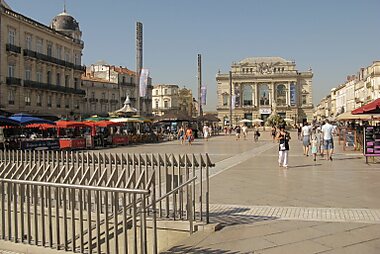
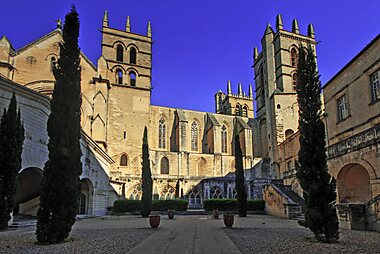
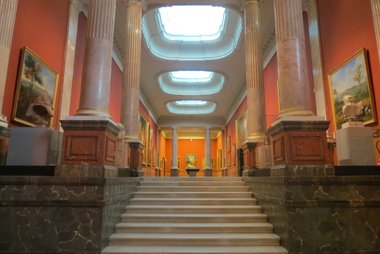

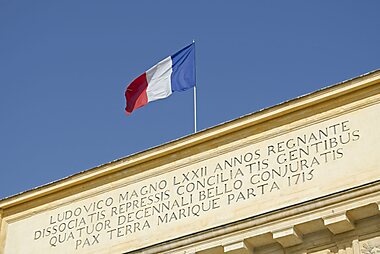
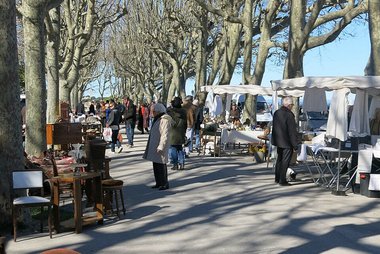
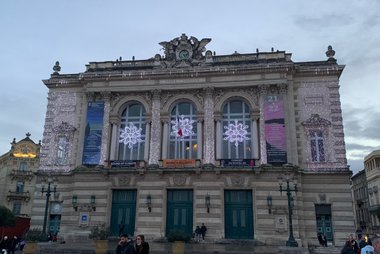
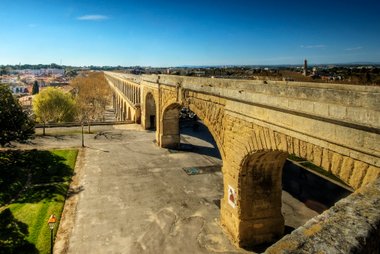
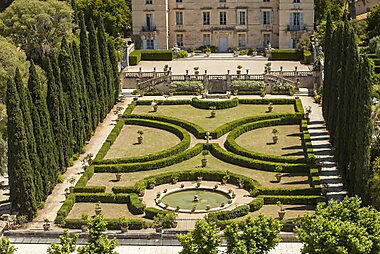
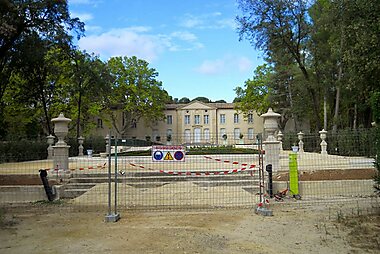
Most sights are in or next to the pedestrian centre (the Écusson) and can be seen on foot in one or two days.
- La Place de la Comédie is the main square and meeting point of the city. The Opéra Comédie stands on its northern side, built in 1888.
- Musée Fabre is the city's main fine arts museum, with European paintings from the 15th to the 20th century. Plan at least two hours.
- Promenade du Peyrou is a 17th-century esplanade on the highest point of the old town. It has wide views over the city, and the aqueduct runs along its western end.
- Porte du Peyrou - Arc de Triomphe is a triumphal arch at the entrance to the Peyrou, built at the end of the 17th century.
- Cathédrale Saint-Pierre is a 14th-century church that became a cathedral in 1536.
- Jardin des plantes de Montpellier was founded in 1593 and is the oldest botanical garden in France. It is a calm place for a break, next to the medical faculty.
- Aqueduc des Arceaux is a two-level stone aqueduct from the 18th century. It brought spring water to the Peyrou and is a pleasant walk with the nearby garden.
- Château de Flaugergues is a country house with gardens east of the centre. Reach it by car or bus for a quiet half day.
Featured Lists


What to experience
- Summer festival evenings: Open-air and indoor concerts of the Radio France festival fill the city in summer.
- Cinemed: This Mediterranean film festival has been held every autumn since 1979.
- Sunset at the Peyrou: Locals walk up to the esplanade in the evening for the views over the city.
- Wine estate visit: Vineyards and wine estates start just outside the city. Ask the tourist office for tasting visits: Montpellier tourist office.
Tours & Activities
Montpellier — Map

 Open the interactive map
Day trips
The coast, old towns and a UNESCO village are all close. Times are one way.
- Beaches at Palavas-les-Flots and La Grande-Motte: about 25 to 30 minutes by car. They offer long sandy beaches and lagoons, and La Grande-Motte is known for its unusual 1960s architecture.
- Sète: about 30 minutes by train. A port town with canals, seafood and a hill with sea views.
- Nîmes: about 30 minutes by train. It has a very well preserved Roman arena and the Maison Carrée temple.
- Aigues-Mortes: about 45 minutes by car, or by regional bus. The 13th-century walls are about 1.6 km long and you can walk along them. The Tour de Constance was built in 1242 under King Louis IX.
- Saint-Guilhem-le-Désert: about 50 minutes by car, 35 km from the city. The village and its abbey are part of a UNESCO World Heritage listing, together with the medieval Pont du Diable. The Gorges de l'Hérault are close.
- Pézenas: about 55 minutes by car. A small old town where Molière stayed with his theatre troupe. It is known for its sweet and savoury mutton pies, the petits pâtés.
Where to explore
Nearby:
- Sète and Cap d'Agde are on the coast to the south-west.
- Nîmes and Uzès are Roman and historic towns to the north-east.
Further away:
- Carcassonne has a famous walled medieval citadel.
- Toulouse is the large city of the south-west.
- Perpignan and Collioure lead towards the Spanish border.
Getting there
- By air: Montpellier–Méditerranée Airport is in Mauguio, about 10 minutes from the centre by road. The shuttle bus (line 620) takes about 25 minutes to the city and costs about 2 to 3 €. There is no direct tram. Taxis wait in front of the arrivals hall. Official airport information: Montpellier–Méditerranée Airport.
- By train: Saint-Roch is the main station in the city centre. The high-speed station Montpellier Sud de France is on the eastern edge and is linked by tram line 1. Paris takes about 3.5 hours and Barcelona about 3 hours by high-speed train. Toulouse, Perpignan and Marseille are also on direct lines. Book on SNCF Connect.
Getting around
- Tram: Five tram lines cover the city, and line 4 runs in a circle around the centre past the cathedral and the Peyrou. A single ticket costs 2.10 € and is valid for 1 hour 30 minutes. Buy it with a QR code at the stop, at a ticket machine, or in the M'Ticket TaM app. Activate it each time you board. Information and journey planner: TaM.
- On foot: The old centre is small and mostly pedestrian, so walking is the best way to see it.
- Cycling: The city is flat and has many bike lanes.
Driving
- Is a car worth it? Not for the city, where the tram and walking are easier. A car is useful for the hills, wine estates and small villages.
- Parking: Use the underground car parks near the centre, or park-and-ride lots at tram terminals.
- Restrictions: The old centre is mostly pedestrian. A low-emission zone covers the city, so check the Crit'Air rules for your vehicle before driving in.
Food & drink
Seafood from the nearby Thau lagoon, including oysters from Bouzigues, is common on local menus. Look for Languedoc wines, and for local goat cheese, the pélardon. Sweet and savoury mutton pies from Pézenas are a regional snack.
For eating, choose areas, not single restaurants. The streets around Place Jean-Jaurès and Place de la Canourgue have many terraces. The covered market Halles Castellane is good for lunch and local products. Service is included in French restaurant bills.
Safety & health
Montpellier is generally safe for visitors. The main risk is pickpocketing in crowded places, such as Place de la Comédie, the trams and around Saint-Roch station. Keep phones and bags close, and be careful at night in quiet side streets.
Summer can be very hot, so carry water and avoid walking in the middle of the afternoon. In autumn, heavy rain can cause flash floods in the region. Follow the local weather alerts if you plan to drive or walk in the hills.
History
Montpellier is a young city for France. It is first mentioned in a document of 985 and grew under the Guilhem family of local lords. It passed to the Kings of Aragon in 1204 and was sold to the French king in 1349.
The city became known for medicine. The medical school, founded in the 13th century, is the oldest still working in the world, and the university grew around it. The Jardin des plantes de Montpellier was created in 1593 to grow medicinal plants.
In the 17th and 18th centuries, the city built the Promenade du Peyrou, the Porte du Peyrou - Arc de Triomphe and the Aqueduc des Arceaux. Many elegant town houses of the old centre come from this time. The wine economy of the 19th century ended when phylloxera destroyed the vineyards in the 1870s and 1880s. The Antigone district, east of the centre, was designed by the Catalan architect Ricardo Bofill in a postmodern style.
Country facts
Quick practical facts for France at a glance:
- Currency
- Euro EUR € · Card payments · Widely accepted
- Emergency numbers
- 112
- Electricity
- 230 V · 50 HzType C / Type E
- Languages
- French
- Tap water
- Safe to drink
- Driving side
- Right
- Calling code
- +33


Montpellier – Plan Your Days
Turn the places from this guide into a real itinerary, with smart routing, time estimates, and everything you need for a perfect trip.


Related destinations
Data: © OpenStreetMap contributors, Wikidata, Wikipedia, Tripomatic, Official websites. Tours by GetYourGuide. We earn commission from bookings. Travel guide generated with AI.
Plan your trip with Tripomatic
- AI-Powered PlanningGet a ready-made day in one tap, let AI spread your shortlist across your trip, or plan everything by chatting.
- Travel AlertsOfficial advisories, severe weather, strikes, and natural hazards for the places on each day of your trip.
- Public Holidays & EventsSee holidays, festivals, and closures on the days of your trip, and what they mean for your plans.
- Cost EstimationAI-powered trip cost breakdowns so you know what to budget before you go.
- Tours & TicketsBook tours, skip-the-line tickets, and activities directly in your plan.