


Perpignan
Perpignan is a city in southern France, about 30 km from the Spanish border. It was once the capital of the Kingdom of Majorca. Today Catalan culture is still visible in the old town, with street signs in French and Catalan and a Spanish feel in the cafés and squares.
The old town is compact and easy to see on foot. Its main sights are a brick gate, a fortress palace and a Gothic cathedral. The city suits a short stay of one or two days. It also works as a base for the Mediterranean beaches, the village of Collioure and the Pyrenees foothills. The painter Salvador Dalí once called the railway station the center of the universe.
Download this guide as a PDFPrintable tourist mapPublic holidays in France

Perpignan – Planning a Trip?
Build your day-by-day itinerary in the Tripomatic app.


When to visit
Late spring and early autumn are the best times. Days are warm and sunny, and the old town is not too busy. July and August are hot, and the beaches nearby are crowded. Winter is mild but can be breezy, and some sights have shorter hours.
Events fill the calendar. Visa pour l'Image, an international photojournalism festival, takes place each September, with free exhibitions in old town buildings. A Good Friday procession, the Procession de la Sanch, is a long-standing local tradition.
Best time to visit: May, June, July, August, September, October
Top sights
- Palace of the Kings of Majorca is a fortress palace on a hill above the old town. It was built for the kings of Majorca in the late 13th century. Visit for the courtyard, the chapels and the view over the city and the plain.
- Le Castillet is a brick gate and tower from the 14th century. It stands at the edge of the old town and was a prison until the end of the 19th century. It is the symbol of the city.
- Cathédrale Saint-Jean-Baptiste is a large Gothic cathedral. Work started in 1324 and ended in 1509. Look for its wide single nave and the carved altarpieces.
- Campo Santo is a rare medieval cloister cemetery next to the cathedral. It is now used for exhibitions and events.
- The Loge de Mer is a former merchants' exchange on the Place de la Loge, the lively center of the old town. Cafés and restaurants fill the square.
- The Musée d'art Hyacinthe-Rigaud shows art from the region, including Catalan works and paintings by Hyacinthe Rigaud, who was born in the city.
Featured Lists


What to experience
- Sit on the Place de la Loge in the evening and watch the old town come alive.
- Walk up to the Palace of the Kings of Majorca at sunset for views over the plain and the Pyrenees.
- Go to a beach at Canet-en-Roussillon for a swim from late May to September.
- Take a day trip to Collioure and walk its harbor and castle.
- Visit the station, where Dalí declared the "center of the universe", for a short photo stop.
- Visit a local market in the old town and buy regional fruit and wine.
Tours & Activities
Perpignan — Map

 Open the interactive map
Day trips
Perpignan is a good base for the coast, the Catalan villages and the Pyrenees foothills. The first two trips are the easiest.
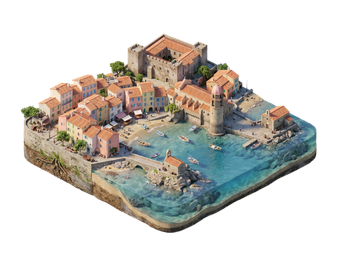
- Collioure: about 30 min by car or 30 to 40 min by train. This small harbor town has a castle, a bell tower on the water and colorful houses. Artists such as Matisse painted here.
- Canet-en-Roussillon: about 20 min by car. This is the nearest large beach resort, with a long sandy beach and a marina.
- Elne: about 20 min by car. This hill town has a Romanesque cathedral and a cloister.
- Céret: about 45 min by car. This town in the Vallespir is known for modern art and a large museum. It also has an old stone bridge.
- Villefranche-de-Conflent: about 1 hour by car. This walled town is listed by UNESCO. A scenic narrow-gauge train, the Little Yellow Train, runs from the area into the mountains.
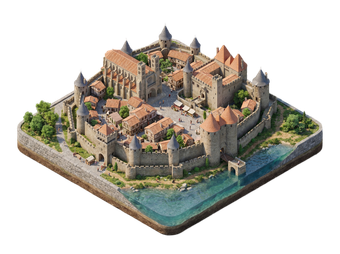
- Carcassonne: about 1.5 hours by train. A famous walled medieval city.
- Spain is close. Barcelona is about 200 km south and can be reached by train or car.
Where to explore
Other cities and towns in the region:
- Collioure is a small harbor town on the Mediterranean coast near the Spanish border.
- Carcassonne is a medieval walled city to the north-west.
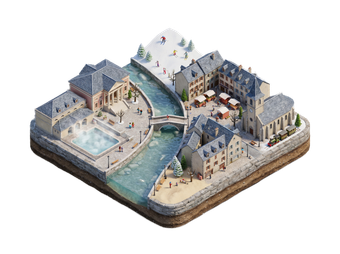
- Ax-les-Thermes is a mountain spa town in the Pyrenees.
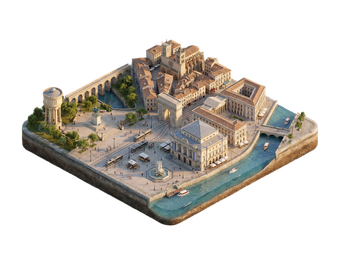
- Montpellier is a large university city to the north-east on the Mediterranean coast.
- Toulouse is a large pink-brick city to the north-west.
- Sète is a canal and fishing port on the coast.
Getting there
- By air: Perpignan–Rivesaltes Airport is a small regional airport just north of the city. It has flights from Paris-Orly and several European cities, some of them seasonal. Ryanair and other low-cost airlines serve the airport. Barcelona-El Prat Airport, about 200 km south, has many more routes. Perpignan Airport
- By train: Perpignan station has direct trains to Paris, Toulouse, Montpellier, Marseille and Barcelona. Many regional trains also run along the coast. SNCF Connect
- By road: The A9 motorway links Perpignan with Montpellier to the north and Spain to the south. It is a toll road.
- By bus: Long-distance coaches link Perpignan with Barcelona and other cities in Spain and France.
Getting around
- On foot: The old town is small and mostly flat. The station is about 15 to 20 minutes from the Castillet on foot.
- Public transit: The city bus network is run by Sankéo. Many lines start near the station and the old town. Ask the driver or buy tickets at a ticket machine.
- Cycling: The center is bike-friendly and flat. The coast and nearby villages are good for longer rides.
Driving
- Is a car worth it?: Not for the old town. A car helps for the beaches, the villages and the Pyrenees foothills.
- Parking: Paid car parks surround the old town. Park there and walk in.
- Restrictions: Many old town streets are pedestrian-only or narrow. Leave the car outside.
Food & drink
The food here mixes French and Catalan traditions. Look for cargolade, a dish of grilled snails, and bouillinada, a fish stew. Sweet dishes include crema catalana, a cold custard with a burnt sugar top.
The region grows fruit and wine. Roussillon wines include sweet fortified wines made from Grenache, such as Rivesaltes and Banyuls. Many old town cafés serve tapas-style plates in the evening.
Safety & health
Perpignan is generally safe for visitors. Petty theft can happen near the station and in busy squares, so keep bags closed. Some areas around the station feel less comfortable late at night.
Summer afternoons are hot. Bring water and sun protection. The strong Tramontane wind can blow for days, especially in winter and spring.
History
Perpignan became a capital in 1276, when James II of Majorca made it the main city of his kingdom. The kingdom's rulers built Palace of the Kings of Majorca in this period. The Crown of Aragon annexed the kingdom in 1344.
The city grew rich from trade and cloth. Work on Cathédrale Saint-Jean-Baptiste started in 1324, and Le Castillet was built in the 14th century to guard the city.
In 1642 French forces took Perpignan from Spain after a siege. The Treaty of the Pyrenees confirmed the change in 1659, and the city has been French since then. Vauban, the French military engineer, strengthened its defenses in the 17th century.
Country facts
Quick practical facts for France at a glance:
- Currency
- Euro EUR € · Card payments · Widely accepted
- Emergency numbers
- 112
- Electricity
- 230 V · 50 HzType C / Type E
- Languages
- French
- Tap water
- Safe to drink
- Driving side
- Right
- Calling code
- +33


Perpignan – Plan Your Days
Turn the places from this guide into a real itinerary, with smart routing, time estimates, and everything you need for a perfect trip.


Related destinations
Data: © OpenStreetMap contributors, Wikidata, Wikipedia, Tripomatic, Official websites. Tours by GetYourGuide. We earn commission from bookings. Travel guide generated with AI.
Plan your trip with Tripomatic
- AI-Powered PlanningGet a ready-made day in one tap, let AI spread your shortlist across your trip, or plan everything by chatting.
- Travel AlertsOfficial advisories, severe weather, strikes, and natural hazards for the places on each day of your trip.
- Public Holidays & EventsSee holidays, festivals, and closures on the days of your trip, and what they mean for your plans.
- Cost EstimationAI-powered trip cost breakdowns so you know what to budget before you go.
- Tours & TicketsBook tours, skip-the-line tickets, and activities directly in your plan.