


Carcassonne
Carcassonne is a medieval fortress city in southern France. Its hilltop old town, the Cité, has two rings of walls, a castle and a church inside. It is a UNESCO World Heritage Site and one of the best-preserved walled cities in Europe.
The Cité is the reason most people come. A visit suits a day or one or two nights, and travelers who like history, walking and regional food. Below the hill is a calmer lower town with a market square, restaurants and the Canal du Midi. A local legend says the city got its name from Lady Carcas, who tricked the army of Charlemagne and rang the town's bells in victory.

Carcassonne – Planning a Trip?
Build your day-by-day itinerary in the Tripomatic app.


When to visit
Late spring and early autumn are the best times. Days are warm, the walls are not too crowded, and outdoor tables are open. July and August are hot and busy, and the Cité has little shade. Winter is quiet and mild, but some restaurants and sights have shorter hours.
The biggest event is 14 July. Fireworks and red lights light up the Cité walls, starting around 22:30. The show is free. Watch from the banks of the Aude, and arrive early to find a place. The Festival de Carcassonne, a summer series of concerts and shows, also runs through July.
Best time to visit: May, June, September, October
Top sights
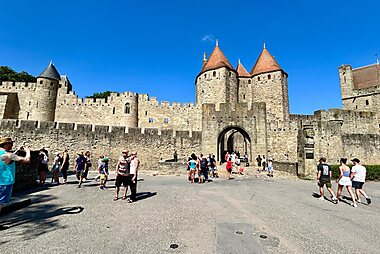
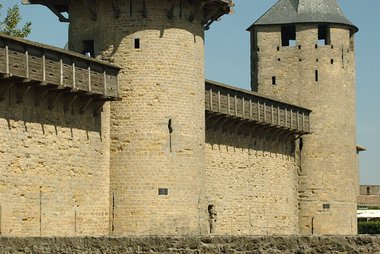
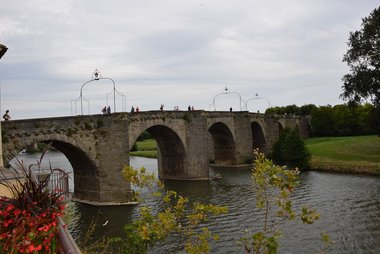
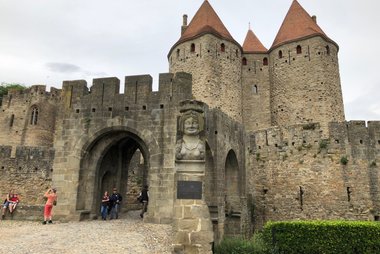
- Cité de Carcassonne is the walled hilltop city and the main sight. Walk its narrow streets and the open ground between the two walls. Entering the Cité is free. You pay only for the castle and the rampart walk.
- Château Comtal is the castle inside the Cité, built by the Trencavel family in the 12th century. Visit it to walk the ramparts and see the Cité from above.
- Porte Narbonnaise is the main eastern gate of the Cité, with a drawbridge and twin towers. Most visitors enter here.
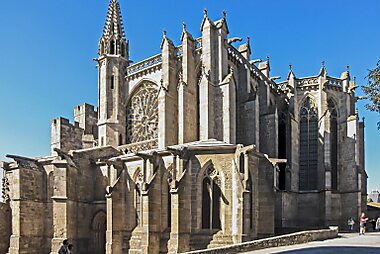
- Basilique Saint-Nazaire is a church inside the Cité. It mixes a Romanesque nave with a Gothic choir. It is known for its old stained glass.
- Pont-Vieux is a medieval stone bridge over the Aude with 12 arches. It links the lower town with the Cité. It gives the classic view of the walls, best in the evening.
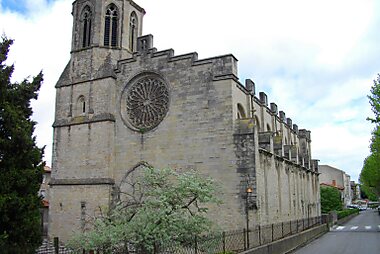
- Cathédrale Saint-Michel is the Gothic cathedral of the lower town. It is a quiet stop on the way between the market square and the river.
Featured Lists


Carcassonne Heritage Sites
Explore the architectural evolution of Carcassonne through this collection of heritage sites, primarily located within the 13th-century Bastide Saint-Louis. The list highlights the city's transition from a medieval stronghold to a textile industrial hub, featuring Gothic churches like Saint-Vincent, 18th-century merchant mansions, and the 14th-century Pont-Vieux. Notable landmarks include the last remaining city gate at Portail des Jacobins and the 17th-century Royal Cloth Manufactory, reflecting centuries of regional history.
18 placesWhat to experience
- Watch the 14 July fireworks over the Cité, from the banks of the Aude. It starts late in the evening and is free.
- Go to a concert at the Festival de Carcassonne in July. Many shows take place inside the Cité.
- Take a boat trip on the Canal du Midi from the canal port in the lower town.
- Cycle or walk part of the Canal du Midi towpath, under plane trees.
- Stay a night in the Cité. Day visitors leave in the late afternoon, and the walls are lit at night.
Tours & Activities
Carcassonne — Map

 Open the interactive map
Day trips
Carcassonne works well as a base for the Cathar country and the Canal du Midi. The first three trips are close.
- Lastours: about 25 min by car. Four ruined castles stand on rocky ridges above a valley. There is no useful train or bus, so a car is easiest.
- Castelnaudary: about 25 min by train. This canal town has a large canal basin. It also claims to be the home of cassoulet.
- Lagrasse: about 45 min by car. This village in the Corbières hills has a large old abbey and a medieval bridge. It is also a wine area.
- Narbonne: about 40 min by train. This city has a cathedral, a Roman underground gallery and a big covered market.
- Toulouse: about 45 to 60 min by train. This large city has a famous basilica, a pink-brick old town and a canal.
Where to explore
Larger cities and regions around Carcassonne:
- Toulouse and Albi to the north-west and north: Toulouse is about 1 hour by train. Albi is a UNESCO-listed brick city about 2 hours away.
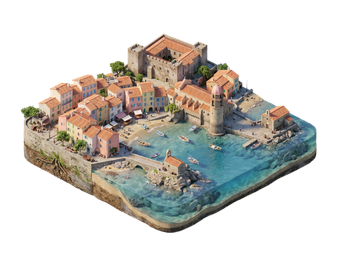
- Mediterranean side: Perpignan is about 1.5 hours by train. Montpellier is about 2 hours by train. Collioure is a small harbor town near the Spanish border.
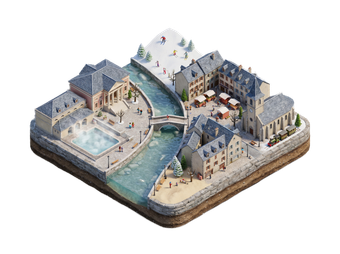
- Pyrenees: Ax-les-Thermes is a mountain spa town with hot springs and ski slopes.
Getting there
- By air: Carcassonne Airport is about 3 km west of the center. Ryanair is the only airline with scheduled flights, mainly to the UK, Belgium, Ireland and Portugal. A shuttle meets arriving flights and goes to the center and the train station, for €6. Pay on board or in the RTCA app. For more routes, use Toulouse-Blagnac Airport, then a train or coach. Carcassonne Airport transport
- By train: Carcassonne station is in the lower town. Direct trains run from Toulouse, Narbonne, Perpignan, Montpellier and Marseille. Trains from Paris usually need a change. SNCF Connect
- By bus: Long-distance coaches link Carcassonne with Toulouse and its airport. They are slower than the train on most routes.
Getting around
- On foot: The lower town, the station and the Pont-Vieux are all walkable. The walk from the station to the Cité takes about 25 to 30 minutes. The streets inside the Cité are cobbled and steep in places.
- Public transit: City buses are run by RTCA. Line 4 goes from the station area to the Cité. Buy tickets in the RTCA app or ask the driver.
- Cycling: The Canal du Midi towpath is flat and good for bikes.
Driving
- Is a car worth it?: Not for the city itself. A car helps for Lastours, Lagrasse and the Cathar castles, where public transport is limited.
- Parking: Paid car parks sit just outside the Cité, near its main gates. They fill up in July and August, so arrive early. Car parks in the lower town are a longer walk from the Cité.
- Restrictions: Narrow streets inside the Cité are meant for pedestrians. Leave the car outside.
Food & drink
The dish to try is cassoulet, a slow-cooked stew of white beans and meat. Carcassonne, Castelnaudary and Toulouse each claim their own version. Local wines come from the Corbières, Minervois and Cabardès areas. Limoux, about 30 minutes away, is known for sparkling wine.
Restaurants inside the Cité mostly serve day visitors, and quality varies. For a better meal, go to the lower town around Place Carnot and the covered market hall. The market hall is named after the chef Prosper Montagné. Markets are held on the square several mornings a week.
Safety & health
Carcassonne is safe for visitors. Petty theft is rare but possible in crowds, so keep bags closed in the Cité in summer. Prices in some Cité shops and restaurants are higher than in the lower town.
Summer afternoons are hot, and the Cité has little shade. Bring water and a hat. The cobbles are uneven, so wear flat shoes.
History
People have lived on the hill since ancient times. The Romans and then the Visigoths fortified it. In the 11th century the Trencavel family took the city. They later built Château Comtal.
In 1209 the army of the Albigensian Crusade besieged the city. Viscount Raymond-Roger Trencavel was captured and died in prison. The French crown then ruled the city. After the Treaty of Corbeil in 1258, Carcassonne became a border fortress facing the Crown of Aragon. The fortress later lost its military use, and the walls decayed.
In 1853 the architect Viollet-le-Duc began a large restoration. It lasted until 1879 and shaped the look of the Cité seen today. Some of his choices, like the pointed slate roofs on the towers, are debated. The walls and gates, including Porte Narbonnaise, are part of this work. Basilique Saint-Nazaire has stood inside the walls since the Middle Ages.
The lower town grew on the other side of the river. Pont-Vieux linked the two. The Canal du Midi arrived in the early 1800s with a port in the lower town.
Country facts
Quick practical facts for France at a glance:
- Currency
- Euro EUR € · Card payments · Widely accepted
- Emergency numbers
- 112
- Electricity
- 230 V · 50 HzType C / Type E
- Languages
- French
- Tap water
- Safe to drink
- Driving side
- Right
- Calling code
- +33


Carcassonne – Plan Your Days
Turn the places from this guide into a real itinerary, with smart routing, time estimates, and everything you need for a perfect trip.


Related destinations
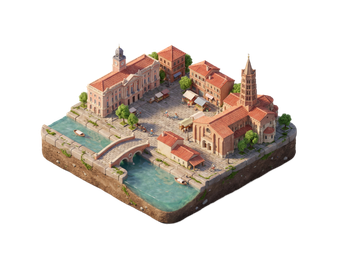
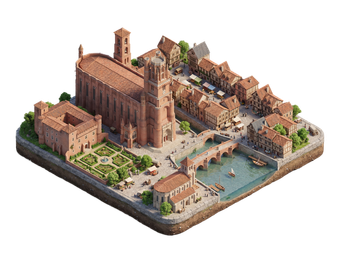
Data: © OpenStreetMap contributors, Wikidata, Wikipedia, Tripomatic, Official websites. Tours by GetYourGuide. We earn commission from bookings. Travel guide generated with AI.
Plan your trip with Tripomatic
- AI-Powered PlanningGet a ready-made day in one tap, let AI spread your shortlist across your trip, or plan everything by chatting.
- Travel AlertsOfficial advisories, severe weather, strikes, and natural hazards for the places on each day of your trip.
- Public Holidays & EventsSee holidays, festivals, and closures on the days of your trip, and what they mean for your plans.
- Cost EstimationAI-powered trip cost breakdowns so you know what to budget before you go.
- Tours & TicketsBook tours, skip-the-line tickets, and activities directly in your plan.