


Milan
Milan is Italy's business and fashion capital. It is a fast-paced northern city, better suited to travelers who enjoy design, art, and good food than to checklist sightseeing. Its compact centre holds a Gothic cathedral, a Renaissance masterpiece, and some of Europe's best-preserved canals, all within an easily walkable core.
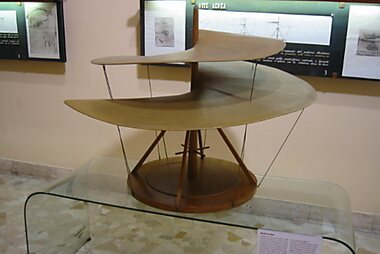
Leonardo da Vinci spent nearly two decades working here for the ruling Sforza family, and his influence is still visible across the city. Milan suits a short city break of two or three nights, and pairs easily with day trips to the northern Italian lakes.

Milan – Tu prépares un voyage ?
Crée ton itinéraire jour par jour dans l'application Tripomatic.
Quand partir
Spring (April to June) and autumn (September to October) are the most pleasant times to visit. Summer turns hot and humid, and many Milanese leave the city in August. Winter is cold with occasional fog and light snow.
Time a visit around Milan Design Week each April. The Salone del Mobile fair and the citywide Fuorisalone fill courtyards, showrooms, and streets with free installations.
Meilleure période pour visiter: septembre, octobre
Hotels are pricier and busier during Design Week and Fashion Week (February and September) — book ahead if traveling then.
Sites incontournables
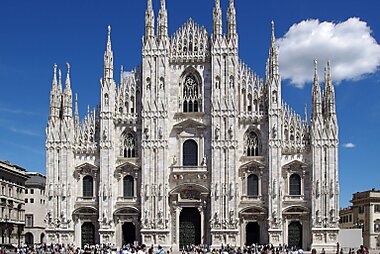
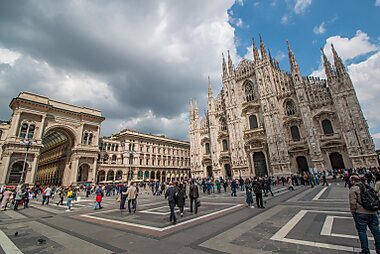
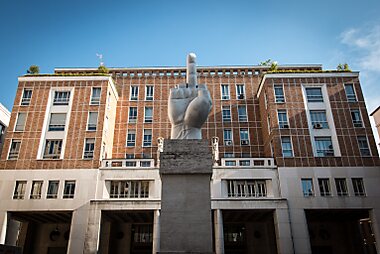
Milan Cathedral is Milan's centrepiece, a Gothic cathedral built almost entirely from pink-tinged marble over nearly six centuries. Climb to the roof terraces for a close look at its spires and statues, and views over the city.
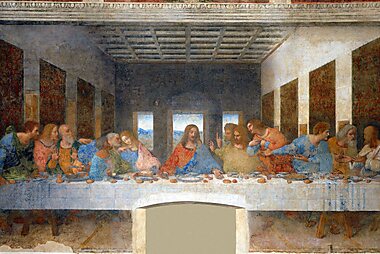
Ultima Cena is Leonardo da Vinci's mural of the Last Supper, painted directly onto a monastery refectory wall in the 1490s. Tickets sell out weeks ahead, since only small groups are admitted for a timed 15-minute visit.
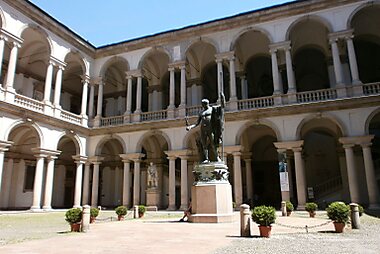
Pinacoteca di Brera holds one of Italy's best collections of Renaissance and modern painting, in a quiet palazzo in the Brera district.
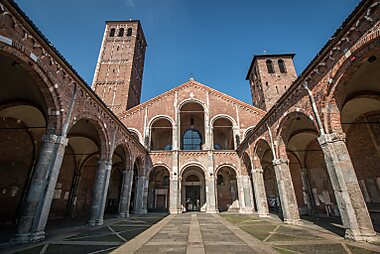
Basilica of Sant'Ambrogio is a Romanesque church founded in the 4th century, one of the oldest in the city. It has a quiet courtyard and early Christian mosaics.
Sforza Castle was the fortified residence of Milan's ruling Sforza dynasty and now houses several city museums, including an unfinished late sculpture by Michelangelo.
Teatro alla Scala is one of the world's most famous opera houses; even without a performance ticket, its small museum gives a look inside.
Vittorio Emanuele II Gallery is a 19th-century glass-domed shopping arcade linking the cathedral square to the opera house. It is worth a walk-through even if you are not buying anything.
Naviglio Grande is the liveliest of Milan's historic canals, lined with bars and restaurants and busiest in the early evening.
Listes recommandées

Milano's Absolute Essentials
Milan’s core attractions span centuries of artistic and architectural evolution. The Gothic Duomo and its expansive square serve as the city's spiritual center, while Leonardo da Vinci’s The Last Supper at Santa Maria delle Grazie highlights its Renaissance heritage. Cultural landmarks include the Teatro alla Scala and the Pinacoteca di Brera’s Italian masterpieces. Modern influence is found in the high-fashion boutiques of the Golden Quadrilateral and the 20th-century collections at the Museo del Novecento, all anchored by the monumental Milano Centrale station.
13 lieux

Les Joyaux Cachés de Milan
Explorez une sélection de sites moins connus de Milan, incluant les innovantes tours du Bosco Verticale couvertes d'une végétation luxuriante, le vaste Cimetière Monumental réputé pour ses sculptures éclectiques, et l'unique chapelle de l'ossuaire à San Bernardino alle Ossa. Cette liste présente également des espaces urbains modernes comme la Place Gae Aulenti, des lieux de shopping culturels tels que le 10 Corso Como, et des œuvres d'art historiquement significatives comme le Cheval de Léonard, offrant des aperçus variés du mélange d'architecture, d'art et de patrimoine milanais.
6 lieux


Milan's Iconic Churches
Milan’s religious landscape spans centuries, from the Gothic Duomo with its marble spires to the UNESCO-listed Santa Maria delle Grazie, housing Leonardo da Vinci’s 'The Last Supper.' The collection includes architectural landmarks like Bramante’s perspective illusion at Santa Maria presso San Satiro and the bone-decorated ossuary of San Bernardino alle Ossa. From the Romanesque foundations of San Babila and Sant'Eustorgio to 20th-century parish churches, these sites showcase a diverse heritage of sacred art, history, and Milanese design.
9 lieux
Modern Architecture & Skyscrapers
Discover Milan’s modern architectural landmarks and skyscrapers that shape its skyline, from environmentally innovative residential towers like the Bosco Verticale to iconic office skyscrapers such as Palazzo Lombardia and Generali Tower. The list includes notable structures spanning from mid-20th century designs like Torre Velasca to contemporary observation towers offering panoramic city views.
8 lieux
Milan's Parks and Gardens
Milan's urban landscape features diverse green retreats and historic plazas. Sempione Park offers a large lake and artistic sculptures, while the Botanic Garden of Brera provides a quiet sanctuary with diverse flora within the Brera Palace complex. The Villa Belgiojoso Bonaparte Garden is known for its ponds and seasonal cherry blossoms. This collection also highlights iconic gathering spots like the Cathedral Square and the 19th-century Piazza della Scala, alongside the scenic pedestrian towpaths of the historic Naviglio Grande canal.
7 lieux
Milan Shopping Destinations
Milan's retail landscape spans from the luxury boutiques of the Quadrilatero della moda to the Art Deco halls of Milano Centrale, which houses over 110 shops. The city features diverse shopping environments, including the tech-integrated Future Food District and large suburban malls like Fiordaliso and Centro Sarca. This selection covers essential services through major supermarket chains like Esselunga and specialized electronics hubs such as the MediaWorld Tech Village, reflecting Milan's status as a commercial and fashion capital.
25 lieux
Milanese Eateries and Pubs
Milan’s culinary landscape blends historic institutions with modern concepts. This selection features the legendary panzerotti of Luini and the 18th-century charm of el Brellìn alongside the unique ATMosfera tram restaurant. Explore the city's craft beer culture at Birrificio Lambrate and La Birrofila, or sample regional specialties at traditional osterias like Da Berti and Ex Mauri. From the high-end Terrazza Triennale overlooking Sempione Park to the diverse food stalls of Mercato Centrale, these venues showcase the breadth of Milanese dining.
20 lieuxAudioguides – Milan
Explore à pied grâce à une visite audio autoguidée qui commente chaque étape dès que tu l'atteins.

Les incontournables de Milan
87 min4.7 km7 étapes
Milan se dévoile monument après monument : une cathédrale gothique vertigineuse, une galerie marchande scintillante du dix-neuvième siècle, le plus prestigieux opéra du monde, un quartier de galeries bohème, une forteresse de la Renaissance, une basilique antique, et enfin La Cène de Léonard de Vinci. Cette promenade d'environ trois kilomètres à travers le centre historique dure environ soixante-quinze à quatre-vingt-dix minutes et relie les sites les plus emblématiques de Milan en une boucle paisible. Rendez-vous sur la Piazza del Duomo, juste devant les marches de la cathédrale, facilement accessible en métro à la station Duomo sur les lignes M1 et M3, ou à pied depuis Milano Centrale.

Milan avec des enfants
66 min3.1 km7 étapes
Milan cache un dragon à la porte d'un château, un taureau porte-bonheur sur lequel on tourne avec son talon, et une Madonnina dorée qui veille sur une cathédrale aux mille statues. Cette promenade en famille au cœur de Milan part à la recherche des meilleures légendes, des secrets et des lieux interactifs de la ville, conçue pour les explorateurs d'environ 10 ans. Elle commence sur la Piazza del Duomo, juste à côté de la station de métro Duomo, et se termine environ 2,5 kilomètres plus loin, à l'arc de la Paix.

Écoute les visites audio de Milan
2 balades dans Audioguides par Tripomatic


Expériences à vivre
- Join the aperitivo ritual: order a drink, usually a Spritz or Negroni, at a bar in the early evening. Help yourself to the buffet of snacks that comes with it — a Milan tradition that doubles as a light dinner. The bars along Naviglio Grande and in the Brera district are the classic settings.
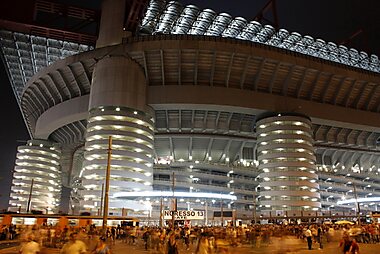
- Catch a match at Stadio Giuseppe Meazza, shared by AC Milan and Inter Milan — a loud, packed matchday atmosphere.
- Browse the antiques market that fills the Navigli canal banks on the last Sunday of every month, with stalls selling vintage furniture, prints, and jewellery.
Visites et activités
Milan — Carte

 Ouvrir la carte interactive
 Excursions à la journée
Milan sits close to some of northern Italy's best-known towns, lakes, and cities — all easy to reach by train without a car.
- Monza — about 10 to 15 minutes by train. A royal park and villa, plus the racetrack that hosts the Italian Grand Prix each September.
- Certosa di Pavia — about 20 to 30 minutes by train. A monumental 15th-century Carthusian monastery with an elaborately decorated marble facade, set among farmland.
- Bergamo — about 50 minutes by train. A walled hilltop old town reached by funicular, with sweeping views over the plain below.
- Lake Como — about an hour by train to Como town. Lakeside villas, mountain backdrops, and boat trips between lakeside villages.
- Verona — about 1 hour 20 minutes by high-speed train. A Roman arena still used for open-air opera, and a well-preserved medieval centre.
S'y rendre
- By air: Malpensa Airport (MXP) is Milan's main international gateway, about 50 km northwest of the centre. The Malpensa Express train runs to Milano Centrale and Cadorna stations in about 50 minutes (around €13). Linate Airport (LIN), 8 km east, handles mostly domestic and short-haul European flights. The M4 metro line reaches the centre in about 12 minutes; a tram and bus also run, taking about 25 minutes. Orio al Serio Airport (BGY), near Bergamo, is used mainly by budget airlines. A shuttle bus takes about an hour into Milan.
- By train: Milano Centrale is the main hub for high-speed Frecciarossa and Italo trains, with connections to Turin (about 1 hour), Bologna (about 1 hour), Florence (about 1 hour 45 minutes), Venice (about 2 hours 30 minutes), and Rome (about 3 hours).
- By bus: Lampugnano bus station, next to the M1 metro line, is the main terminal for long-distance coaches to other Italian and European cities.
Se déplacer
- Public transit: ATM operates the metro (five lines), trams, and buses. Tap a contactless bank card or phone directly at metro gates and on board trams and buses — there is no need to buy a paper ticket in advance. See the ATM journey planner for routes and fares.
- Taxi / ride-hailing: Uber operates only as a licensed premium car service in Milan, not as an everyday ride-share app — regular metered taxis, hailed at a rank or by phone, are the more practical option.
- On foot / cycling: the historic centre is flat and compact, and most top sights are within a 20-minute walk of the Duomo. BikeMi, the city bike-share scheme, is a popular way to cover longer distances.
Conduite
- Is a car worth it?: No — the historic centre is compact, walkable, and well served by transit. A car only helps for reaching the lakes or countryside independently.
- Parking: metered blue-line street spaces in the centre, paid via app or roadside meter; cheaper to park near an outer metro station and ride the metro in.
- Restrictions: Area C charges a daily fee (around €7.50) to drive into the historic centre on weekdays. Pay online or at a tobacconist by midnight the following day. Area B, covering nearly the whole municipality, bars older, higher-emission vehicles.
Gastronomie
Milan's signature dishes reflect its cooler, richer northern Italian cooking. Try risotto alla milanese, coloured golden with saffron, and cotoletta alla milanese, a breaded and fried veal cutlet. Ossobuco, braised veal shank, often appears alongside the risotto. Panettone, the tall sweet Christmas bread eaten across Italy, originated here.
Aperitivo is taken more seriously in Milan than almost anywhere else in the country — many bars build their evening business around it. For dinner, the streets around the Navigli canals and the Brera district cluster the best casual restaurants and wine bars. Head there rather than the pricier spots directly around the cathedral square.
Sécurité et santé
Milan is a safe city for tourists by international standards, and violent crime is rare. The main risks are petty: pickpocketing on crowded metro lines and around Milano Centrale and the cathedral square. Watch also for people offering a "free" bracelet or petition to sign near the Duomo — politely decline and keep walking.
Tap water is safe to drink, including from the small green drinking fountains ("vedovelle") found across the city.
Histoire
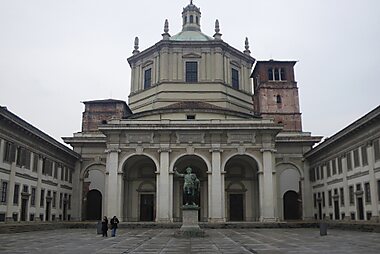
Milan began as Mediolanum, a settlement of the Insubres Celts later conquered by Rome and made a capital of the Western Roman Empire. In 313 AD, Emperor Constantine issued the Edict of Milan here, granting religious tolerance across the empire. The Colonne di San Lorenzo in front of one of the city's oldest basilicas date from this Roman period.
Construction of Milan Cathedral began in 1386 and stretched over nearly six centuries. Napoleon ordered the facade finished in the early 1800s, though the last bronze doors were not added until 1965. From the 15th century, the ruling Sforza dukes governed from Sforza Castle and drew artists including Leonardo da Vinci to their court.
Allied bombing destroyed much of the historic centre in 1943. Milan's rapid postwar rebuilding made it Italy's financial, industrial, and fashion capital, a role it still holds today.
Infos pays
Quick practical facts for Italy at a glance:
- Devise
- euro EUR € · Paiements par carte · Largement acceptées
- Numéros d'urgence
- 112
- Électricité
- 230 V · 50 HzType C / Type F / Type L
- Langues
- italien
- Eau du robinet
- Potable
- Sens de conduite
- À droite
- Indicatif téléphonique
- +39


Milan – Planifie tes journées
Transforme les lieux de ce guide en un véritable itinéraire, avec des itinéraires intelligents, des estimations de temps et tout ce dont tu as besoin pour un voyage parfait.




