


Argentina
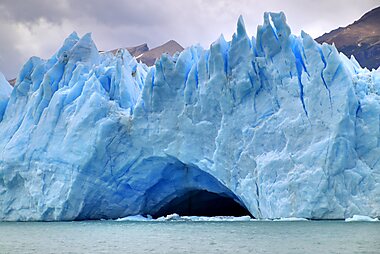
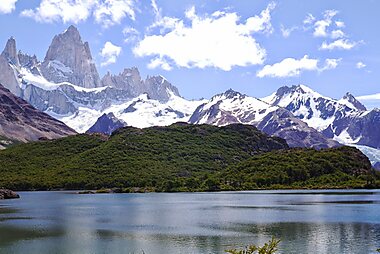
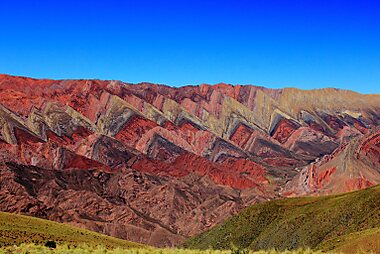
Argentina stretches nearly 3,700 km from the subtropical north to the sub-Antarctic tip of Tierra del Fuego, so the country reads almost like several destinations in one. Most first trips center on Buenos Aires, a European-flavored capital of tango, steakhouses, and grand boulevards, then branch out toward whichever landscape draws you most: the thundering Iguazu Falls on the Brazilian border, the glaciers and granite spires of Argentine Patagonia, the high-altitude deserts and rainbow-striped hills around Salta and Jujuy, or the vineyards of Mendoza in the foothills of the Andes.
Distances are genuinely vast — flying, not driving, connects most regions — so trips usually pick two or three areas rather than trying to cover the whole country. Wildlife-watchers head to Patagonia's coast for whales and penguins, hikers and skiers gravitate to the Lake District around Bariloche, and wine lovers build a trip around Mendoza's Malbec country. Argentina rewards travelers with time to spare and an appetite for red meat, red wine, and long, late dinners.


Argentina – Planning a Trip?
Build your day-by-day itinerary in the Tripomatic app.


Money & payments
Argentina's peso has a history of steep inflation and multiple, sometimes wildly different, exchange rates, so it's worth checking a current rate just before your trip rather than relying on an old figure. Cash — ideally clean, undamaged US dollars for exchanging on arrival — has traditionally gotten travelers a noticeably better rate than a card swipe or ATM withdrawal, though this gap narrows and widens with government policy, so confirm the current situation locally.
Card acceptance is decent in Buenos Aires and other big cities but patchier in small towns and rural Patagonia, where cash is often the only option. ATMs impose low withdrawal limits and high fees; many travelers rely on transfer apps like Western Union or peer exchanges instead for larger amounts.
Featured Lists

Argentina Essentials
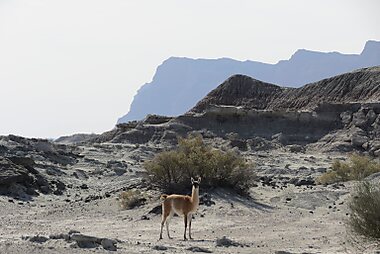
Argentina’s diverse geography spans from the tropical Iguazu Falls on the Brazilian border to the subantarctic glaciers of Patagonia. This collection features UNESCO-listed sites including the 17th-century Jesuit missions and the 9,000-year-old rock art of Cueva de las Manos. Geological highlights include the multi-hued canyons of Quebrada de Humahuaca and the Triassic fossils of Ischigualasto Provincial Park. Cultural heritage is represented by the Museum of High Altitude Archaeology in Salta, which houses well-preserved Inca mummies discovered on Andean peaks.
14 places


Historic Churches & Cathedrals
Argentina’s religious heritage is preserved in this collection of colonial cathedrals, Jesuit missions, and neo-gothic landmarks. Highlights include the 17th-century UNESCO-listed Church of the Society of Jesus in Córdoba and the striking terracotta facade of Salta’s Iglesia San Francisco. From the remote 1730s Capilla de Candonga to the adobe structures of the Quebrada de Humahuaca, these sites showcase diverse architectural styles including Baroque, Neoclassical, and traditional Andean construction techniques.
10 places
Argentina's Coastal Escapes
Argentina's coastline spans from the bustling urban beaches of Mar del Plata to the remote shores of Patagonia. This selection includes the iconic Playa Bristol and the sheltered bay of Playa Varese, alongside maritime landmarks like the Faro Segunda Barranca and the cliffside Faro Cabo Peñas. Further south, the city of Río Gallegos occupies a significant Patagonian bay, while the Bicentennial Lighthouse provides a modern architectural monument in the interior.
6 placesTours & Activities
Argentina — Map

 Open the interactive map
 Tipping
Tipping (la propina) is customary but modest by international standards.
- Restaurants: around 10% is standard, left in cash even when paying the bill by card, since tips added to a card payment don't always reach the staff.
- Cafes and bars: rounding up or leaving small change is enough.
- Taxis: not generally tipped, though rounding up the fare is common.
- Hotel staff: a small note for porters and housekeeping is appreciated.
- Tour guides: tip more generously on multi-day tours, especially in Patagonia.
~10 %, left in cash
round up the fare
small note for porters/housekeeping
round up or leave small change
more generous on multi-day tours
Electricity
Argentina uses Type C and Type I plugs — the same slanted three-pin style used in Australia — at 220 V / 50 Hz. Travelers from North America or continental Europe with Type C-only devices will need an adapter for the Type I sockets found in most modern buildings.
Language
Spanish is the official language, spoken with a distinctive Argentine accent and its own vocabulary — Argentines use vos instead of tú for "you," and the double-L/Y sound (ll/y) is pronounced more like "sh" than elsewhere in Latin America. English is common in hotels and tourist-facing businesses in Buenos Aires and major destinations, but far less so once you're off the beaten path.
Staying connected
Prepaid SIM cards from Claro, Movistar, or Personal are sold at airport kiosks and phone shops; bring your passport, since registration is required. Coverage is strong in cities and along major routes, but drops off in remote stretches of Patagonia and the northern deserts — plan for gaps in signal on long-distance drives through those regions.
Safety & emergencies
Argentina is generally safe for travelers, and violent crime against tourists is rare. The main risks are petty theft and scams in crowded areas of Buenos Aires — pickpocketing on public transport, distraction thefts, and counterfeit or short-changed currency at informal exchange points. Keep valuables out of sight, use officially marked taxis or a ride-hailing app at night, and stay alert in busy tourist zones like San Telmo and La Boca.
Health
Tap water is safe to drink in Buenos Aires and most major cities; in smaller towns or rural areas, bottled water is the safer default. Pharmacies (farmacias) are widespread and can handle most minor ailments without a prescription. Altitude can catch visitors off guard in the northwest — Salta, Jujuy, and the high desert around Purmamarca sit at 1,200–4,000 meters, so take it easy for the first day or two and stay hydrated.
Visas & entry
Visitors from most of the Americas, the EU, and several other countries can enter visa-free for stays of up to 90 days. Citizens of some countries, including the United States, Canada, and Australia, may be charged a reciprocity fee or need to apply for an e-visa depending on current bilateral arrangements, which change periodically.
Visa and entry requirements change frequently. Verify current requirements with the official immigration authority or your country's embassy before travel.
Etiquette
Argentines greet with a single kiss on the cheek, even between men who are friends or being introduced — a handshake is more common only in formal business settings. Meal times run late: lunch after 1pm, dinner rarely before 9pm and often closer to 10 or 11pm, especially in Buenos Aires. Asado (the Argentine barbecue) is a social ritual as much as a meal — if invited to one, expect it to run for hours. Mate, the shared herbal tea, has its own etiquette: drink from the same straw (bombilla) as it's passed around, and don't say "thank you" until you're done, since saying gracias signals you don't want another round.
Holidays & opening hours
Many businesses close for the afternoon in smaller towns, reopening in the early evening, while Buenos Aires keeps more continuous hours. National holidays that fall near a weekend are sometimes shifted by the government to create a long weekend (fin de semana largo), so posted dates can move from year to year.
Getting around
- By air: given Argentina's size, domestic flights are the practical way to cover long distances — between Buenos Aires, Iguazú, El Calafate, and Bariloche, flying can save days compared to driving or the bus.
- By bus: Argentina's long-distance coach network is extensive and comfortable, with reclining "cama" seats on overnight routes — a genuinely practical way to cover mid-range distances.
- By train: passenger rail is limited outside a few commuter lines around Buenos Aires; it's not a practical way to cross the country.
- By car: self-driving works well for focused regions like the Lake District's Seven Lakes Route or Mendoza's wine valleys, but covering multiple regions by road eats up days that flying would save.
Buenos Aires has an extensive subway (subte) and bus network; buy a rechargeable SUBE card, which also works on public transport in dozens of other towns and cities around the country, including Bariloche, Ushuaia, and Mendoza. Argentina drives on the right.
Driving
- Speed limits: generally 40–60 km/h in urban areas, 110 km/h on rural highways, and up to 130 km/h on some motorways — signposted limits vary, so watch for posted signs.
- Key rules: seatbelts are mandatory for all occupants, headlights must stay on during the day on highways, and drink-driving limits are strictly enforced.
- Tolls: many highways, especially around Buenos Aires, charge cash or card tolls at booths; some now use an electronic tag (Telepase) for faster lanes.
- Remote driving: in Patagonia and the northern deserts, fuel stations can be far apart — fill up whenever you get the chance and carry extra water.
- Parking: metered street parking (estacionamiento medido) is common in city centers; look for blue-lined spaces and a nearby ticket machine or attendant.
- Fuel: stations are typically attended, not self-service; ask for "nafta" for petrol or "gasoil"/"diesel" for diesel.
Food & drink
Beef is central to Argentine food culture, and asado — meat slow-grilled over wood or charcoal — is close to a national institution. A parrilla (steakhouse) menu typically includes cuts like bife de chorizo (sirloin) and ojo de bife (ribeye), along with chorizo and morcilla (blood sausage) as starters. Beyond beef, Italian immigration left a deep mark: pizza and pasta are everyday food, and milanesa (a breaded cutlet) rivals steak as the national comfort dish.
Mate, a bitter herbal infusion sipped from a gourd through a metal straw, is a daily ritual more than a beverage — you'll see it everywhere from parks to offices. For something sweet, dulce de leche appears in nearly every dessert, and facturas (pastries) are the standard breakfast or afternoon-coffee order. Argentina's wine regions, especially Mendoza, produce world-class Malbec, and a bottle with dinner is the norm rather than the exception.
Where to explore
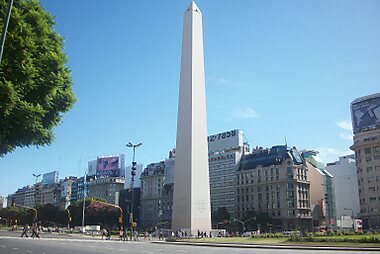
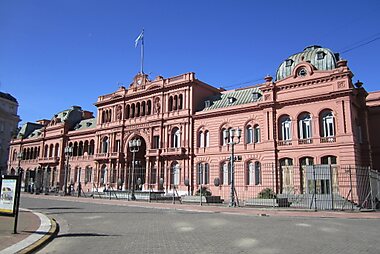
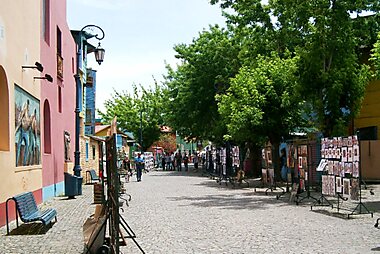
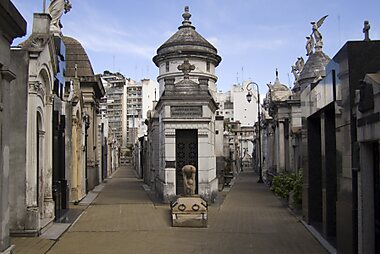
The capital: Buenos Aires anchors most itineraries, with tango, grand architecture, and the colorful La Boca and Recoleta neighborhoods.
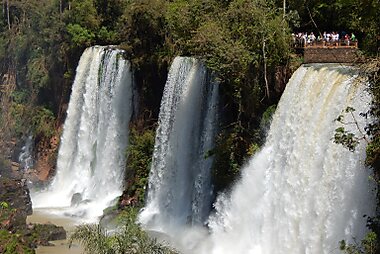
Iguazú Falls: Puerto Iguazú is the gateway to the falls on the Argentine side, with jungle boardwalks that bring you far closer to the cascades than the Brazilian viewpoint.
Patagonia: Bariloche is the hub for the Lake District's hiking, skiing, and chocolate-shop culture. Further south, El Calafate is the base for the Perito Moreno Glacier, while El Chaltén is Argentina's trekking capital, at the foot of Mount Fitz Roy. On the Atlantic coast, Puerto Madryn is the launchpad for whale-watching and penguin colonies around Península Valdés, and Ushuaia, often billed as the world's southernmost city (a title Chile's Puerto Williams also claims), is the departure point for Antarctica cruises and end-of-the-world train rides.
Wine and colonial heritage: Mendoza is Argentina's wine capital, ringed by vineyards against an Andean backdrop. Salta and the far northwest hold colonial architecture and the rainbow-hued rock formations of the Quebrada de Humahuaca.
Inland cities: Córdoba is Argentina's second city, known for its Jesuit heritage and student-driven nightlife, while Rosario on the Paraná River is a laid-back riverside city and the birthplace of Che Guevara.
The coast: Mar del Plata is Argentina's classic beach resort city, packed with holidaymakers over the summer months.
Argentina – Plan Your Trip
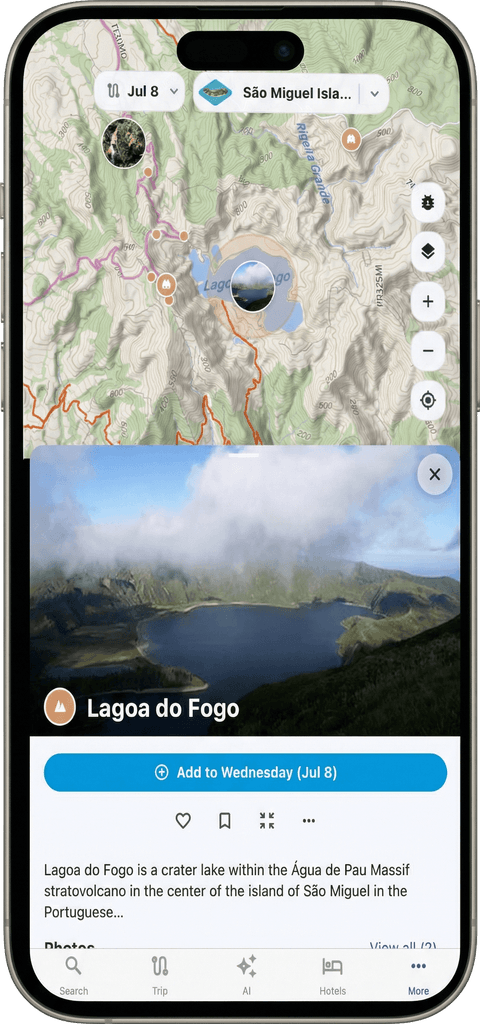
Pick the places you want to see and Tripomatic turns them into a day-by-day route, with smart routing, time estimates, and everything you need for a perfect trip.

Related destinations


Data: © OpenStreetMap contributors, Wikidata, Wikipedia, Tripomatic, Official websites, geoBoundaries (CC BY 4.0). Tours by GetYourGuide. We earn commission from bookings. Travel guide generated with AI.