



Tokió
Tokyo is Japan's capital and the center of the world's largest metropolitan area. Ultra-modern skyscrapers stand next to centuries-old shrines, and the city is served by an extensive train and subway network. It suits travelers who want big-city energy, a wide range of food from street stalls to Michelin-starred restaurants, and easy day trips to mountains, hot springs, and even subtropical islands — all reachable from the same transit hub.
Beyond the 23 central wards that most visitors see, Tokyo Prefecture stretches west into forested mountains and south into a chain of remote islands, giving the destination far more range than the skyline suggests.

Tokió – Utazást tervezel?
Állítsd össze a napi útvonalad a Tripomatic alkalmazásban.


Mikor érdemes utazni
Spring (March–May) and autumn (October–November) are mild and popular for cherry blossoms and fall colors. Summer (June–September) is hot and humid, with a rainy season in June. Winter is cold but mostly dry, with little snow in the city.
Plan around cherry blossom season in late March and early April, when parks like Ueno Park and Shinjuku Gyoen fill with hanami picnics — it's the busiest time to visit, so book well ahead.
A legjobb időszak a látogatásra: május, június
Főbb látnivalók
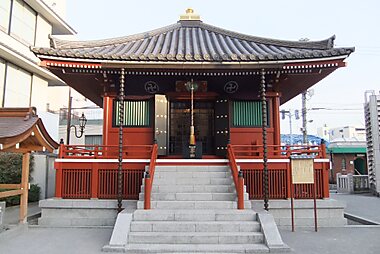

Sensō-ji is Tokyo's oldest temple, founded in the seventh century, and its bright red gate and busy approach street make it one of the city's most photographed spots.
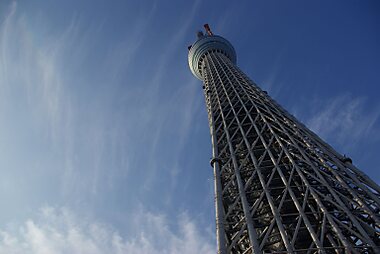
For the best view over the whole city, head up Tokyo Skytree, the tallest structure in Japan at 634 meters.
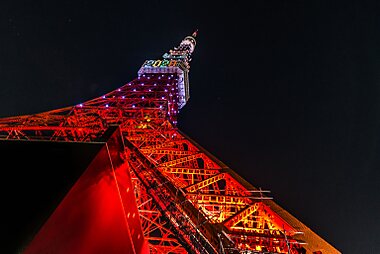
Tokyo Tower, built in 1958 and modeled on the Eiffel Tower, is a shorter but equally loved observation deck near the city center.
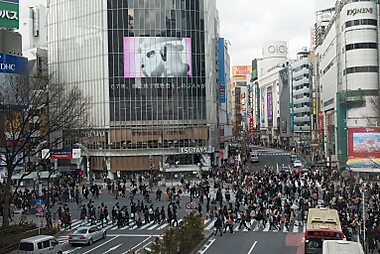
Shibuya Crossing is one of the world's busiest pedestrian crossings, with up to 3,000 people crossing at once when the lights change.
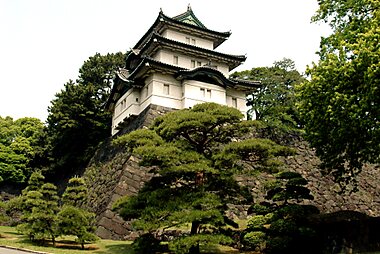
Tokyo Imperial Palace sits on the site of the former Edo Castle and remains the residence of Japan's Emperor; the surrounding moat and gardens are open to walk around.
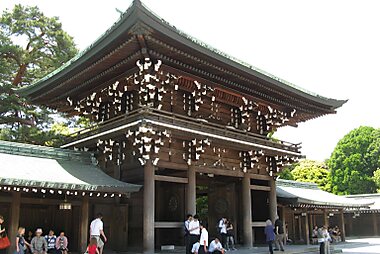
Meiji Shrine is a peaceful Shinto shrine set inside a forest of 100,000 trees donated from across Japan when it was built in 1920.
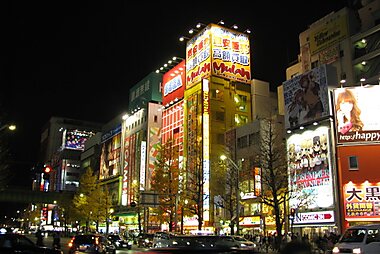
Akihabara is the center of Tokyo's anime, manga, and electronics culture, packed with multi-story stores and themed cafes.
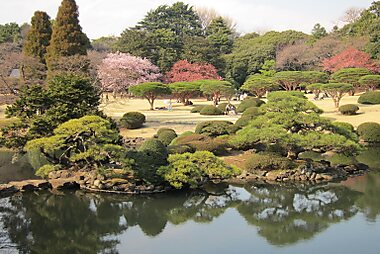
Shinjuku Gyoen combines Japanese, French, and English garden styles in one large park, a quiet escape from the surrounding high-rises.
Kiemelt listák


Iconic Shinto Shrines of Tokyo
Explore Tokyo's spiritual heritage through its diverse Shinto shrines. This collection features Meiji Jingu, a massive forest oasis dedicated to Emperor Meiji, and the ornate Ueno Tōshō-gū, a 17th-century structure honoring the Tokugawa shogunate. The list includes the historically significant Yasukuni Shrine and the hidden Hanazono Inari-jinja with its tunnel of red torii gates. From the naval history at Togo Shrine to the peaceful heights of Ichigaya Kameoka Hachimangu, these sites showcase centuries of Japanese religious architecture and tradition.
7 hely


Élmények
- Step into teamLab Planets, a barefoot digital art space where you wade through water and light installations rather than just look at them.
- Spend an evening hopping between the tiny, six-seat bars of Shinjuku Golden Gai in Shinjuku — each one holds a different theme and a different crowd.
- Grab a stool at one of the yakitori stalls along Omoide-yokocho, a narrow alley of smoke-filled grills that has barely changed since the postwar years.
- Catch a sumo tournament if the dates line up, or visit Sumo Museum in Ryogoku to see the sport's history up close.
- Hike Mount Takao, a mountain inside Tokyo's own borders, reachable by train and cable car in under an hour from the city center.
- Watch the sunset over the bay near Rainbow Bridge in Odaiba.
Túrák és tevékenységek
Tokió — Térkép

 Interaktív térkép megnyitása
 Egynapos kirándulások
Tokyo's rail network puts several very different day trips within easy reach.
- Yokohama — about 30 minutes by train. Japan's second-largest city has a large waterfront district, a large Chinatown, and a distinct international history.
- Kamakura — about 1 hour by train. A former samurai capital with dozens of temples and shrines, including a 13-meter bronze Buddha statue, plus a laid-back beach town feel.
- Kawagoe — about 1 hour by train. Known as "Little Edo" for its streets of preserved warehouse buildings from the Edo period.
- Hakone — about 1.5–2 hours by train. A hot spring resort area with views of Mount Fuji on clear days, reachable by a scenic train, cable car, and boat combination.
- Nikko — about 2 hours by train. A mountain town famous for elaborately decorated shrines and mausoleums set among old cedar forests, a UNESCO World Heritage Site.
Mit érdemes felfedezni
Tokyo Prefecture covers far more than the city center.
Tokyo Special Wards is the urban core most visitors explore — a continuous stretch of neighborhoods including Shibuya, Shinjuku, and Asakusa.
West of the city, the Tama area rises into forested hills and mountains, including Mount Takao, a popular hiking spot only an hour from central Tokyo.
South of the mainland, the Izu and Ogasawara Islands stretch nearly 1,000 km into the Pacific, with beaches, diving, and whale watching far removed from the city skyline.
Odajutás
- By air: Two airports serve Tokyo. Haneda Airport is the closer option, about 30 minutes from central Tokyo by monorail or train. Narita Airport is farther out, about 60–90 minutes away via the Narita Express train or Skyliner.
- By train: Tokyo Station is the main hub for the Tokaido Shinkansen (to Kyoto, Osaka, and Nagoya) and the Tohoku Shinkansen (to Sendai and beyond). Shinagawa Station also serves the Tokaido Shinkansen line to Kyoto and Osaka.
- By bus: Overnight highway buses connect Tokyo to cities across the country at a lower cost than the Shinkansen, arriving mainly at Shinjuku and Tokyo Station bus terminals.
Közlekedés
- Public transit: The JR Yamanote loop line and the Tokyo Metro and Toei subway networks cover the city. Buy an IC card (Suica or Pasmo) and tap it at the gates — no need for paper tickets on most journeys. Both cards can also be loaded onto a smartphone. Tokyo Metro
- Taxi: Taxis are metered, clean, and reliable, but more expensive than the train. Ride-hailing apps operate but cover far fewer cars than regular taxi stands.
- On foot: Central districts are walkable in themselves, but distances between them are long — take the train between areas rather than walking.
Vezetés
- Is a car worth it?: No, for a stay in the city center. The rail network reaches everywhere useful, and city traffic plus expensive parking make driving impractical. A car only helps for exploring the mountains of the Tama area or other remote parts of the prefecture.
- Parking: Paid car parks near stations and department stores are the norm; street parking is scarce and closely enforced.
- Restrictions: The Shuto Expressway network charges distance-based tolls via an ETC card; central Tokyo has no separate congestion charge.
Ételek és italok
Tokyo's food scene ranges from a quick stand-up bowl of noodles to some of the most exclusive sushi counters in the country, often booked months ahead.
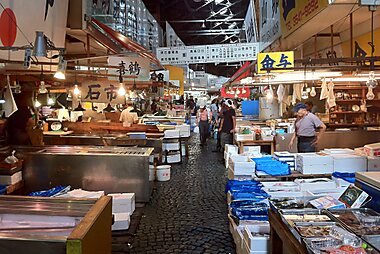
For a browsing food experience, walk the stalls of Tsukiji Outer Market, the historic outer market that still sells fresh seafood, skewers, and street snacks even though the wholesale auction moved elsewhere. For ramen, head underground to Tokyo Ramen Street near Tokyo Station, where several well-known shops sit side by side.
Biztonság és egészség
Tokyo is one of the safest big cities to visit — violent crime is rare, and it is common to see unattended bags holding a table at a cafe. The most common issues tourists run into are pickpocketing on crowded trains during rush hour and overpriced bars in nightlife areas like Kabukicho and Roppongi that pressure customers into paying inflated bills — stick to venues with clearly posted prices.
Japan sits in an active earthquake zone. Minor tremors are common and buildings follow strict seismic codes, so follow any posted evacuation instructions if a larger one occurs.
Történelem
Tokyo began as the small fishing village of Edo. It became the country's center of power in 1603, when Tokugawa Ieyasu expanded an existing fort into Edo Castle and made the city his base — the site is now Tokyo Imperial Palace. By the 1700s, Edo had grown into one of the largest cities in the world.
The city was renamed Tokyo, meaning "eastern capital," in 1868, when the Emperor moved his court there from Kyoto. It was rebuilt twice in the 20th century — after the Great Kanto Earthquake of 1923 and after Allied bombing during the Second World War. Sensō-ji was destroyed in the 1945 air raids and rebuilt afterward, much like many of Tokyo's historic sites.
Országinformációk
Here are the essentials for traveling in Japan:
- Pénznem
- japán jen JPY ¥ · Bankkártyás fizetés · Gyakran elfogadott
- Segélyhívó számok
- 118
- Elektromos hálózat
- 100 V · 60 HzA típus / B típus
- Nyelvek
- japán
- Csapvíz
- Biztonságosan iható
- Közlekedés iránya
- Bal oldali
- Nemzetközi előhívó
- +81


Tokió – Tervezd meg a napjaidat
Alakítsd át az útikönyvben szereplő helyeket valódi útitervvé okos útvonaltervezéssel, időbecslésekkel és mindennel, ami a tökéletes utazáshoz kell.




