


Passau
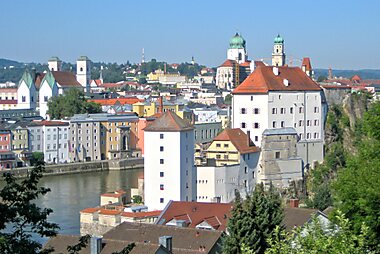
Passau sits where the Danube, the Inn and the Ilz meet. The old town fills a narrow peninsula between two of the rivers. Baroque churches and tall town houses line its lanes.
The city suits a short stay of one or two nights. It is also a common start or end point for Danube river cruises and for the Danube cycle path.
Download this guide as a PDFPrintable tourist mapPublic holidays in Germany

Passau – Planning a Trip?
Build your day-by-day itinerary in the Tripomatic app.


When to visit
Late spring to early autumn is the best time for walking and boat trips. Summers are warm and can bring rain. Winters are cold, and snow is common.
The old town is quiet in winter.
Best time to visit: September
Top sights
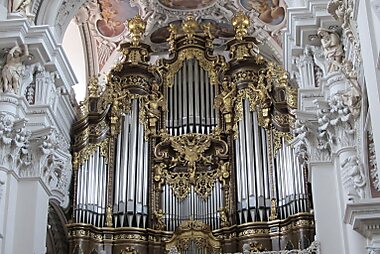
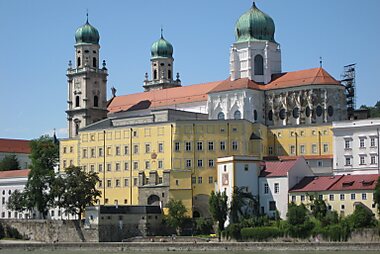
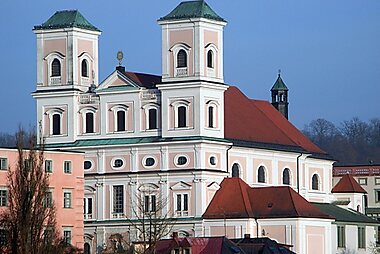
- Dom St. Stephan is the main church of the old town. The baroque building was built after a fire in 1662. It is known for its very large organ.
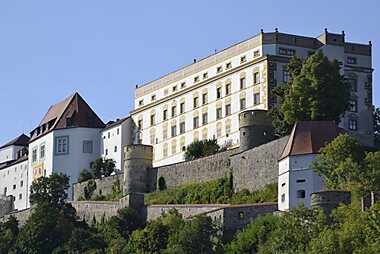
- Veste Oberhaus is a fortress above the Danube, founded in 1219. It houses a museum, and the view over the three rivers is the main reason to climb up.
- Alte Residenz was the palace of the prince-bishops. Its oldest surviving part is a Romanesque door jamb from 1180. Parts of it are used by the courts.
- Veste Niederhaus is a medieval castle on the tip of land where the Ilz meets the Danube. It is private and not open to visitors. See it from across the river or from the Oberhaus.
- St. Michael is a 17th-century church with baroque additions. It stands in a quiet lane in the old town.
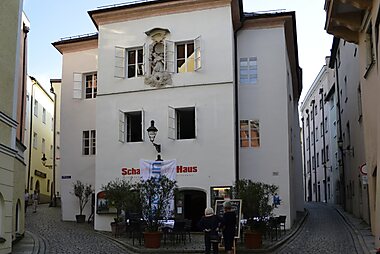
- Scharfrichterhaus is a medieval house that was once the home of the town executioner. Today it is a jazz and cabaret stage.
- The Dreiflüsseeck is the point where the three rivers join. The Danube, Inn and Ilz run side by side for a short stretch.
- The Passau Glass Museum has a large glass collection.
Featured Lists


Historic Churches of Passau
Passau’s ecclesiastical landscape is defined by its dramatic Baroque reconstruction following the 17th-century city fires. This collection features St. Stephan’s Cathedral, home to one of the world’s largest cathedral organs, alongside the city’s oldest parish church, St. Paul. The list spans from the Jesuit-style St. Michael’s near the river confluence to the late Gothic St. Salvator tucked beneath the Veste Oberhaus fortress. These sites represent centuries of religious history across the Old Town and the riverside Innstadt district.
8 placesWhat to experience
- Take a river boat trip to see the three rivers meet. Many Danube cruises start in Passau.
- Hear an organ concert in the cathedral in the warmer months.
- Go to a cabaret or jazz evening at Scharfrichterhaus.
- Cycle the Danube path east from the city.
Tours & Activities
Passau — Map

 Open the interactive map
Day trips
Passau is close to the Austrian border and to the Bavarian Forest.
- Schärding: a small Austrian town on the Inn with a bright, colourful main square.
- Linz: the Austrian city on the Danube, with museums.
- Bavarian Forest National Park: forest hiking to the north-east. A car makes the trip easier.
Where to explore
Upriver along the Danube:
- Regensburg is a Roman and medieval city with a well-preserved old town.
Getting there
- By air: Munich Airport is the main gateway for most visitors. Linz Airport in Austria is a smaller option. Both need a train or road transfer to Passau.
- By train: Long-distance trains run to Passau Hauptbahnhof from Regensburg, Nuremberg and Vienna. Deutsche Bahn
- By river: many Danube cruises start or end here.
Getting around
- Public transit: city buses are run by Stadtwerke Passau. Buy single, multi-trip and day tickets from the driver. Stadtwerke Passau fares
- On foot: the old town is compact and flat, so walking is the easiest way to get around. The climb to the Oberhaus is steep.
- By bike: the Danube cycle path to Vienna runs east from here. It is flat along the river.
Food & drink
Bavarian dishes are the base of the menu here, with roast pork, dumplings and pretzels. Beer halls and inns serve them in the old town.
For eating, look along the lanes around the Rathausplatz and by the Inn and Danube embankments. Many places have terraces facing the river in summer.
Safety & health
Pickpockets can work in busy spots such as the old town squares. Keep bags closed.
The Danube and Inn can rise after heavy rain, and the lower lanes of the old town flood at times.
History
Passau began as a Roman fort called Batavis. Later it became the seat of a bishop. The prince-bishops ruled the city and the land around it for centuries from the Alte Residenz and the Veste Oberhaus.
A fire destroyed most of the old town in 1662. Italian architects and craftsmen rebuilt it in baroque style. Their largest work is the Dom St. Stephan.
The prince-bishops lost their rule in 1803.
Country facts
Quick practical facts for Germany at a glance:
- Currency
- Euro EUR € · Card payments · Commonly accepted
- Emergency numbers
- 112 Ambulance · Fire brigade
- Electricity
- 230 V · 50 HzType C / Type F
- Languages
- German
- Tap water
- Safe to drink
- Driving side
- Right
- Calling code
- +49


Passau – Plan Your Days
Turn the places from this guide into a real itinerary, with smart routing, time estimates, and everything you need for a perfect trip.


Related destinations
Other Destinations
Data: © OpenStreetMap contributors, Wikidata, Wikipedia, Tripomatic, Official websites. Tours by GetYourGuide. We earn commission from bookings. Travel guide generated with AI.
Plan your trip with Tripomatic
- AI-Powered PlanningGet a ready-made day in one tap, let AI spread your shortlist across your trip, or plan everything by chatting.
- Travel AlertsOfficial advisories, severe weather, strikes, and natural hazards for the places on each day of your trip.
- Public Holidays & EventsSee holidays, festivals, and closures on the days of your trip, and what they mean for your plans.
- Cost EstimationAI-powered trip cost breakdowns so you know what to budget before you go.
- Tours & TicketsBook tours, skip-the-line tickets, and activities directly in your plan.